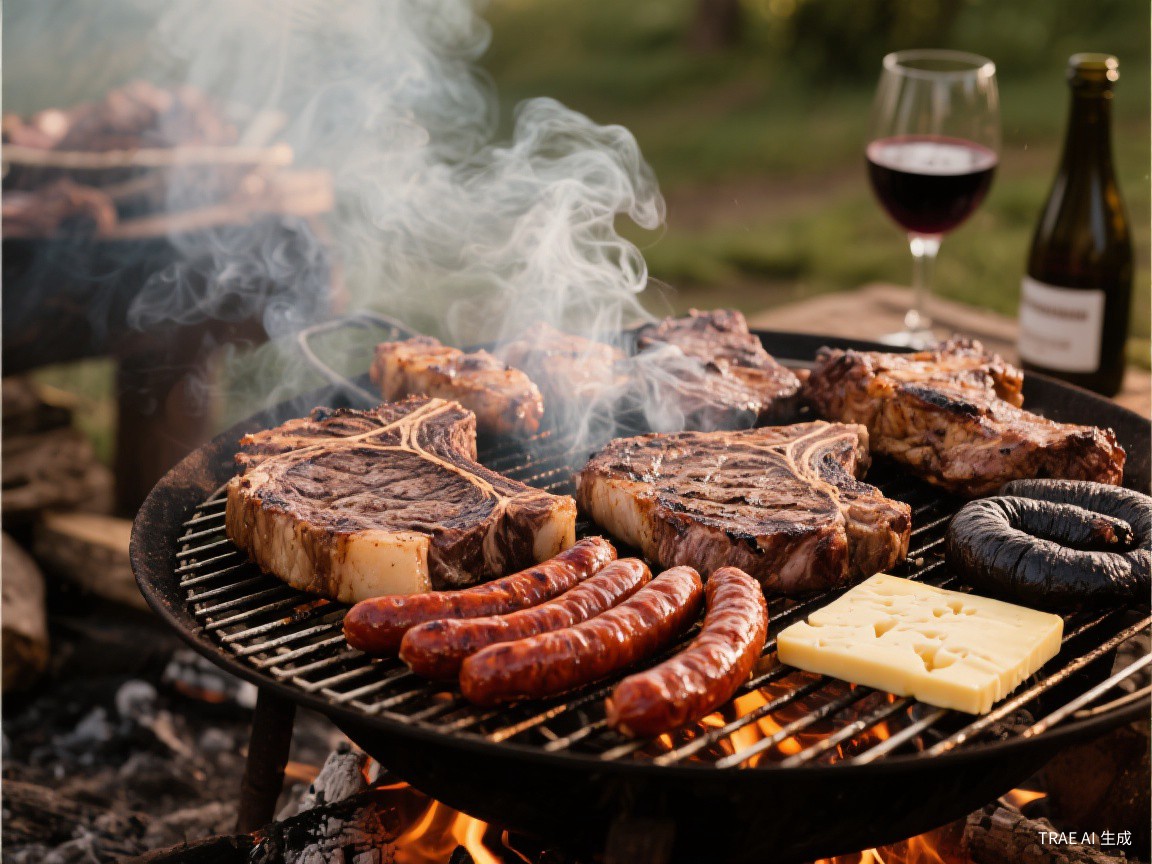
Asado is Argentina's culinary soul—a ritual that brings family and friends together around fire and meat. More than a cooking method, it's a social institution where the asador (grill master) holds a position of respect and the meal unfolds slowly over hours of conversation.
The Fire
Traditional asado uses wood—quebracho or espinillo—burned down to embers before cooking begins. The meat never sees direct flame, only the steady, even heat of glowing coals. This slow cooking renders fat and develops deep, complex flavors.
Patient Heat
If you can hold your hand 4 inches above the grill for 8-10 seconds, the heat is right. Asado is low and slow—rushing leads to burned outside and raw inside.
The Cuts
An asado features multiple cuts, each with its own character:
- Asado de tira: Short ribs, the quintessential cut
- Vacío: Flank steak, tender when properly cooked
- Entraña: Skirt steak, quick-cooking and flavorful
- Chorizo and morcilla: Sausages and blood sausage
- Provoleta: Grilled provolone cheese
The Chimichurri
This vibrant sauce of parsley, garlic, oregano, olive oil, and vinegar cuts through the richness of the meat. Make it a day ahead to let flavors meld. Some families add tomato or bell pepper; others keep it green and herbal.
The Ritual
Asado begins in the afternoon and continues until dark. The asador manages the fire, turns the meat, and announces when each cut is ready. Guests eat in waves as different pieces finish cooking, always accompanied by wine and conversation.