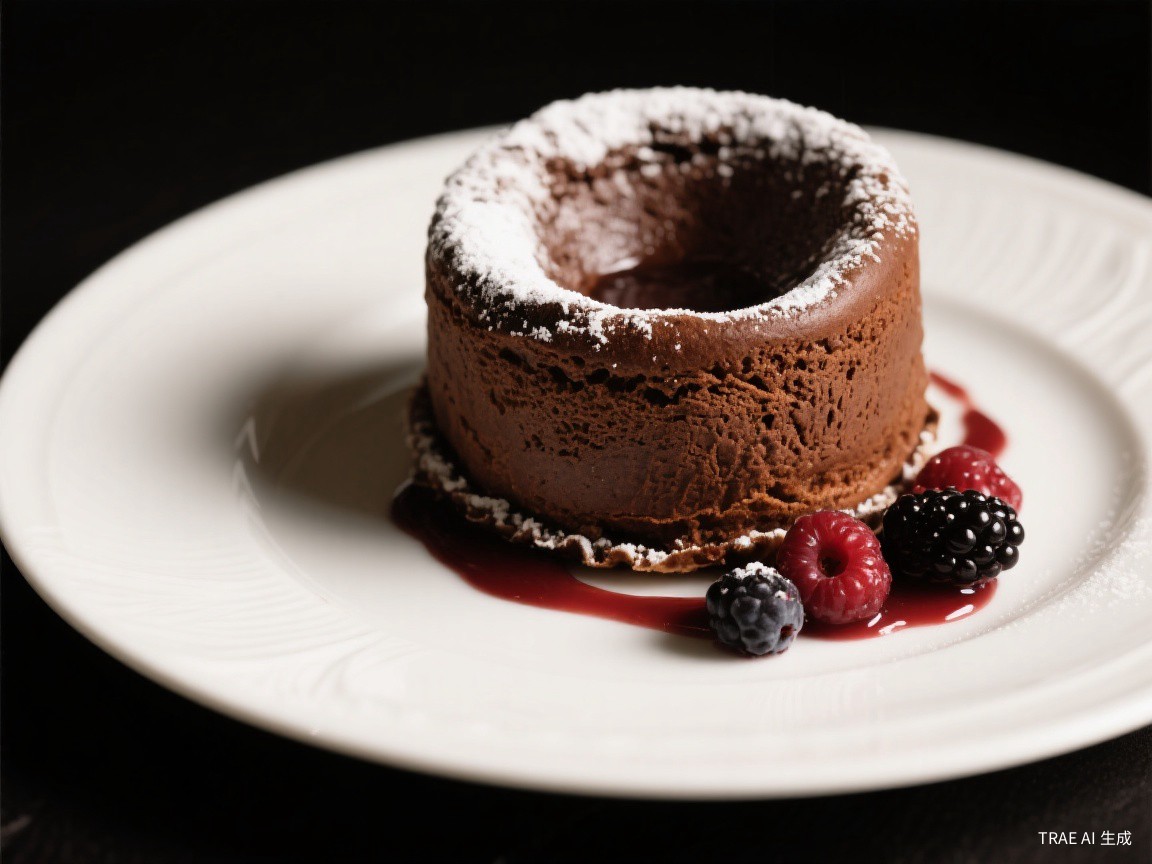
The soufflé has an undeserved reputation for difficulty. Yes, it requires attention to detail, but the technique is straightforward once understood. A properly made soufflé rises dramatically in the oven, then falls within minutes of serving—part of its charm and drama.
The Science of the Rise
Soufflés rise because of air bubbles trapped in beaten egg whites. When heated, the air expands and the egg proteins set, creating that dramatic lift. Understanding this helps you avoid common pitfalls.
The Copper Bowl Secret
Traditional French chefs use copper bowls for beating egg whites. A reaction between copper and egg whites stabilizes the foam. If you don't have copper, add a pinch of cream of tartar for similar results.
The Chocolate Base
A rich chocolate base is essential. Use high-quality chocolate (70% cocoa) and blend it with a pastry cream or crème pâtissière. The base should be flavorful enough to stand on its own, as the egg whites will dilute it slightly.
Folding Technique
The key to a light soufflé is folding—not stirring. Use a large spatula to cut through the center, scrape along the bottom, and fold over. Work quickly but gently, preserving as many air bubbles as possible. A few streaks of white are fine; they'll disappear in the oven.
The Ramekin Preparation
Butter the ramekins thoroughly, then coat with sugar (for sweet soufflés) or grated cheese (for savory). This creates a rough surface that helps the soufflé climb. Run your thumb around the inside rim to create a small groove—this helps the soufflé rise straight.
Timing Is Everything
Have your guests seated before the soufflé goes into the oven. It needs to be served immediately upon emerging. The fall is inevitable—embrace it as part of the soufflé's nature.