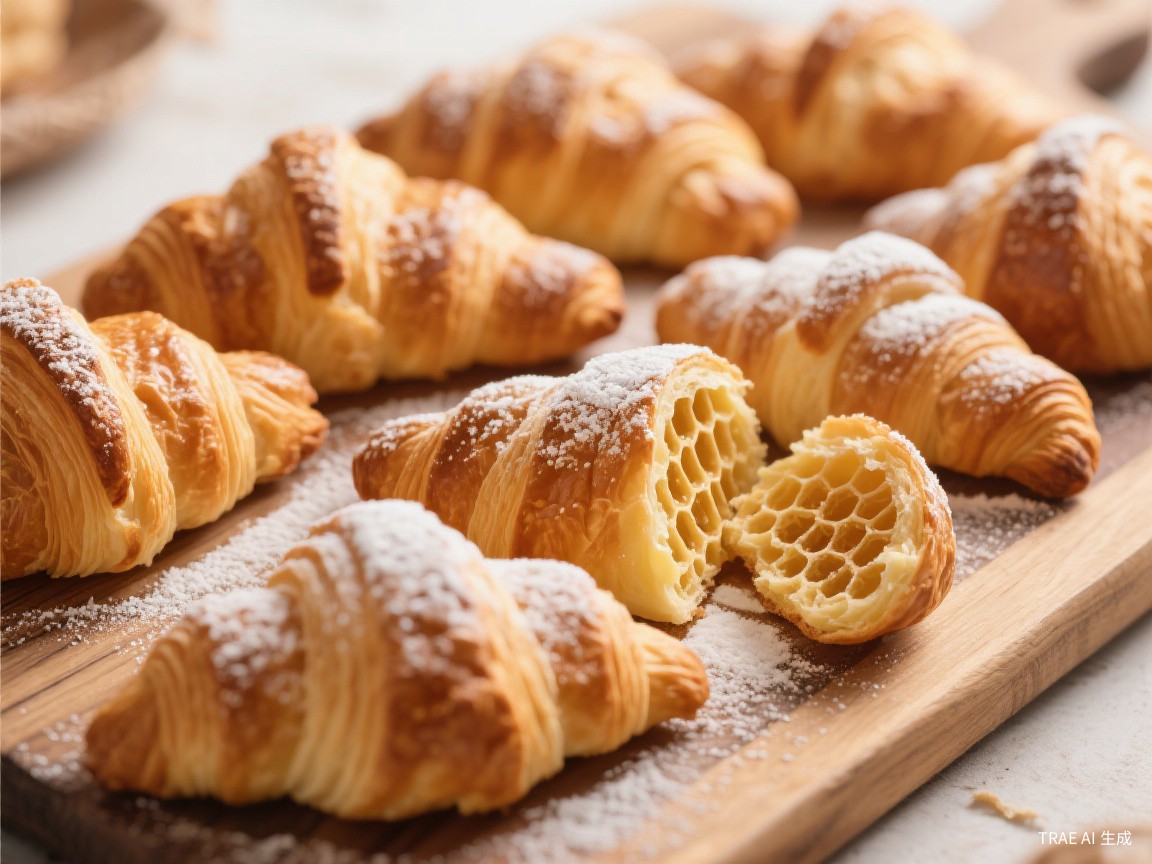
There's nothing quite like a perfectly baked croissant—golden, flaky layers shattering at first bite, revealing a honeycomb interior that's simultaneously buttery and light. While many assume such pastries require professional equipment, the truth is that with patience and technique, you can achieve croissant perfection in your home kitchen.
Understanding Laminated Dough
The magic of croissants lies in lamination—the process of folding butter into dough multiple times to create hundreds of distinct layers. When baked, the water in the butter turns to steam, separating these layers and creating that characteristic flaky texture.
This isn't a quick project. A proper croissant requires at least 24 hours from start to finish, with most of that time being rest periods for the dough. But don't let that discourage you—the actual hands-on time is manageable, and the results are incomparable.
The Three Pillars of Success
Before we dive into the recipe, understand these three principles:
- Temperature control: Both dough and butter must remain cold throughout the lamination process. If the butter melts, you lose your layers.
- Patience: Rushing the resting periods will result in tough, bread-like croissants rather than tender, flaky ones.
- Quality ingredients: This is not the place for margarine or low-fat alternatives. Use high-quality European butter with at least 82% fat content.
Chef's Secret
Work in the coolest part of your kitchen, or even near an open window in winter. If at any point the dough feels warm or the butter seems soft, stop immediately and refrigerate for 20-30 minutes. There's no shame in taking breaks.
The Dough (Détrempe)
Start with a relatively simple yeast dough. Unlike bread, croissant dough should be fairly soft and slightly under-hydrated—this makes it easier to roll without sticking. The key ingredients are:
- Bread flour (higher protein for structure)
- Whole milk (for richness and browning)
- Fresh yeast or instant yeast
- Sugar (just enough to feed the yeast and aid browning)
- Salt
Mix the dough just until it comes together—overworking will develop too much gluten, making it difficult to roll. Let it rest for an hour at room temperature, then refrigerate overnight. This rest period allows the gluten to relax and the flavors to develop.
The Butter Block (Beurrage)
While the dough rests, prepare your butter block. Pound cold butter into a flat rectangle between sheets of parchment paper. The butter should be pliable but still cold—about 60°F (15°C) is ideal. If it's too cold, it will crack; too warm, and it will melt into the dough.
The Lamination Process
Now comes the art. Roll your dough into a rectangle twice the size of your butter block. Place the butter in the center and fold the dough over it like a book. This is your first "turn."
Roll the packet into a long rectangle and fold it in thirds like a letter. This is a "single turn." Rotate 90 degrees, roll again, and fold once more. You've now completed a "double turn."
"The number of layers in a croissant is mathematical poetry. Three double turns give you 729 layers of butter and dough. Each layer must remain distinct for the perfect flake."
— Pierre Hermé, Master Pâtissier
Refrigerate for at least one hour between each set of turns. Most recipes call for three double turns total, creating those 729 layers. More turns would make the layers too thin; fewer would leave them too thick.
Shaping and Baking
After the final turn and rest, roll your dough to about 4mm thickness. Cut into triangles and roll from base to tip, curving the ends slightly to create the classic crescent shape.
Proof the shaped croissants for 1-2 hours until they've doubled in size and jiggle slightly when shaken. The dough should feel light and airy, not dense or cold.
Brush with egg wash and bake in a hot oven (around 400°F/200°C) for 15-20 minutes until deeply golden. The croissants should be evenly browned with visible layers on the sides.
Troubleshooting Common Issues
Dense interior: Your butter may have melted during lamination, or you didn't proof long enough.
Uneven layers: The dough wasn't rolled evenly, or the butter block wasn't uniform.
Not flaky: The oven wasn't hot enough, or the croissants were underbaked.
Master the Art of Pastry
Download our complete croissant timeline and temperature guide.
Get the Free Guide