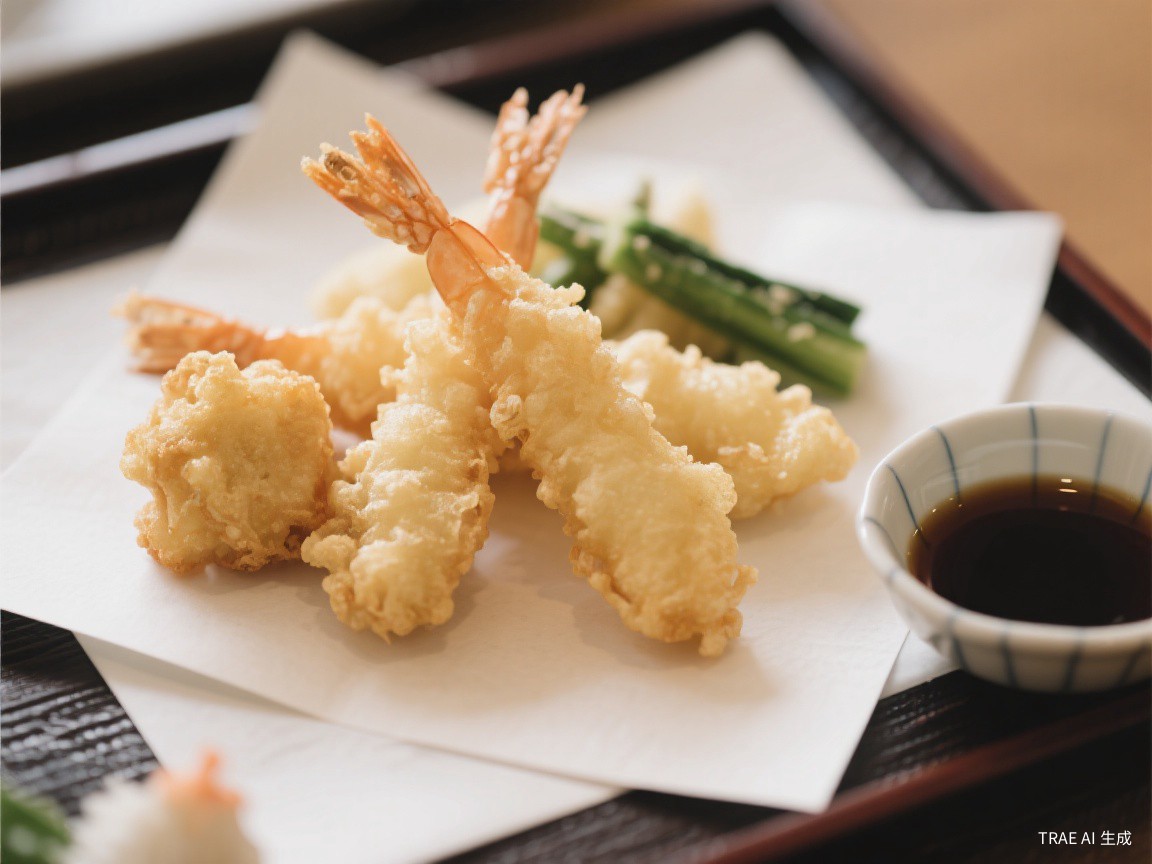
Tempura appears deceptively simple—battered and fried vegetables or seafood. But achieving that ethereal, shatteringly crisp coating requires understanding the science and technique that Japanese chefs have refined over centuries.
The Batter Philosophy
The ideal tempura batter is barely mixed, with visible lumps of flour. Overmixing develops gluten, resulting in a heavy, bread-like coating. The batter should be ice-cold—this creates a dramatic temperature difference when hitting hot oil, producing a lighter texture.
The Ice Water Trick
Use ice-cold water, and add ice cubes to keep the batter cold while working. Some chefs even chill their flour. The colder everything is, the lighter the tempura.
The Oil Temperature
Maintain oil at 340-360°F (170-180°C). Too hot, and the batter burns before the interior cooks. Too cool, and the tempura absorbs oil, becoming greasy. A thermometer is essential.
Choosing Ingredients
Classic tempura ingredients include shrimp, eggplant, sweet potato, shiitake mushrooms, and green beans. Cut vegetables into uniform pieces for even cooking. Seafood should be patted completely dry before battering.
The Dipping Sauce
Tentsuyu—tempura dipping sauce—combines dashi, soy sauce, mirin, and grated daikon. The daikon adds a fresh, clean element that cuts through the richness of the fried batter.