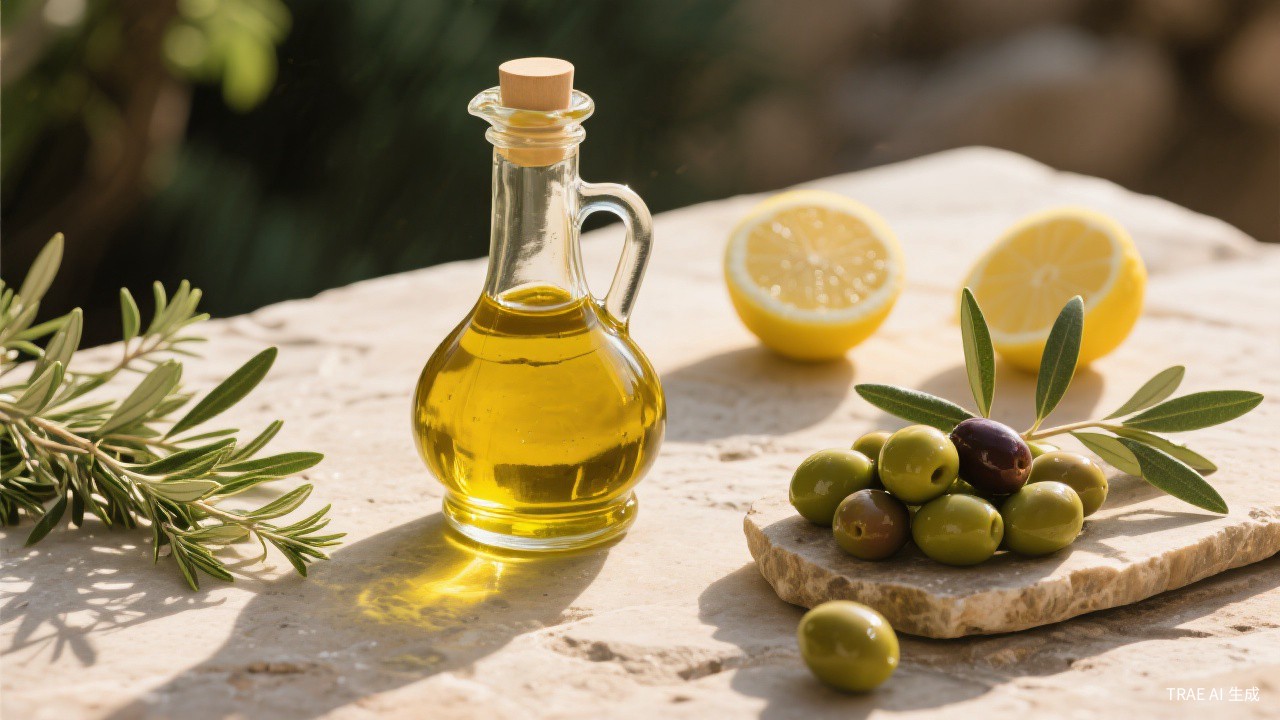
Homer called it "liquid gold." Hippocrates prescribed it as medicine. Ancient Olympic athletes slathered it on their bodies before competition. For six thousand years, olive oil has been far more than a cooking ingredient—it has been a currency, a sacrament, a fuel, a cosmetic, and a symbol of peace and prosperity. Today, as science confirms what Mediterranean civilizations intuited millennia ago, olive oil stands at the intersection of culinary tradition and modern nutrition, a product whose story is inseparable from the story of Western civilization itself.
Ancient Roots: Where the Olive Tree Began
The wild olive tree, Olea europaea, originated in the eastern Mediterranean basin, likely in the region that now encompasses modern-day Syria, Lebanon, and Palestine. Fossil evidence suggests that olives were being collected as early as 6000 BCE, but the deliberate cultivation of olive trees for oil production began around 4000 BCE in Crete, during the early Minoan civilization. The Minoans developed sophisticated pressing techniques using stone mortars and woven mats, and olive oil quickly became the backbone of their economy, traded across the Aegean and beyond.
The ancient Greeks elevated the olive tree to sacred status. According to Greek mythology, the goddess Athena and the god Poseidon competed for patronage of the city of Athens. Poseidon offered a spring of saltwater; Athena offered an olive tree. The citizens chose Athena's gift, recognizing that the olive provided food, oil, and wood—sustenance that would endure long after a spring might run dry. The olive wreath, or kotinos, became the prize awarded to victors at the ancient Olympic Games, and cutting down an olive tree in Athens was punishable by death.
"The olive tree is surely the richest gift of Heaven. I can scarcely expect that the gods have created anything more perfect than the olive."
— Thomas Jefferson, in a letter to a friend, 1809
Roman Innovation and Expansion
It was the Romans who transformed olive oil production from a regional craft into an industrial enterprise. By the first century CE, Rome was consuming an estimated 20 million liters of olive oil annually, much of it imported from provinces in Spain, North Africa, and the Middle East. The Romans invented the trapetum, a heavy stone press that dramatically increased oil extraction efficiency, and developed an extensive shipping network using amphorae—ceramic vessels whose distinctive shapes allow archaeologists to trace trade routes across the Mediterranean to this day.
Mount Testaccio in Rome, a hill composed entirely of broken olive oil amphorae shards, stands as a monument to the scale of Roman olive oil consumption. Rising 35 meters high and covering roughly 20,000 square meters, this artificial mound contains the remnants of an estimated 53 million amphorae, accumulated over roughly 250 years of continuous trade. It is perhaps the most tangible evidence of olive oil's central role in the ancient economy.
The Science of Olive Oil: Understanding the Grades
Modern olive oil classification is governed by the International Olive Council (IOC), an intergovernmental organization based in Madrid that sets standards recognized by most producing nations. Understanding these grades is essential for any serious cook, as the differences between them are dramatic and directly affect both flavor and health benefits.
- Extra Virgin Olive Oil (EVOO): The highest grade, extracted solely by mechanical means without heat or chemicals. It must have a free acidity of no more than 0.8 grams per 100 grams and pass rigorous sensory testing for taste and aroma defects.
- Virgin Olive Oil: Also mechanically extracted but with slightly higher acidity (up to 2.0 grams per 100 grams). It may have minor flavor defects but is still suitable for consumption.
- Refined Olive Oil: Oil that has been treated with heat and chemicals to neutralize defects. It is bland in flavor and typically blended with virgin oil for commercial sale.
- Olive Pomace Oil: Extracted from the leftover paste after initial pressing using solvents. It is the lowest grade and should not be confused with true olive oil.
Expert Tip
When shopping for extra virgin olive oil, look for bottles that display a harvest date (not just a best-by date), are stored in dark glass or tin to protect from light, and come from a single country or region rather than a vague "Mediterranean blend." Freshness matters—olive oil is a fruit juice, and it degrades over time. Use your EVOO within 12 to 18 months of harvest for the best flavor and health benefits.
The Harvest: A Labor of Patience
The quality of olive oil is determined long before it reaches the press—it begins in the grove. The timing of the harvest is perhaps the single most important factor. Olives harvested early in the season, when they are still green, produce oil that is peppery, bitter, and rich in polyphenols—the antioxidant compounds responsible for many of olive oil's health benefits. Olives harvested later, when they have turned black, yield a milder, sweeter oil with lower polyphenol content but higher volume.
Traditional harvesting methods involve hand-picking or beating the branches with long poles to knock the olives onto nets spread below the trees. While labor-intensive, this method minimizes damage to both the fruit and the tree. Modern mechanical harvesters, which shake the trunk or canopy, have dramatically increased efficiency but require careful calibration to avoid bruising. Once harvested, olives must be pressed within 24 to 48 hours to prevent oxidation and fermentation—the clock starts ticking the moment the fruit leaves the branch.
The Great Olive Oil Rivalries: Italy, Spain, and Greece
The Mediterranean's three great olive oil-producing nations each bring a distinct character to their product, shaped by terroir, tradition, and olive variety. Understanding these differences transforms olive oil from a generic pantry staple into a nuanced ingredient worthy of the same attention as wine.
Italy produces some of the world's most celebrated olive oils, particularly from regions like Tuscany, Puglia, and Umbria. Italian oils tend to be grassy, peppery, and assertive, with flavors of artichoke, almond, and green tomato. The Frantoio, Leccino, and Coratina varieties are among the most prized. However, Italy is also the world's largest importer of olive oil—much of the "Italian" olive oil on supermarket shelves is actually blended from Spanish, Greek, and Tunisian oil and bottled in Italy, a practice that has sparked widespread fraud investigations and consumer confusion.
Spain is the world's largest olive oil producer by a wide margin, accounting for roughly 45 percent of global output. The vast olive groves of Andalusia, particularly in the province of Jaén, produce oils that range from mild and buttery (Picual variety) to intensely fruity and peppery (Arbequina). Spanish oils are increasingly recognized by connoisseurs for their exceptional quality-to-price ratio, though they have historically suffered from a reputation as bulk commodity oil.
Greece consumes more olive oil per capita than any other nation—roughly 20 liters per person annually—and is the world's third-largest producer. Greek oils, dominated by the Koroneiki variety, are known for their robust, herbaceous character and high polyphenol content. Much of Greece's finest oil is consumed domestically, meaning that the best Greek olive oils are rarely found outside the country, a source of both pride and frustration for Greek producers seeking international recognition.
The Mediterranean Diet: Science Validates Tradition
In the 1950s, American physiologist Ancel Keys conducted a landmark study across seven countries that revealed a striking pattern: populations in Mediterranean regions, despite consuming relatively high amounts of fat, had dramatically lower rates of heart disease than their American and Northern European counterparts. The key, Keys argued, was the type of fat—specifically, the abundance of olive oil in the Mediterranean diet.
Decades of subsequent research have confirmed and expanded on Keys' findings. The PREDIMED study, published in the New England Journal of Medicine in 2013, followed over 7,400 participants in Spain and found that those following a Mediterranean diet supplemented with extra virgin olive oil experienced a 30 percent reduction in the risk of major cardiovascular events compared to a control group following a low-fat diet. Olive oil's health benefits are attributed to its high concentration of monounsaturated fatty acids (primarily oleic acid), polyphenols (including oleocanthal, which has anti-inflammatory properties similar to ibuprofen), and vitamin E.
Olive Oil Fraud: A Growing Concern
The global demand for extra virgin olive oil has created a lucrative market for adulteration. Studies by the University of California, Davis, have found that a significant percentage of imported olive oils labeled as "extra virgin" fail to meet IOC standards when tested. Common fraud practices include blending with cheaper seed oils, deodorizing lower-grade oil to mask defects, and mislabeling the country of origin. The European Union has invested heavily in anti-fraud measures, including DNA testing and chemical fingerprinting, but the problem persists, making it more important than ever for consumers to educate themselves about what they are buying.
The Eternal Tree
Olive trees are among the longest-living organisms on Earth. Some trees in the Mediterranean are estimated to be over 3,000 years old, their gnarled, twisted trunks bearing witness to the rise and fall of empires. On the island of Crete, the Olive Tree of Vouves—still producing olives today—is believed to be at least 3,000 years old, making it one of the oldest known living trees in the world. These ancient trees are not merely botanical curiosities; they are living connections to the earliest chapters of human agriculture, reminders that the relationship between humanity and the olive tree is one of the oldest and most enduring partnerships in our history.
From the stone presses of ancient Crete to the centrifugal extractors of modern Andalusia, from the anointing of kings to the drizzling over a simple plate of pasta, olive oil has flowed through human history like no other food. It is, in every sense, liquid gold—precious, enduring, and infinitely rewarding for those who take the time to understand it.
Explore More Food Culture
Dive deeper into the stories behind the foods and beverages that shape our world.
Browse Culture Articles