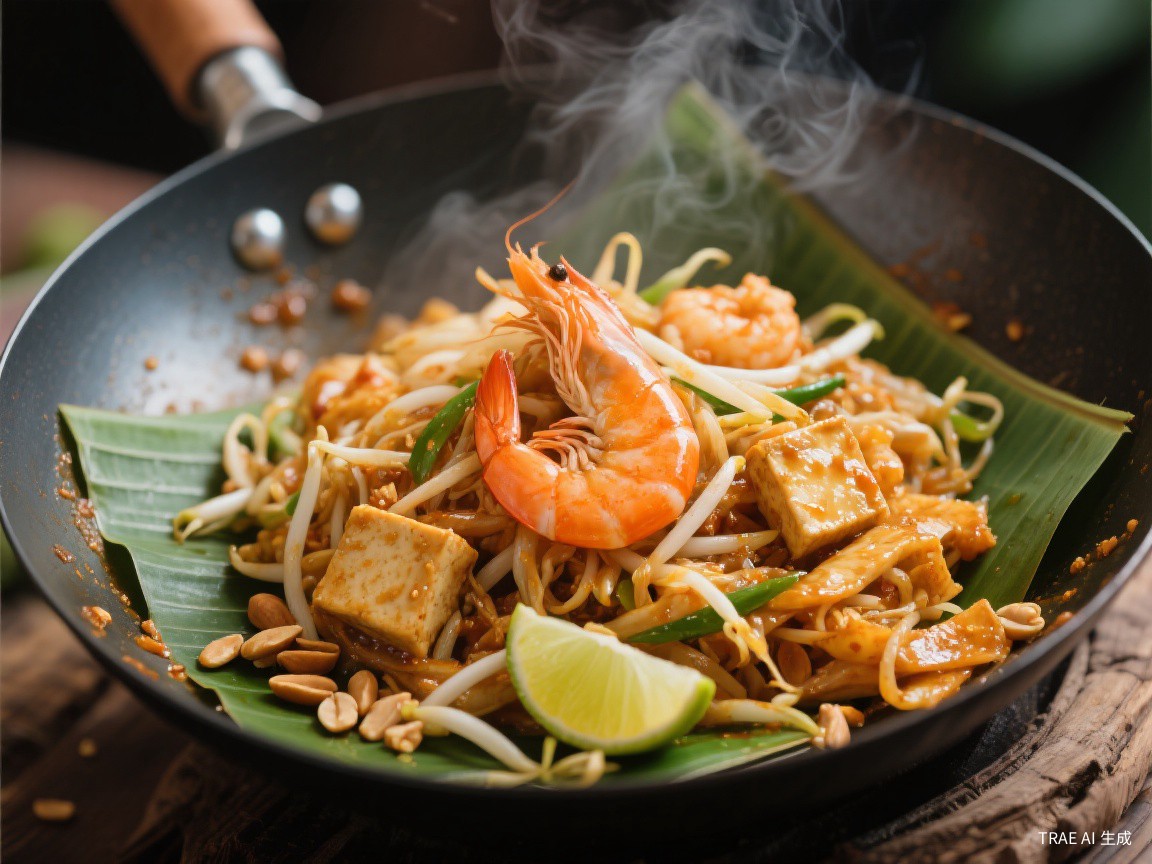
Walk down any street in Bangkok, and you'll find pad thai sizzling in woks, the aroma of tamarind and fish sauce filling the air. This humble noodle dish has become Thailand's most famous culinary export, yet many home cooks struggle to recreate that authentic street food flavor. Today, we're sharing the secrets that make Bangkok's pad thai truly exceptional.
The Origins of Pad Thai
Contrary to popular belief, pad thai isn't an ancient Thai dish. It was promoted in the 1930s and 1940s as part of Prime Minister Plaek Phibunsongkhram's campaign to create a national identity. The government distributed recipes and encouraged street vendors to sell this noodle dish, which combined Chinese stir-fry techniques with Thai flavors.
Today, pad thai represents the perfect balance of Thai cuisine: sweet, sour, salty, and savory all in one dish. The key lies in understanding how each ingredient contributes to this harmony.
Essential Ingredients
The soul of pad thai lies in its sauce. While many Western recipes call for ketchup or soy sauce, authentic pad thai relies on three key ingredients:
- Tamarind paste: Provides the characteristic sourness that defines the dish
- Fish sauce: Adds depth and umami
- Palm sugar: Balances the sourness with natural sweetness
Pro Tip
Make your sauce in advance and taste-test it before cooking. The ratio should be roughly 2:1:1 (tamarind:palm sugar:fish sauce), but adjust to your preference. The sauce should taste intensely flavored on its own—it will mellow when combined with noodles.
The Noodle Question
Use dried rice noodles, specifically labeled as "pad thai noodles" or "rice stick noodles." The width should be about 3-5mm—thin enough to absorb flavor, thick enough to maintain texture.
Soak the noodles in room temperature water for 30-45 minutes until pliable but still firm. They'll finish cooking in the wok. Never boil them beforehand, or you'll end up with mushy noodles that can't absorb the sauce properly.
The Wok Technique
Pad thai is cooked over extremely high heat in a well-seasoned wok. This creates wok hei—the breath of the wok—that subtle smokiness that elevates street food dishes. If you're using a home stove, use your largest burner on maximum heat and work in small batches.
"The secret to great pad thai is speed. Every second counts once the noodles hit the wok. Have everything prepped and within arm's reach."
— Auntie Som, Bangkok Street Vendor
Step-by-Step Method
- Prep everything: This is crucial. Once you start cooking, there's no time to chop or measure.
- Heat the wok: It should be smoking hot before adding oil.
- Cook proteins first: Push to the side, then add beaten eggs.
- Add noodles and sauce: Toss vigorously to coat evenly.
- Finish with garnishes: Bean sprouts, garlic chives, crushed peanuts, and lime.
Common Mistakes to Avoid
Many home cooks make the mistake of adding too many vegetables. Authentic pad thai is primarily noodles with minimal additions—bean sprouts and garlic chives are traditional, but bell peppers, carrots, and broccoli are Western additions that dilute the dish's character.
Another error is overcooking the noodles. They should retain a slight chew, never be soft or gummy. If your noodles are clumping together, your heat is too low or your wok is overcrowded.
Serving Suggestions
Pad thai is traditionally served with additional condiments on the side: more fish sauce, vinegar with sliced chilies, sugar, and dried chili flakes. Each diner customizes their portion to taste. A wedge of lime is essential—the bright acidity cuts through the richness and ties all flavors together.