When most of the world thinks of pho, they picture the Hanoi or Saigon versions: slender rice noodles in a clear, aromatic beef broth, served with a towering platter of fresh herbs, bean sprouts, lime wedges, and chili. But travel three hours east from Hanoi to the port city of Hai Phong, and you will discover an entirely different pho—one that challenges almost every assumption you hold about Vietnam's most famous soup.
How Hai Phong Pho Differs from Hanoi and Saigon
Understanding Hai Phong pho requires understanding the regional diversity of Vietnamese cuisine. Vietnam is a long, narrow country with dramatically different climates and cultural influences from north to south, and pho reflects this diversity more clearly than perhaps any other dish. Hanoi pho, the original, is austere and refined—clear broth, thin noodles, minimal garnishes, a purity of flavor that reflects the northern temperament. Saigon pho, by contrast, is generous and exuberant—sweeter broth, more herbs, more garnishes, a reflection of the south's tropical abundance.
Hai Phong pho occupies its own distinct territory. As a major port city with a history of international trade, Hai Phong developed a culinary identity that absorbed influences from Chinese, French, and other Southeast Asian cuisines while remaining firmly rooted in northern Vietnamese traditions. The result is a pho that is heartier, more robust, and more texturally complex than its better-known cousins.
"People come to Vietnam looking for pho, and they find Hanoi or Saigon. But the real treasure is in Hai Phong, where pho is not a delicate soup but a full meal—rich, satisfying, and completely unique."
— Chef Linh, Vietnamese Cuisine Expert
The Wider Banh Da Noodles
The most immediately striking difference in Hai Phong pho is the noodle. While standard pho uses banh pho—thin, flat rice noodles similar to Italian tagliatelle—Hai Phong pho uses banh da, a significantly wider, thicker rice noodle that more closely resembles a wide fettuccine or even a small sheet of rice paper. These noodles are chewier, more substantial, and far more satisfying to eat than the delicate strands found in other regional variations.
The banh da noodles are made from a batter of rice flour and tapioca starch, steamed in large sheets and cut into wide ribbons. Their texture is the defining characteristic of the dish—they have a pleasant resistance when you bite into them, a chewiness that the Vietnamese call dai, and they hold up far better to the rich broth than thinner noodles would. In Hai Phong, the noodle is not merely a vehicle for the soup; it is an equal partner in the experience.
Chef's Tip
If you cannot find banh da noodles at your local Asian market, substitute with wide rice noodles or even fresh pho noodles that are slightly thicker than usual. The key is a noodle with enough body to stand up to the rich broth without becoming mushy.
The Noodle-Broth Relationship
In Hanoi pho, the thin noodles are almost transparent, allowing the clarity of the broth to take center stage. In Hai Phong, the wide banh da noodles absorb the broth differently, their broader surface area soaking up more of the liquid while maintaining their structural integrity. This creates a different eating experience—one where noodle and broth are consumed together in each spoonful rather than separately. The broth clings to the wide ribbons of noodle, ensuring that every bite is saturated with flavor.
The Richer Pork Bone Broth
While beef pho is the version most familiar to international audiences, Hai Phong is famous for its pork-based pho, and the broth is notably different from the beef versions found elsewhere. The foundation is pork bones—femurs and neck bones, blanched and then simmered for six to eight hours with charred ginger, onions, and a blend of warm spices including star anise, cinnamon, and cardamom.
What distinguishes the Hai Phong broth is its richness and depth. The pork bones yield a broth that is naturally sweeter and more gelatinous than beef bones, creating a mouthfeel that is luxurious and coating. Some Hai Phong cooks add a small amount of dried squid or shrimp to the broth for additional umami depth—a technique that reflects the city's coastal heritage and its access to excellent seafood.
- Pork femur bones: Provide the gelatinous body and rich mouthfeel that defines the broth
- Pork neck bones: Add meaty depth and a subtle sweetness
- Charred ginger and onion: The aromatic foundation, blackened over an open flame before simmering
- Dried squid: An optional but traditional addition that contributes deep umami character
- Rock sugar: Used sparingly to balance the savory elements without making the broth sweet
The Distinctive Garnishes
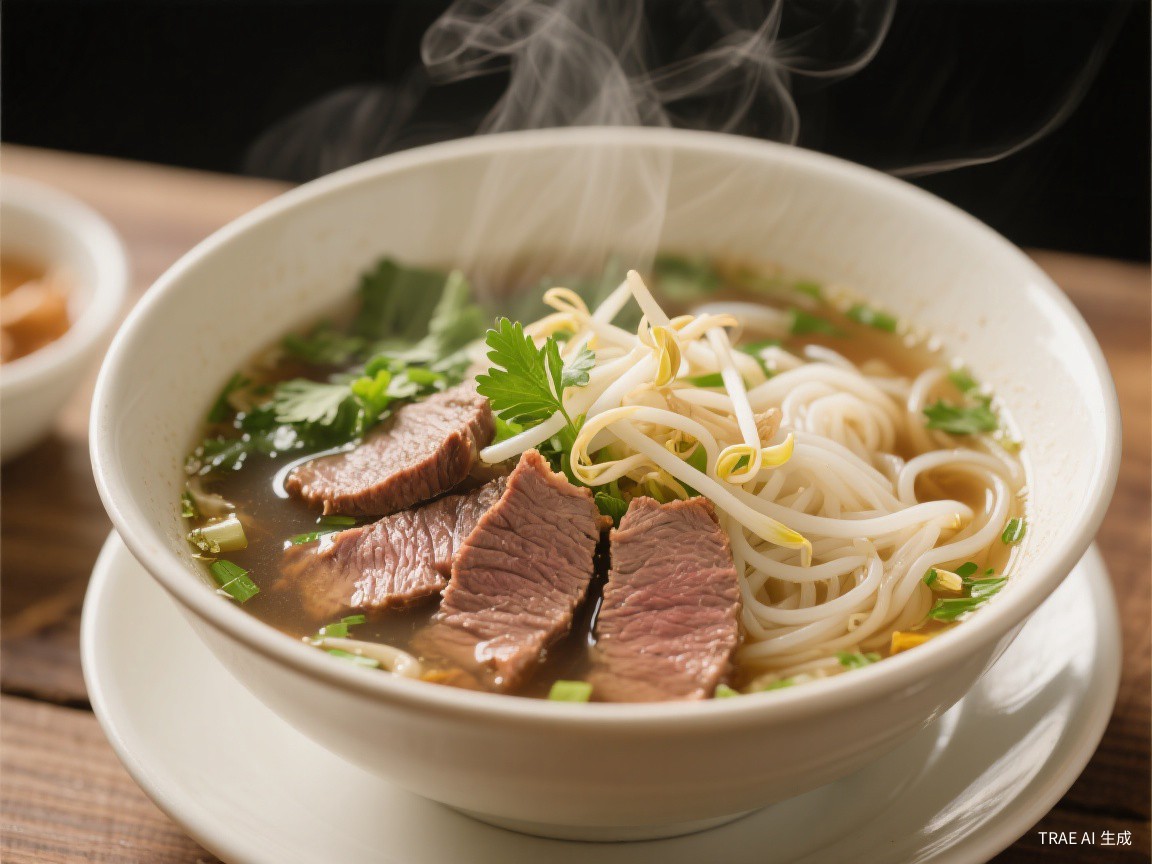
In Hanoi, pho garnishes are minimal—perhaps some sliced chili and a squeeze of lime. In Saigon, the garnish plate overflows with bean sprouts, Thai basil, sawtooth herb, cilantro, lime, and hoisin and sriracha on the side. Hai Phong takes yet another approach, offering garnishes that are distinctive to the region and perfectly calibrated to complement the richer broth and wider noodles.
The most characteristic Hai Phong garnish is cha que, or cinnamon pork sausage—a firm, slightly sweet pork patty flavored with cinnamon and five-spice powder, sliced and floated on top of the soup. This adds a textural contrast and a warming spice note that harmonizes beautifully with the aromatic broth. Other common garnishes include giò lụa (Vietnamese pork roll), sliced pork liver, and heart—all thinly sliced and arranged on top of the noodles before the broth is ladled over them.
What You Will Not Find
Notably absent from Hai Phong pho are the bean sprouts, Thai basil, and hoisin sauce that characterize southern-style pho. Hai Phong purists do not add herbs to their pho at all, preferring to let the carefully constructed flavors of the broth and garnishes speak for themselves. This restraint is characteristically northern, reflecting a culinary philosophy that values balance and intentionality over abundance.
The Quay: Fried Dough Stick Pairing
No bowl of Hai Phong pho is complete without a serving of quay—golden, puffy fried dough sticks that are essentially Vietnamese crullers. These are not merely a side item; they are an integral part of the Hai Phong pho experience. Dipped into the hot broth, the quay absorbs the liquid like a sponge, its crispy exterior softening just slightly while its interior remains light and airy. The contrast between the savory, aromatic broth and the mildly sweet, fried dough is one of the great pleasures of northern Vietnamese eating.
Quay are made from a simple dough of flour, water, yeast, and a touch of baking powder, shaped into narrow sticks and deep-fried until puffed and golden. They are sold fresh throughout Hai Phong's morning markets, and the best pho stalls have a constant supply arriving throughout the breakfast service. Eating quay with pho is a Hai Phong ritual as essential as dipping bread in olive oil is in Italy.
The Banh Da Cua Connection
Hai Phong's culinary fame extends beyond pho to another remarkable noodle dish: banh da cua, or crab noodle soup. This dish shares the wide banh da noodles with Hai Phong pho but features a tomato-based broth enriched with crab meat, pork, and field mushrooms. The broth is reddish-orange from the tomatoes, tangy and slightly sweet, with the crab providing a delicate sweetness that permeates every element of the dish.
Banh da cua is arguably Hai Phong's most iconic dish, and many visitors to the city seek it out specifically. But understanding it alongside Hai Phong pho reveals the full picture of the city's noodle culture—a culture that prizes wide, chewy noodles and complex, deeply flavored broths above all else. The two dishes are siblings, sharing DNA but expressing it in radically different ways.
Finding Authentic Hai Phong Pho
For travelers venturing to Hai Phong, the pho stalls are concentrated in the old city center, particularly around the markets near Lach Tray Street. The best bowls are served at small, family-run establishments that have been operating for decades, often with three generations of the same family working behind the counter. Breakfast is the traditional time for pho in Hai Phong, as it is throughout Vietnam, and the stalls begin serving before dawn, their fragrant broth already simmering since the previous evening.
For home cooks, recreating Hai Phong pho requires sourcing the right noodles and committing to the long, slow broth simmer that gives the dish its character. It is not a quick weeknight meal. But the reward is a bowl of soup that opens a window onto a regional cuisine that most of the world has yet to discover—one that is rich, satisfying, and utterly distinctive.
Ready to Explore Northern Vietnamese Cuisine?
Download our guide to regional Vietnamese pho styles with broth recipes, noodle guides, and garnish pairings.
Get the Free Guide