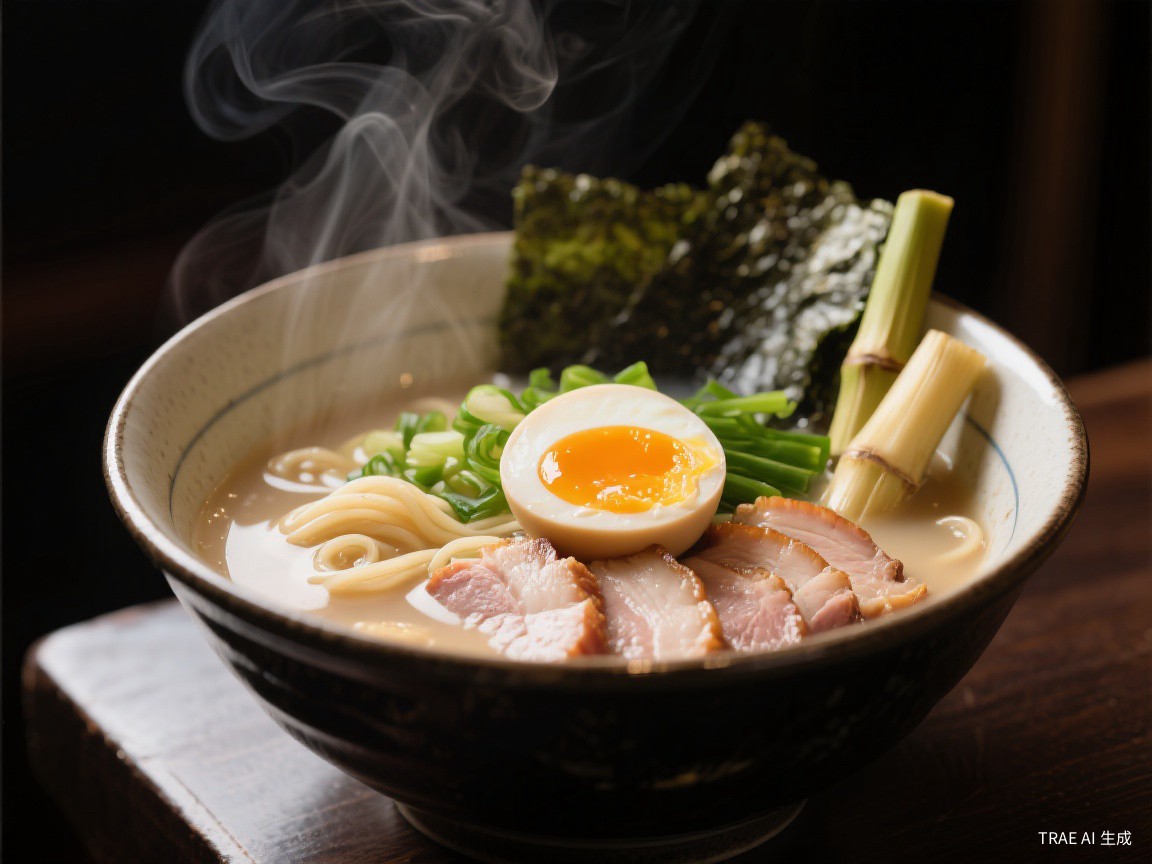
A perfect bowl of ramen is a symphony of components—rich broth, springy noodles, savory toppings, and aromatic seasonings working in harmony. While instant ramen has its place, true ramen mastery requires understanding each element and how they combine to create something greater than the sum of its parts.
The Soul: Understanding Ramen Broth
The broth is the heart of ramen, and different styles demand different approaches:
Tonkotsu (Pork Bone)
Cloudy, rich, and intensely savory. Made by boiling pork bones for 12-18 hours until the collagen breaks down and emulsifies into a creamy white broth. This is the style most associated with Hakata ramen.
Shoyu (Soy Sauce)
Clear, brown, and deeply flavored. A chicken or pork base seasoned with soy sauce, this Tokyo-style broth is lighter but no less complex. The soy sauce adds umami and a subtle sweetness.
Miso
Hokkaido's contribution to ramen culture. A robust, hearty broth enriched with miso paste, often including butter and corn as toppings. Perfect for cold winter nights.
Chef's Secret
For home cooks, a hybrid approach works well. Use store-bought chicken stock as a base, then enrich with pork bones or bacon for depth. Simmer for 4-6 hours rather than the traditional 18—your kitchen, your rules.
The Tare: Seasoning the Bowl
Tare is the concentrated seasoning added to the bowl before the broth. It's what actually flavors the soup—the broth provides body, but the tare provides character.
- Shoyu tare: Reduced soy sauce with mirin, sake, and aromatics
- Shio tare: Salt-based, often with seafood extracts
- Miso tare: Fermented soybean paste mixed with dashi and seasonings
The Noodles: Texture Matters
Ramen noodles contain kansui—alkaline mineral water that gives them their characteristic yellow color and springy texture. The thickness varies by style:
"Thin noodles for rich tonkotsu, thick noodles for miso, medium for shoyu. The noodle must match the broth—too thin, and it gets lost; too thick, and it overwhelms."
— Ivan Orkin, Ivan Ramen
For home cooking, fresh ramen noodles from Japanese markets are ideal. If unavailable, look for dried ramen noodles (not instant ramen blocks) or make your own with bread flour and baked baking soda as a kansui substitute.
Essential Toppings
Each topping serves a purpose in the bowl:
Chashu (Braised Pork Belly)
Melt-in-your-mouth pork belly, braised in soy sauce, sake, and aromatics. The fat renders into silky richness that melts into the broth.
Ajitama (Marinated Soft-Boiled Egg)
A perfectly jammy egg, marinated in soy sauce and mirin. The yolk should be custardy, the whites lightly seasoned.
Menma (Fermented Bamboo Shoots)
Crunchy, slightly sour, and deeply savory. Provides textural contrast to the soft noodles.
Nori and Scallions
Nori adds oceanic umami; scallions provide fresh bite and color. Both are essential finishing touches.
Assembly: The Final Steps
- Place tare in the bottom of your bowl
- Add a ladle of hot broth and mix
- Cook noodles until just done (they'll continue cooking in the hot broth)
- Drain well and add to the bowl
- Ladle more broth over the noodles
- Arrange toppings artfully on top
- Serve immediately—ramen waits for no one
The Golden Rule
Ramen must be eaten immediately after assembly. The noodles continue absorbing broth, so every minute of delay affects the final experience. Have everything ready before cooking the noodles, and eat quickly once served.
Start Your Ramen Journey
Download our complete guide to ramen components and timing.
Get the Free Guide