There is a particular kind of devotion required to wake at four in the morning, light a fire in a smoker, and commit the next twelve to fourteen hours to a single cut of meat. Pulled pork is not merely food in the American South—it is a ritual, a gathering point, and for the pitmasters who dedicate their lives to it, a calling. The magic lies in taking something tough and unyielding—specifically the pork shoulder, also known as the Boston butt—and through time, smoke, and patience, transforming it into something that shreds at the lightest touch of a fork.
Choosing the Right Cut
The foundation of great pulled pork begins at the butcher counter. The pork shoulder is a complex, well-exercised muscle group from the front leg of the pig, and it comes in two primary forms: the Boston butt and the picnic shoulder. The Boston butt is the upper portion, thicker and more marbled, while the picnic is the lower section with more connective tissue and a shank bone still attached. For most home cooks and competition pitmasters alike, the Boston butt is the preferred cut. Its higher fat content and more uniform shape make it forgiving to cook and consistently juicy.
When selecting your shoulder, look for a piece weighing between eight and ten pounds with the fat cap still intact. That layer of fat—typically a quarter to half inch thick—is not something to trim away aggressively. It acts as a protective blanket during the long cook, basting the meat from above as it renders slowly. You want to see good intramuscular marbling throughout the meat, visible as thin white streaks running through the pink flesh. This marbling will melt during cooking, keeping every fiber moist and flavorful.
Chef's Tip
Ask your butcher for a bone-in Boston butt. The bone conducts heat into the center of the roast and, more importantly, contributes collagen and minerals to the surrounding meat as it cooks. When the pork is done, the bone should slide out cleanly with zero resistance—that is your signal that perfection has been achieved.
The Great Regional Divide: North Carolina vs. Texas
Before you even think about seasoning, you need to understand that pulled pork in America is not a monolith. It is a dish shaped by geography, history, and fierce local pride. The two most iconic regional styles—Eastern North Carolina and Central Texas—represent fundamentally different philosophies about what barbecue should be.
Eastern North Carolina: Vinegar and Fire
In the coastal plains of North Carolina, pulled pork is defined by its sauce: a thin, tangy, vinegar-based concoction that cuts through the richness of the pork with startling acidity. The traditional Eastern Carolina sauce contains apple cider vinegar, red pepper flakes, a touch of sugar or honey, and sometimes a dash of hot sauce. There is no tomato, no molasses, no thick sweetness—just sharp, clean acidity that makes your lips tingle and your mouth water for the next bite.
The meat itself is typically seasoned with nothing more than salt, pepper, and perhaps a little cayenne before going on the smoker. The philosophy here is that the smoke and the pork should speak for themselves, while the vinegar sauce provides contrast and brightness. Whole hogs are the traditional choice in this region, but the approach works beautifully on Boston butt as well.
Central Texas: Rub and Smoke
Head west to the hill country around Austin, and you will find a completely different animal—sometimes literally. Texas barbecue is more closely associated with beef brisket, but when Texans do make pulled pork, they bring the same dry-rub-heavy philosophy. A typical Texas-style rub for pork shoulder includes coarse salt, cracked black pepper, garlic powder, onion powder, paprika, and sometimes a pinch of brown sugar for bark formation. The sauce, if any is used at all, is a thin tomato-based mop applied sparingly during the final hour of cooking.
"Barbecue is not a recipe. It is a conversation between fire, meat, and time. The best pitmasters don't control that conversation—they listen to it."
— Ed Mitchell, Whole Hog Pitmaster
Building Your Dry Rub
A great dry rub is like a spice cabinet in miniature—every ingredient plays a specific role. The foundation is always salt and sugar in roughly equal parts, with sugar serving double duty as a flavor enhancer and the primary agent in bark formation. That dark, caramelized crust on the exterior of smoked pork shoulder—known in barbecue circles as "the bark"—is largely the result of the Maillard reaction between the sugars in your rub and the proteins on the meat's surface.
Beyond the foundation, a well-constructed rub might include smoked paprika for color and subtle sweetness, garlic and onion powders for savory depth, ground cumin for an earthy warmth, and cayenne pepper for a slow-building heat that lingers on the palate. Some pitmasters add coffee grounds to their rub—the bitterness of roasted coffee mirrors the bitterness of char and creates a remarkably complex bark. Others swear by a tablespoon of cocoa powder, which adds an almost imperceptible richness that people notice but cannot quite identify.
A Versatile Rub Recipe
- 1/4 cup dark brown sugar: Provides sweetness and promotes bark formation
- 2 tablespoons kosher salt: The essential flavor amplifier and moisture retainer
- 1 tablespoon smoked paprika: Adds color and a whisper of smoke even before the wood chips
- 1 tablespoon garlic powder: Savory backbone that permeates the meat during the long cook
- 1 tablespoon onion powder: Sweet and aromatic, complementing the natural sweetness of pork
- 1 teaspoon ground black pepper: Sharp heat that balances the sugar
- 1 teaspoon cayenne pepper: Optional, for those who like a gentle warmth
- 1 teaspoon ground cumin: Earthy depth that rounds out the flavor profile
Smoking Techniques That Make the Difference
The smoker is your instrument, and like any instrument, it requires practice to play well. Whether you are using a dedicated offset smoker, a kamado-style ceramic grill, or even a standard kettle grill rigged for indirect heat, the principles remain the same: maintain a consistent low temperature, introduce clean smoke, and resist the urge to check on the meat every thirty minutes.
The target temperature for smoking pork shoulder is between 225 and 250 degrees Fahrenheit. At this range, the collagen in the meat—tough connective tissue that makes the shoulder chewy when cooked quickly—slowly breaks down into gelatin. This conversion is the entire point of the long cook. It typically begins in earnest around 160 degrees internal temperature and continues until the meat reaches approximately 203 degrees, the widely accepted target for perfectly tender pulled pork.
Wood Selection Matters
The wood you choose to burn is not a minor detail—it defines the flavor profile of your finished product. Hickory is the classic choice for pork, offering a strong, bacon-like smokiness that pairs naturally with the meat. Apple wood provides a milder, sweeter smoke that is particularly well-suited to the vinegar-based sauces of the Carolinas. Cherry wood contributes beautiful color to the bark along with a fruity sweetness. Many experienced pitmasters blend two or three woods—hickory for backbone, apple for sweetness, and a handful of oak chunks for long, clean burn times.
Avoid softwoods entirely. Pine, cedar, and fir contain resins that produce acrid, bitter smoke and can make your meat taste like you cooked it over a campfire made of lumber scraps. Stick with hardwoods and fruitwoods, and always use seasoned wood that has been drying for at least six months.
The Stall and How to Push Through It
Every pitmaster who has ever cooked a pork shoulder has encountered the stall. Around 150 to 170 degrees internal temperature, the meat's temperature will plateau—sometimes for four to six hours—refusing to climb despite the smoker humming along at a steady 240 degrees. This phenomenon occurs because moisture evaporating from the meat's surface cools it, much like sweat cools your skin on a hot day.
The stall is where many beginners panic, crank up the heat, and end up with tough, dry pork. Patience is the answer. Alternatively, you can employ the "Texas crutch"—wrapping the shoulder tightly in aluminum foil or butcher paper once it hits the stall. This traps moisture and heat, pushing the internal temperature upward more quickly. Butcher paper is preferred by competition pitmasters because it allows the meat to breathe slightly, preserving bark texture while still accelerating the cook.
Chef's Tip
After wrapping and pushing through the stall, let the pork shoulder rest for at least one hour—two is better—before shredding. During the rest, the internal temperature drops slightly and the juices redistribute throughout the meat. Shred too soon, and those juices will pool on your cutting board instead of staying in every succulent strand of pork.
Serving Suggestions and Pairings
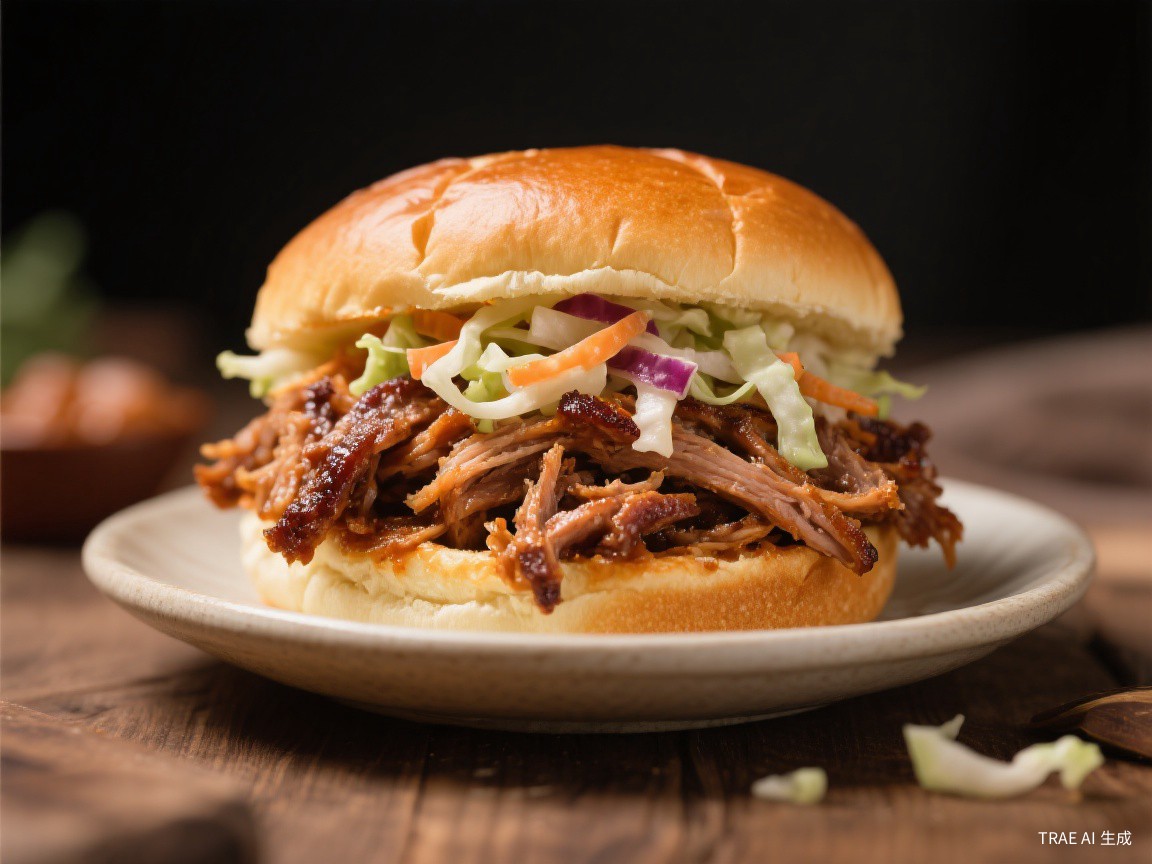
Pulled pork demands the right stage. A soft, slightly sweet brioche bun is the gold standard, though toasted potato rolls have their devoted following. The bun should be sturdy enough to hold the meat without collapsing, but tender enough that it does not compete texturally. Slaw is non-negotiable in the Carolinas—a crisp, vinegar-dressed cabbage slaw provides the crunch and acidity that balance the rich, smoky meat. In Texas, you might find it served with pickled red onion and jalapeno slices instead.
For sides, baked beans slow-cooked with molasses and bacon, creamy macaroni and cheese, and cornbread with honey butter form the classic trinity. A cold beer—preferably a crisp lager or a slightly sweet amber ale—is the traditional accompaniment, though sweet tea holds its own in the South. Whatever you serve, remember that pulled pork at its best is a communal experience, meant to be piled high on a platter and shared with people you love.
Storing and Reheating
- Refrigerate promptly: Wrapped tightly, pulled pork keeps for four to five days in the refrigerator
- Freeze with juices: Store portions with some of the cooking juices for up to three months
- Reheat gently: Use a low oven (250 degrees Fahrenheit) with a splash of apple juice or broth to restore moisture
- Avoid the microwave: It heats unevenly and will make the edges tough and dry
- Plan for leftovers: Pulled pork freezes beautifully and makes incredible tacos, nachos, and breakfast hashes
Ready to Smoke Your Best Pork Yet?
Download our complete pulled pork guide with temperature charts, wood pairing guides, and competition-level sauce recipes.
Get the Free Guide