Ratatouille is more than a vegetable stew—it's a celebration of Provencal summer on a plate. This iconic French dish transforms eggplant, zucchini, peppers, and tomatoes into something far greater than the sum of its parts. When done right, ratatouille captures the essence of the Mediterranean: sun-ripened vegetables, aromatic herbs, and the simple pleasure of ingredients treated with respect.
The Origins of Ratatouille
Ratatouille was born in Nice, the jewel of the French Riviera, where the Mediterranean climate produces an abundance of vegetables throughout the long, warm summers. The name comes from the French verb "touiller," meaning to stir or toss, reflecting the rustic origins of this peasant dish. Originally, it was a way for farmers to use up their vegetable surplus, cooked slowly until everything melded into a harmonious whole.
For most of its history, ratatouille was a humble country dish, hardly known outside Provence. That changed in the 20th century as Provencal cuisine gained recognition, and the 2007 Pixar film introduced the name to millions worldwide. Today, ratatouille appears on menus from Paris to Tokyo, though the best versions still come from home kitchens in the south of France.
Chef's Tip
Use vegetables of similar diameter for the most visually appealing presentation. If your eggplant is much larger than your zucchini, cut the eggplant slices in half to create uniform pieces.
The Essential Vegetables
Traditional ratatouille includes four main vegetables: eggplant, zucchini, bell peppers, and tomatoes. Each plays a crucial role in the final dish. Eggplant provides a meaty texture and absorbs flavors beautifully. Zucchini adds sweetness and tender bite. Peppers contribute color and a subtle bitterness that balances the other flavors. Tomatoes form the saucy base that binds everything together.
Selecting quality vegetables is paramount. Look for firm, glossy eggplant with no soft spots. Zucchini should be small to medium-sized—large ones tend to be watery and bland. Peppers should feel heavy for their size with taut skin. And the tomatoes should be fully ripe but not mushy, with deep color and an aromatic scent.
Vegetable Selection Guide
- Eggplant: Italian or Globe varieties work best; avoid over-mature specimens with many seeds.
- Zucchini: Small to medium size; dark green skin indicates freshness.
- Bell peppers: Red, yellow, or orange for sweetness; green for a more vegetal note.
- Tomatoes: Roma or San Marzano for sauce; round tomatoes for the layered version.
- Onions: Yellow or red, adding sweetness and depth.
Two Schools of Preparation
There are two main approaches to ratatouille, each with its advocates. The traditional method involves cooking each vegetable separately, then combining them at the end. This preserves the distinct texture and flavor of each ingredient. The vegetables maintain their integrity, creating a rustic dish with clear vegetable pieces in a rich tomato base.
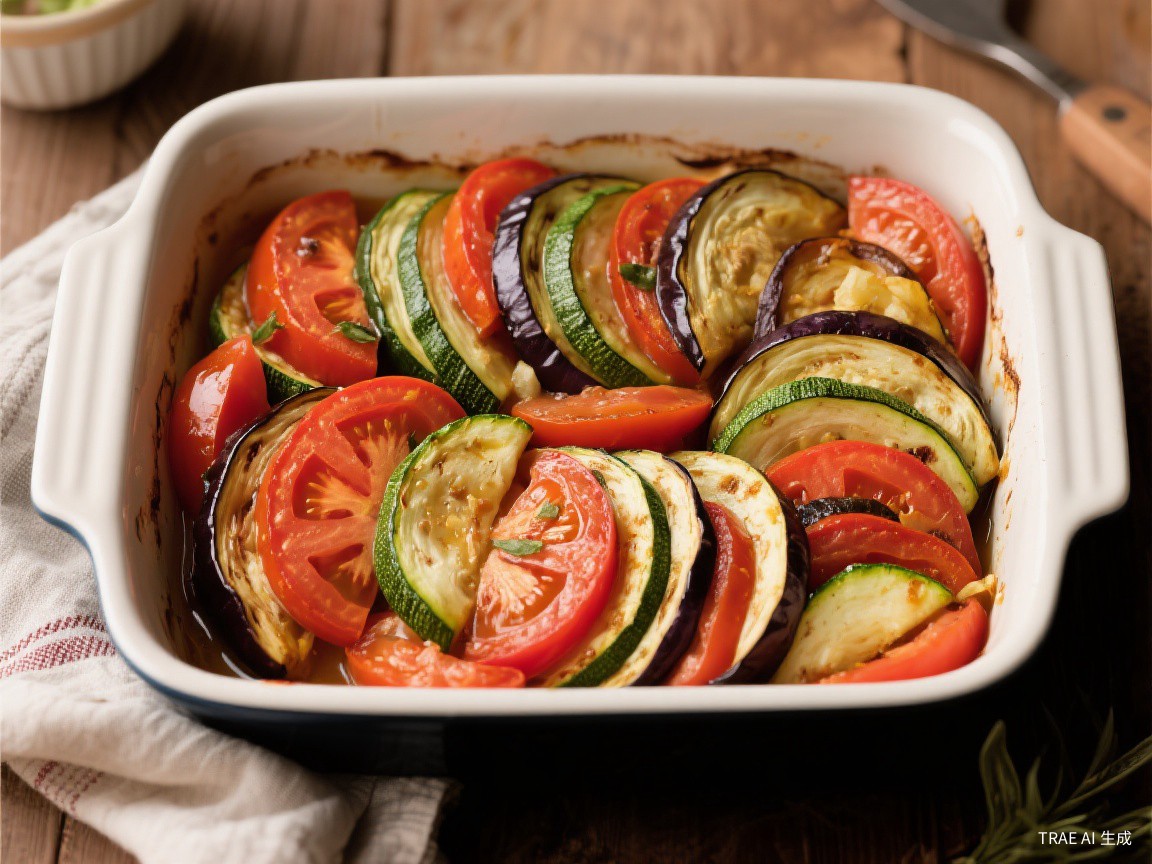
The more modern approach, popularized by the film, arranges thinly sliced vegetables in overlapping rows over a tomato-pepper sauce. This "confit byaldi" style creates an elegant presentation that's as beautiful as it is delicious. The vegetables cook together, their flavors mingling while each slice remains distinct.
"Ratatouille is a dish that teaches patience. The vegetables need time to release their moisture, absorb the herbs, and become tender without turning to mush. Rush the process, and you'll miss the magic."
— Chef Michel Guerard
The Herb Blend: Herbes de Provence
No ratatouille is complete without the aromatic blend known as herbes de Provence. This mixture typically includes thyme, rosemary, oregano, marjoram, and lavender, though recipes vary. The herbs infuse the vegetables with the scents of the Mediterranean countryside, transforming simple produce into something evocative of place.
For the best flavor, use fresh herbs when possible. Fresh thyme and rosemary can be scattered throughout the dish, while dried herbes de Provence works well for longer cooking. Basil should be added at the very end—its delicate flavor dissipates with heat. A bay leaf or two added during cooking and removed before serving adds subtle depth.
The Traditional Method
For classic ratatouille, begin by sautéing each vegetable separately in olive oil. Start with the eggplant, which needs the most cooking time to become tender. Then cook the peppers, followed by the zucchini. Finally, prepare a tomato-onion base that will hold everything together. Combine all the vegetables in a large pot, add your herbs, and simmer gently until the flavors meld.
This method takes time but rewards patience. The vegetables retain their individual characters while absorbing the collective flavors. The texture should be tender but not mushy—each bite should offer a variety of textures and tastes. Serve at room temperature for the best flavor, allowing the vegetables to express themselves fully.
Step-by-Step Traditional Ratatouille
- Prep vegetables: Cut into uniform pieces for even cooking.
- Cook eggplant: Until golden and tender, about 10 minutes.
- Cook peppers: Until softened, about 8 minutes.
- Cook zucchini: Briefly, just until tender-crisp.
- Make tomato base: Sauté onions, add tomatoes, simmer until thickened.
- Combine: Add all vegetables to tomato base with herbs.
- Simmer: Low heat for 20-30 minutes until flavors meld.
The Elegant Layered Version
For the stunning presentation seen in restaurants, prepare a pepper-tomato sauce and spread it in the bottom of your baking dish. Slice all vegetables uniformly thin—about 1/8 inch thick. Arrange them in overlapping rows, alternating colors for visual impact. Drizzle with olive oil, sprinkle with herbs, and bake at a low temperature until the vegetables are tender and the top is slightly caramelized.
This method requires more precision but creates a dish worthy of a dinner party centerpiece. The key is uniform slicing—a mandoline makes quick work of this task. The vegetables should overlap by about half their width, creating a beautiful pattern while ensuring even cooking. Cover the dish for the first hour of baking, then uncover for the final 30 minutes to achieve a light caramelization.
Serving Suggestions
Ratatouille is remarkably versatile. Serve it warm as a side dish to grilled meats or fish. At room temperature, it makes an excellent addition to a summer buffet. Cold, it works as a salad or sandwich filling. Leftovers improve after a day in the refrigerator, as the flavors continue to develop.
For a complete Provencal meal, pair ratatouille with a simple roast chicken or a piece of grilled fish. A crusty baguette is essential for soaking up the flavorful juices. A glass of rose from Provence or a light red like Cotes du Rhone complements the Mediterranean flavors beautifully.
Variations and Adaptations
While the classic combination remains beloved, ratatouille welcomes variations. Some cooks add garlic liberally; others insist it overpowers the vegetables. A splash of red wine in the tomato base adds depth. Some recipes include olives or capers for briny contrast. These variations show how the basic concept adapts to different tastes while maintaining its essential character.
For a heartier version, add chickpeas or white beans. For a richer dish, include a sprinkle of grated Gruyere before serving. Confit byaldi, the elegant version popularized by chef Michel Guerard, uses a more refined technique but the same essential ingredients. However you prepare it, ratatouille remains a celebration of summer's bounty.
Ready to Master French Vegetable Cookery?
Download our complete guide to Provencal cuisine, with recipes for ratatouille, tapenade, and more Mediterranean classics.
Get the Free Guide