Of all the dishes in the Greek culinary canon, moussaka is perhaps the most misunderstood—and the most rewarding to master. To the outside world, it is simply "that eggplant casserole," a hearty baked dish found in every Greek restaurant from Athens to Adelaide. But within Greece, moussaka is a source of regional pride, familial tradition, and surprisingly fierce debate. It is a dish that carries centuries of history in its layers, and understanding those layers is the key to making it truly well.
The Man Who Invented Modern Moussaka
The moussaka the world knows today—the grand, layered casserole with its golden bechamel crown—is largely the invention of one man: Nikolaos Tselementes. Born in 1878 on the island of Sifnos, Tselementes trained as a chef in Vienna and later worked in some of the finest kitchens in Europe before returning to Greece in the early twentieth century. He was, by all accounts, a man caught between two culinary worlds—the rustic, olive-oil-rich traditions of his homeland and the refined, sauce-driven techniques of French cuisine.
Tselementes's great contribution was marrying these two traditions. He took the existing concept of moussaka—a dish with roots in the Arab and Ottoman culinary traditions, where layered eggplant and meat preparations were common throughout the eastern Mediterranean—and reimagined it with French technique. The most significant addition was the bechamel sauce, that luxurious white sauce of butter, flour, and milk that forms the distinctive top layer of the modern Greek moussaka. Before Tselementes, Greek moussaka existed, but it was a simpler affair: layered eggplant and meat, sometimes with a tomato sauce, baked until tender but lacking the creamy crown that defines the dish today.
His 1920s cookbook, "Odigos Mageirikis" (Cooking Guide), became the most influential cookbook in Greek history, standardizing recipes for a nation still defining its culinary identity after centuries of Ottoman rule. Tselementes's version of moussaka became the standard, and it remains so to this day—though not without controversy. Some Greek food purists argue that his French influence diluted authentic Greek cooking, replacing the clean, bright flavors of the Mediterranean with heavy, butter-laden sauces. The debate continues, but the dish endures.
"Tselementes did not destroy Greek cooking. He gave it a new vocabulary. Whether you use that vocabulary or not, you must respect the fluency with which he spoke it."
— Chef Sofia
The Ottoman Connection
The word "moussaka" itself is of Arabic origin, derived from "musaqqa'a," meaning "chilled" or "made cold"—a reference to the fact that early versions of the dish were often served at room temperature. The Ottoman Empire, which ruled Greece for nearly four centuries, brought this culinary tradition to the region, along with countless other dishes that would become woven into the fabric of Greek cooking.
Throughout the Levant and the broader Middle East, variations of moussaka persist to this day. In Turkey, "musakka" is a simpler layered dish of eggplant, tomatoes, and ground meat, often served without the bechamel topping. In Lebanon and Syria, moussaka is typically a stew of eggplant, chickpeas, and tomatoes, served warm with pita bread. The Egyptian version layers eggplant with a spiced meat sauce and a bechamel-like topping, bearing the closest resemblance to the Greek interpretation. These variations remind us that moussaka is not exclusively Greek—it is a shared dish, claimed by many cultures, each one making it their own.
The Eggplant: Salting, Frying, and Patience
Eggplant is the backbone of moussaka, and treating it properly is the single most important step in the entire recipe. Raw eggplant acts like a sponge, absorbing oil voraciously during frying and becoming greasy and heavy. The traditional solution is salting: slicing the eggplant into half-inch rounds, sprinkling both sides generously with salt, and letting them rest for thirty to forty-five minutes on a rack or layered between paper towels.
During this time, the salt draws moisture out of the eggplant through osmosis. You will see beads of liquid form on the surface. This moisture, if left in place, would cause the eggplant to absorb excessive oil during frying. After salting, rinse the slices thoroughly under cold water to remove excess salt, then press them firmly between clean towels to extract as much remaining moisture as possible. Some modern cooks skip this step, arguing that contemporary eggplant varieties are less bitter than their predecessors, but I have never regretted taking the time to salt. The difference in texture is remarkable—salted eggplant fries up golden and tender with far less oil, and the final moussaka is lighter and more refined.
Chef's Tip
Instead of frying the eggplant slices in a generous amount of oil, try brushing them lightly with olive oil and roasting them at 400 degrees Fahrenheit for twenty to twenty-five minutes, flipping once. This produces eggplant that is tender and slightly caramelized with a fraction of the oil. The flavor is arguably better than fried, and the cleanup is considerably easier. My yiayia would disapprove, but even she admitted the roasted version was delicious when I finally convinced her to try it.
The Meat Sauce: Lamb, Beef, or Both
The meat layer of moussaka is where regional and personal preferences diverge most sharply. In mainland Greece, particularly in the north where sheep farming is common, lamb is the traditional choice and is considered by many to be the most authentic. Ground lamb provides a richness and a subtle gaminess that pairs beautifully with eggplant and tomato. In southern Greece and the islands, where lamb is less abundant, beef is more commonly used, and many modern Greek cooks use a mixture of the two—typically half beef, half lamb—to balance the lamb's assertiveness with the beef's milder flavor.
The meat sauce itself is a slow-simmered affair. Ground meat is browned in olive oil, then onions and garlic are added until softened. Crushed tomatoes or tomato paste provides the acidic backbone, and the sauce is seasoned with cinnamon, allspice, and sometimes a pinch of clove—spices that reflect Greece's historical position at the crossroads of Europe and the Middle East. A bay leaf, a sprig of fresh oregano, and a splash of red wine round out the flavor. The sauce should simmer for at least thirty to forty minutes, reducing and concentrating until it is thick, rich, and deeply savory.
The Bechamel: Greece's French Crown
The bechamel sauce is what elevates Greek moussaka from a simple baked casserole to something approaching grandeur. A classic French bechamel—butter, flour, and milk, whisked smooth and cooked until thick—is the starting point, but the Greek version adds two crucial ingredients: egg yolks and grated cheese, typically kefalotyri or a sharp Gruyere. The egg yolks, tempered with a ladleful of hot milk mixture before being stirred back into the sauce, add richness and help the bechamel set into a firm, sliceable layer during baking. The cheese adds depth and a golden crust.
Making bechamel requires attention and confidence. The butter and flour must cook together for at least two minutes to remove the raw flour taste—a step called "cooking out the roux." The milk must be added gradually, whisking constantly to prevent lumps. And the sauce must be stirred continuously as it thickens, scraping the bottom and corners of the pan to prevent scorching. A pinch of nutmeg, traditional in both French and Greek bechamel, adds a warm, aromatic note that many people cannot identify but would miss if it were absent.
Assembling the Layers
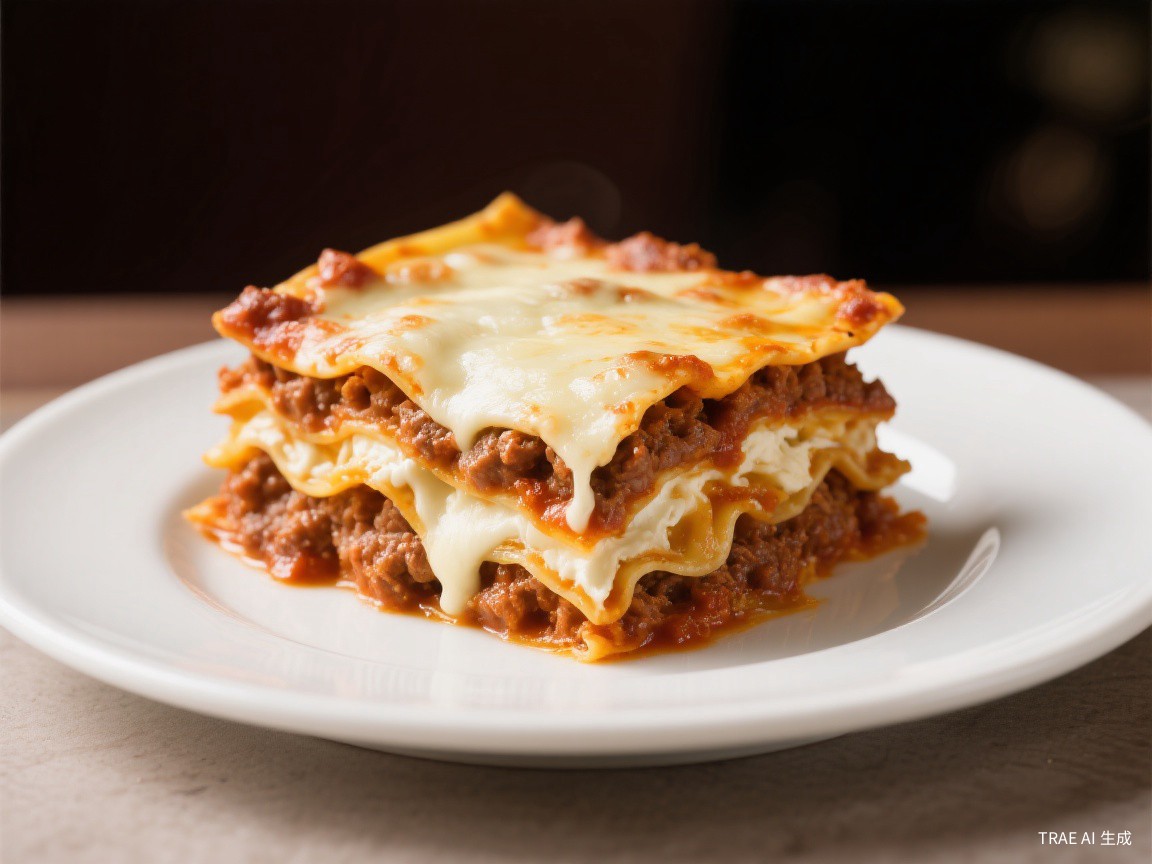
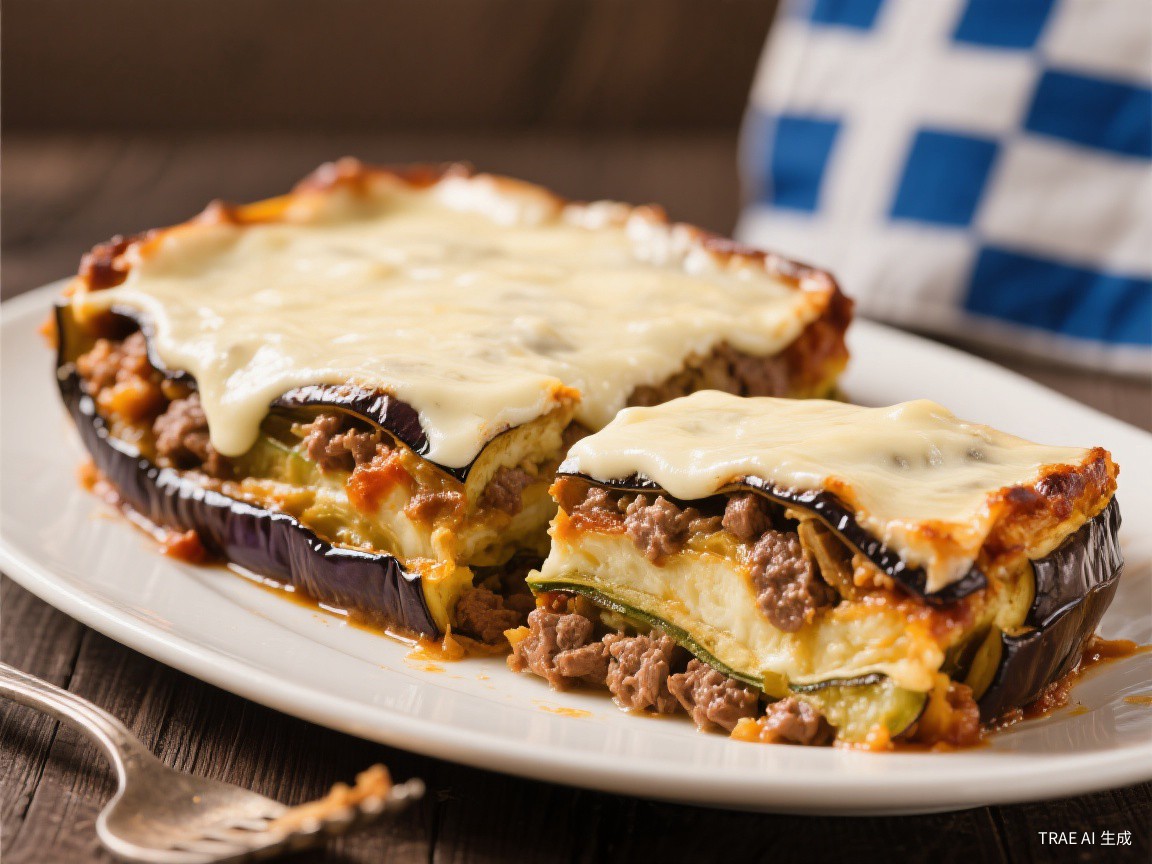
The assembly of moussaka is where patience and precision converge. In a well-buttered baking dish, the layers are built as follows: a base layer of eggplant slices, overlapping slightly to cover the bottom completely; a generous layer of the meat sauce, spread evenly; a second layer of eggplant; a second layer of meat sauce; and finally, the bechamel, poured over the top and smoothed with a spatula. Some cooks add a layer of sliced potatoes between the eggplant and meat, which adds bulk and a pleasant textural contrast, though this is more common in northern Greece and less traditional in the south.
- Layer one: Eggplant slices, overlapping, covering the bottom of the dish
- Layer two: Meat sauce, spread evenly to the edges
- Layer three: Second layer of eggplant slices
- Layer four: Remaining meat sauce
- Layer five: Bechamel sauce, smoothed to an even layer on top
Serving Temperature and the Art of Reheating
Here is a truth about moussaka that surprises many people: it is almost always better the next day. Like lasagna and many other layered casseroles, moussaka benefits enormously from resting. When freshly baked, the layers have not yet fully set, and slicing produces a messy, sliding affair. After refrigerating overnight, the bechamel firms, the meat sauce congeals, and the eggplant layers hold their shape, producing clean, beautiful slices that hold together on the plate.
To reheat, cover the moussaka with foil and warm it in a 350-degree Fahrenheit oven for thirty to forty minutes, until heated through. Remove the foil for the last ten minutes to re-crisp the bechamel surface. Avoid the microwave—it will make the bechamel soggy and the eggplant rubbery. In Greece, moussaka is typically served warm, not piping hot, often accompanied by a simple green salad dressed with olive oil and red wine vinegar and a slice of crusty bread.
Common Mistakes to Avoid
- Skipping the eggplant salting step: This leads to greasy, oil-soaked eggplant that makes the entire dish heavy.
- Under-seasoning the meat sauce: The cinnamon and allspice are not optional—they define the Greek flavor profile.
- Rushing the bechamel: Lumpy, undercooked bechamel will ruin the texture of the top layer.
- Slicing while too hot: Let the moussaka rest for at least twenty minutes before cutting.
- Using low-fat milk in the bechamel: Whole milk is essential for the proper richness and consistency.
A Dish of Many Homes
Moussaka is, at its core, a dish about layers—not just the physical layers of eggplant, meat, and sauce, but the cultural layers of the civilizations that have shaped the eastern Mediterranean. The Arabs gave it a name. The Ottomans spread it across their empire. The French gave it a crown. And the Greeks made it their own, transforming it into one of the most recognizable dishes in the world. Every time you make moussaka, you are participating in a culinary tradition that spans centuries and continents—and that, I think, is a beautiful thing worth savoring.
Ready to Master Moussaka?
Download our complete recipe with layering diagrams, timing guides, and variations including a vegetarian moussaka with lentils and mushrooms.
Get the Free Recipe