There is a particular shade of green that exists only in a properly made salsa verde—a vivid, almost electric hue that comes from roasted tomatillos, charred serrano chiles, and fresh cilantro, all blitzed together while still warm. When that salsa is combined with cream and poured over rolled tortillas filled with shredded chicken, the result is enchiladas suizas: one of Mexico's most beloved and misunderstood dishes. Misunderstood, because the name suggests a European origin. Beloved, because one bite tells you everything you need to know about why it has endured for nearly a century.
The Sanborn's Legend
The story of enchiladas suizas begins in a specific place and time: Mexico City, in the early twentieth century, at a restaurant called Sanborn's. Founded in 1904 by two American brothers, Walter and Frank Sanborn, Sanborn's started as a pharmacy and soda fountain in the historic center of Mexico City before evolving into one of the city's most iconic restaurants. Its location in the House of Tiles—a stunning eighteenth-century building covered in blue and white Puebla ceramic tiles—gave it an air of grandeur that attracted both Mexican elites and international visitors.
It was at Sanborn's that enchiladas suizas were reportedly invented, though the word "invented" requires some qualification. Enchiladas themselves are ancient—a dish of rolled, sauced tortillas that predates the Spanish conquest by centuries. The Aztecs and other Mesoamerican peoples ate tortillas dipped in chile sauces, and the concept of filling and rolling them evolved naturally over time. What Sanborn's did was something new: they took the traditional enchilada and gave it a creamy, dairy-based sauce inspired by European cooking, creating a dish that felt simultaneously Mexican and international.
Why "Swiss"? The Name Explained
The name "suizas," meaning "Swiss," refers not to Switzerland itself but to the Swiss-style cream and cheese that distinguish these enchiladas from their traditional Mexican counterparts. In the early twentieth century, Mexican cuisine was experiencing a wave of European influence, particularly French and Swiss. Dairy products like cream and certain cheeses were associated with European sophistication, and incorporating them into traditional Mexican dishes was seen as a mark of refinement. The name was a nod to this European inspiration—a way of signaling that these were not ordinary enchiladas but something elevated and modern.
The irony, of course, is that enchiladas suizas are now considered thoroughly, authentically Mexican. They have been adopted, adapted, and claimed by generations of Mexican cooks, and they appear on menus from Tijuana to Cancun. The European influence that once defined them has been so thoroughly absorbed into the fabric of Mexican cooking that it is now invisible—a seamless part of a cuisine that has always been remarkably open to outside influences while remaining stubbornly, defiantly its own.
"Enchiladas suizas are proof that Mexican cuisine has never been afraid of borrowing, transforming, and making something entirely new. The best food cultures in the world are the ones that are not afraid to evolve."
— Chef Elena
The Tomatillo: Mexico's Green Gold
The soul of enchiladas suizas is the salsa verde, and the soul of salsa verde is the tomatillo. Tomatillos—sometimes called husk tomatoes or tomates verdes in Spanish—are not green tomatoes, despite the common misconception. They are an entirely different species, Physalis philadelphica, related to the cape gooseberry rather than the tomato. Their flavor is brighter, more acidic, and more herbaceous than that of a tomato, with a distinctive tartness that defines the character of any salsa verde.
Selecting good tomatillos is straightforward but important. Look for husks that are intact and papery, not shriveled or moldy. The fruit inside should feel firm and fill the husk reasonably well—tomatillos that are too small for their husks tend to be underripe and excessively tart. The ideal tomatillo has a bright green color, though slightly yellowish ones are fine and will be a bit sweeter. Avoid any with dark spots or soft patches.
The Art of Roasting Tomatillos
The difference between a good salsa verde and a great one lies almost entirely in how the tomatillos are cooked. Boiling them is quick and easy, but it dilutes their flavor and produces a thinner, less complex sauce. Roasting—whether under a broiler, on a dry comal, or over an open flame—is the method that transforms tomatillos from merely tart into something extraordinary.
Under a broiler, tomatillos should be placed cut-side down on a sheet pan and roasted at high heat for eight to twelve minutes, until their skins are blackened and blistered and the flesh beneath has softened and turned a deeper, olive-tinged green. The charring introduces smoky, caramelized notes that add depth to the salsa, balancing the tomatillos' natural acidity. Serrano or jalapeno chiles should be roasted alongside them, their skins blistering and blackening until fragrant.
Chef's Tip
After roasting, do not discard the juices that accumulate on the sheet pan. Those caramelized, concentrated juices are packed with flavor. Scrape them into the blender along with the roasted tomatillos and chiles. This small act of kitchen thriftiness is what separates a salsa that tastes merely good from one that tastes like it came from a skilled cook's kitchen. My mother always did this, and she would scold me if she caught me pouring those juices down the drain.
The Cream: Crema vs. Sour Cream
The defining characteristic of enchiladas suizas is the creamy sauce—a blend of salsa verde and dairy that gives the dish its luxurious, velvety texture. In Mexico, the dairy of choice is crema, specifically crema Mexicana or crema fresca. This is not the same as American sour cream, and understanding the difference is crucial for authentic results.
Crema Mexicana is a naturally sweet, slightly tangy cream with a consistency somewhere between heavy cream and sour cream—it pours easily but coats the back of a spoon. Its flavor is mild and slightly buttery, with far less acidity than sour cream. When heated, it does not curdle easily, making it ideal for sauces. Sour cream, by contrast, is thicker, more acidic, and more prone to breaking when heated. If crema is unavailable, a mixture of equal parts heavy cream and sour cream provides a reasonable approximation—the heavy cream tempers the sour cream's acidity and improves its behavior when heated.
The sauce itself is straightforward: the roasted salsa verde is blended until smooth, then combined with crema in a saucepan and warmed gently over medium-low heat. Some recipes add a small amount of chicken broth to thin the sauce to a pourable consistency. The goal is a sauce that is vibrant green, creamy but not heavy, and bright with the flavor of roasted tomatillos and chiles. It should coat the enchiladas generously without drowning them.
The Tortilla: Softening Without Sogging
The tortilla is the vessel, and getting it right is essential. Corn tortillas—not flour—are the only acceptable choice for enchiladas suizas. Their earthy, slightly sweet flavor and pliable texture are integral to the dish. Flour tortillas, while delicious in their own context, would make the enchiladas heavy and cloying, their neutral flavor contributing nothing to the balance of the dish.
The critical technique is softening the tortillas before filling and rolling them. Stiff, cold tortillas will crack when you try to roll them, creating leaks and an unappetizing presentation. The traditional method is to briefly fry them in a shallow pool of warm oil—just a few seconds per side—until they are pliable and slightly blistered but not crisp. This not only softens the tortillas but also creates a subtle seal that helps them hold together during baking and prevents the sauce from making them excessively soggy.
A lighter alternative is to warm the tortillas on a dry comal or skillet, then dip them briefly in warm salsa verde before filling. This method eliminates the oil entirely and infuses the tortillas with flavor from the sauce, but it produces a softer, more delicate enchilada that requires more careful handling. Both methods are legitimate; the choice depends on whether you prefer a slightly richer, more structured result or a lighter, more delicate one.
The Chicken Filling
The traditional filling for enchiladas suizas is shredded chicken, and the best chicken for this purpose is chicken that has been poached—simmered gently in water with aromatics until tender and easily shredded. A whole chicken cut into pieces, or bone-in chicken breasts and thighs, poached with onion, garlic, a bay leaf, and salt, produces meat that is moist, flavorful, and perfectly textured for enchiladas. The poaching liquid, strained and reduced, makes an excellent base for rice or soup, ensuring nothing is wasted.
The shredded chicken should be seasoned lightly—salt, a squeeze of lime juice, perhaps a pinch of cumin and some finely chopped white onion. It should not be heavily seasoned, as the sauce provides most of the dish's flavor. Over-seasoning the filling creates a competition between the chicken and the salsa that neither wins. The chicken is a supporting player; the sauce is the star.
- Queso fresco: Mild, crumbly, slightly salty—the traditional topping for enchiladas suizas
- Cotija: Aged, firm, strongly flavored—use sparingly as an accent, not a blanket
- Queso panela: Fresh, squeaky texture, mild flavor—good for filling as well as topping
- Queso Oaxaca: Melting cheese similar to mozzarella—excellent inside the tortilla
Queso Fresco vs. Cotija: The Cheese Question
The cheese that crowns enchiladas suizas is almost always queso fresco—a fresh, white, crumbly Mexican cheese with a mild, slightly salty flavor and a texture that ranges from soft to firm depending on the brand and age. Queso fresco does not melt when heated, which means it retains its crumbly, bright appearance on top of the baked enchiladas, providing a visual and textural contrast to the creamy sauce. Its mildness is an asset here, complementing the tangy salsa verde without competing with it.
Cotija, another common Mexican cheese, is a different creature entirely. Named after the town of Cotija in Michoacan, it is an aged, firm, strongly flavored cheese that is often described as Mexico's answer to Parmesan. While delicious, cotija is generally too assertive for enchiladas suizas—its salty, pungent character can overwhelm the delicate balance of the green sauce. Some cooks use a small amount of cotija mixed with queso fresco for a topping with more complexity, but queso fresco alone is the traditional and, in my opinion, the best choice.
Assembly and Baking
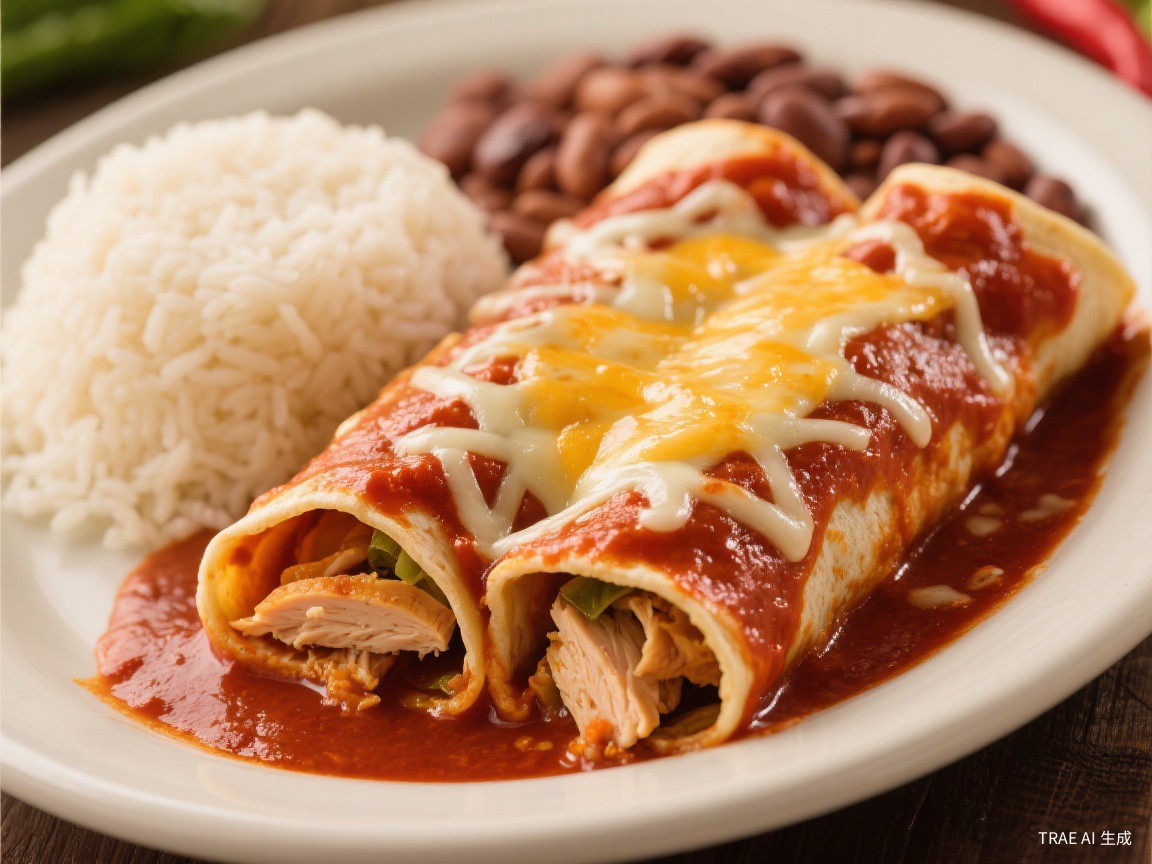
The assembly of enchiladas suizas follows a rhythm that becomes second nature with practice. A softened tortilla is laid flat, a spoonful of shredded chicken is placed along its center, and it is rolled tightly into a cylinder. The rolled enchilada is placed seam-side down in a buttered or oiled baking dish, and the process is repeated until the dish is full, the enchiladas nestled snugly side by side. The green cream sauce is then poured generously over the top, ensuring every enchilada is well coated. A scattering of queso fresco and a few sprigs of fresh cilantro complete the dish before it goes into a 375-degree Fahrenheit oven for fifteen to twenty minutes, just long enough for the sauce to bubble and the cheese to soften.
Common Mistakes to Avoid
- Using flour tortillas: Corn tortillas are non-negotiable for authentic enchiladas suizas.
- Over-filling the tortillas: Two to three tablespoons of chicken per tortilla is plenty. More will cause tearing.
- Boiling the tomatillos instead of roasting: Roasting develops the smoky, caramelized depth that defines great salsa verde.
- Using sour cream straight: If substituting for crema, blend it with heavy cream to reduce acidity and prevent curdling.
- Serving immediately from the oven: Let the enchiladas rest for five to ten minutes before serving—the sauce will settle and the flavors will meld.
A Dish That Bridges Worlds
Enchiladas suizas are, at their heart, a dish about the beautiful things that happen when culinary traditions meet. They carry the ancient Mesoamerican heritage of the tortilla, the indigenous Mexican tradition of chile-based sauces, and a touch of European dairy refinement—all woven together into something that feels entirely, effortlessly Mexican. They are proof that the best food is never afraid of outside influence, never rigid in its identity, always evolving. And they are, quite simply, one of the most delicious things you will ever eat.
Ready to Make Enchiladas Suizas?
Download our complete recipe with tomatillo roasting guide, sauce variations, and step-by-step assembly photos.
Get the Free Recipe