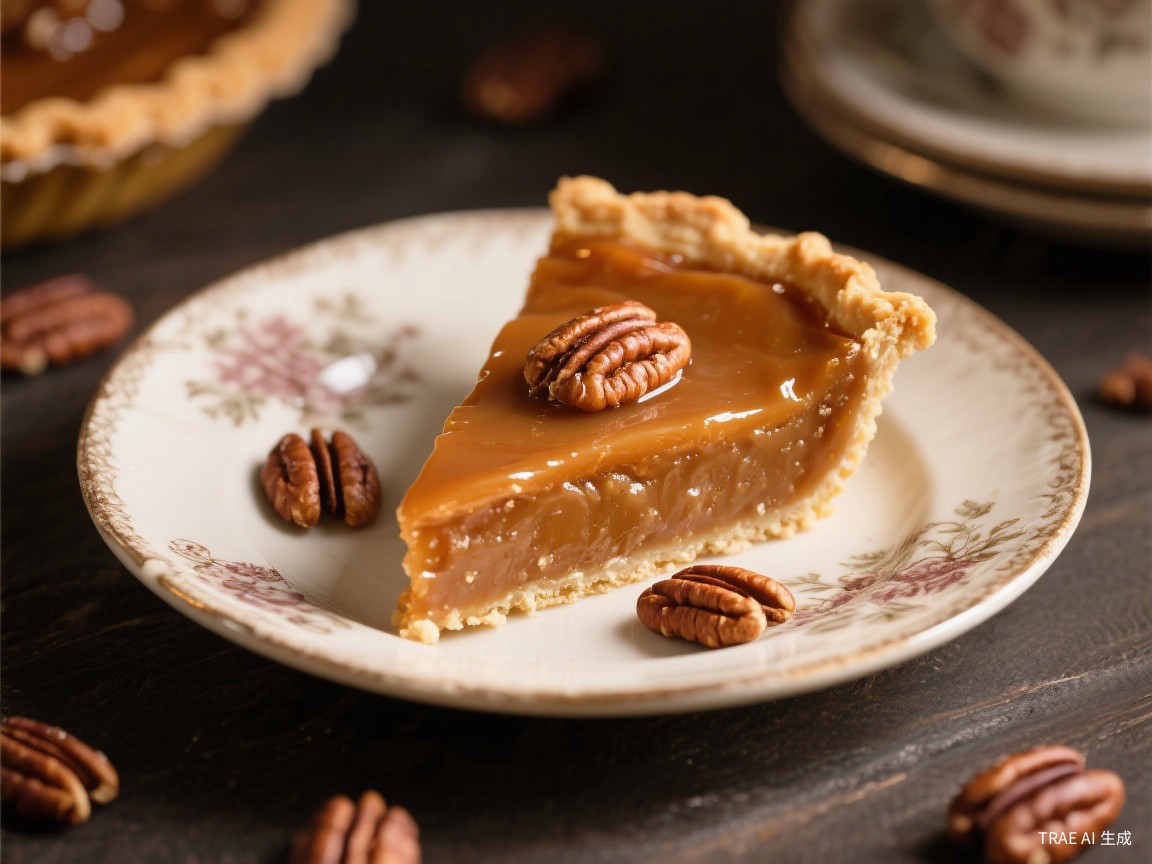
There is a particular kind of silence that falls over a Southern dining table when a pecan pie is set down at its center. Conversations pause. Eyes widen. Someone inevitably murmurs something about their grandmother. Pecan pie is not merely a dessert in the American South—it is a portal to memory, a vehicle for nostalgia, and a testament to the alchemy that occurs when butter, sugar, eggs, and pecans unite in a humble pie shell. It is, by any reasonable measure, America's sweetest tradition.
The Nut That Built a Dessert
The word "pecan" itself comes from the Algonquin word "pacane," meaning a nut requiring a stone to crack. Long before European settlers arrived in North America, Native American tribes throughout the Mississippi Valley and what is now the southern United States relied on wild pecans as a vital food source. They pressed them for oil, ground them into meal, and ate them whole as a portable, nutrient-dense snack. The pecan tree, a species of hickory native to the southern and central United States and northern Mexico, was so valued that some tribes considered it sacred.
Spanish colonists in the sixteenth century were among the first Europeans to encounter pecans, and they quickly recognized their culinary potential. Thomas Jefferson planted pecan trees at Monticello, and George Washington reportedly received pecans as a gift from Thomas Jefferson himself. But it was not until the late nineteenth century that commercial pecan cultivation took hold, particularly in Georgia, Texas, and New Mexico—states that remain the nation's leading producers today.
Choosing the Right Pecan
Not all pecans are created equal, and the variety you choose will significantly affect your pie. The two most common varieties available to home bakers are Stuart and Desirable. Stuart pecans, the older and more widely available variety, have a robust, earthy flavor and a slightly thicker shell. Desirable pecans, as the name suggests, are prized for their larger size, thinner shells, and cleaner, more buttery flavor. For pecan pie, I lean toward Desirable halves—they look more elegant arranged on top and have a sweetness that complements the filling without competing with it.
Freshness matters enormously. Pecans are high in natural oils, which means they can go rancid if stored improperly. Always smell your pecans before using them. They should have a mild, sweet, nutty aroma. Any hint of paint thinner or harshness means they have turned. Store pecans in an airtight container in the refrigerator for up to six months, or in the freezer for up to two years.
Chef's Tip
Toasting your pecans before adding them to the pie filling is a game-changer. Spread the halves on a sheet pan and toast at 350 degrees Fahrenheit for eight to ten minutes, shaking the pan halfway through. This deepens their flavor and adds a subtle smokiness that elevates the entire pie. Let them cool completely before using—warm pecans will melt the butter in your filling and alter the texture.
The Karo Syrup Legacy
No discussion of pecan pie is complete without acknowledging the role of Karo syrup. In the 1920s, the Corn Products Refining Company, makers of Karo syrup, began printing a recipe for pecan pie on its syrup cans. The recipe was simple, reliable, and required only ingredients most Southern households already had on hand. The marketing was so effective that, to this day, many Americans believe Karo syrup invented pecan pie. It did not—but it certainly popularized it.
The original pecan pie likely predates Karo's involvement by decades, with roots in Southern plantation kitchens where resourceful cooks combined pecans, eggs, sugar, and whatever sweetener was available—molasses, honey, or sorghum syrup. Karo's contribution was standardization. By providing a consistent, widely available ingredient with a printed recipe attached, they turned what had been a regional specialty into a national dessert. The company's dark corn syrup, with its caramel-like depth, became the backbone of the filling most Americans recognize today.
"Pecan pie is the taste of every Sunday dinner I ever had as a child. One bite and I am twelve years old again, sitting at my mama's table, with the afternoon light coming through the kitchen window."
— Chef Sarah
The Butter vs. Margarine Debate
If you want to start a lively discussion in any Southern kitchen, ask whether pecan pie filling should be made with butter or margarine. Traditionalists, myself included, insist on unsalted butter for its superior flavor and the way it browns during baking, adding caramel notes to the filling. Butter also produces a slightly more cohesive set, giving the pie a silkier texture.
However, there is a genuine historical reason margarine has a place in this conversation. During the Great Depression and World War II, butter was rationed and expensive, while margarine was cheap and widely available. An entire generation of Southern bakers learned to make their pecan pies with margarine, and many never saw a reason to switch back. Margarine does produce a slightly different texture—somewhat firmer, with a less complex flavor—but it is far from ruinous. If butter is what your grandmother used, use butter. If she used margarine, there is honor in that continuity.
The Pie Crust Foundation
A pecan pie is only as good as its crust, and this is where many bakers stumble. The filling is heavy—dense with eggs, butter, and sugar—and it requires a crust that can support that weight without becoming soggy or collapsing. A standard all-butter pie crust works beautifully if handled correctly, but a crust made with a combination of butter and shortening offers extra structural integrity thanks to shortening's higher melting point.
Blind baking the crust—partially baking it before adding the filling—is a step I consider essential for pecan pie. Line your rolled crust with parchment paper, fill it with pie weights or dried beans, and bake at 375 degrees Fahrenheit for fifteen minutes. Remove the weights and parchment, prick the bottom with a fork, and return it to the oven for another five to eight minutes until the bottom is set and lightly golden. This creates a barrier that prevents the liquid filling from seeping into the raw dough and producing a soggy bottom.
The Chess Pie Connection
Pecan pie belongs to a family of Southern desserts known as chess pies—simple, egg-based pies sweetened with sugar or syrup and bound with a small amount of flour or cornmeal. The origins of the name "chess pie" are murky and delightful. One theory holds that it is a corruption of "cheese pie," referring to a traditional English curd tart. Another suggests it comes from the phrase "it's just pie," spoken with a thick Southern drawl. A third, more charming explanation is that plantation cooks stored the pies in a pie chest, and the name evolved from "chest pie" to "chess pie."
Whatever its name's origin, the chess pie template—eggs, sugar, butter, a splash of vinegar or lemon juice for brightness—provided the foundation upon which pecan pie was built. Add pecans to a chess pie, and you have essentially created the dessert that would come to define Southern baking. The vinegar, by the way, is not optional. That tiny amount of acidity balances the extreme sweetness of the filling and prevents the pie from tasting cloying. It is the secret ingredient that separates a good pecan pie from a great one.
Bourbon: The Spirit of Southern Baking
A tablespoon or two of good bourbon in the filling is a tradition that has become nearly universal in modern Southern kitchens. The bourbon does not make the pie taste boozy—alcohol evaporates during baking—but it introduces vanilla, caramel, and oak notes that harmonize beautifully with the pecans and brown sugar. Use a bourbon you enjoy drinking, not cooking bourbon. A Kentucky straight bourbon like Maker's Mark or Woodford Reserve works wonderfully. Some bakers also add a teaspoon of vanilla extract and a pinch of salt, both of which amplify the other flavors without calling attention to themselves.
- Stuart pecans: Earthy, robust, traditional choice, slightly thicker shell
- Desirable pecans: Larger, buttery, cleaner flavor, ideal for pie tops
- Pawnee pecans: Smaller, exceptionally sweet, great for mixing
- Elliott pecans: Round, teardrop-shaped, rich oil content, deep flavor
Baking and the Telltale Jiggle
The single most common mistake in pecan pie baking is overbaking. A properly baked pecan pie should still jiggle slightly in the center when you gently shake the pan. This is not underdone—it is exactly right. The filling will continue to set as it cools, and that gentle jiggle ensures a silky, custard-like texture rather than a rubbery, overcooked one. Bake at 350 degrees Fahrenheit for fifty to sixty minutes, checking at the forty-five-minute mark. The edges should be set and puffed, while the center retains a slight wobble.
Cooling is equally critical. A pecan pie must cool completely—at least two to three hours at room temperature—before slicing. Cutting into a warm pie will cause the filling to run, and no amount of patience during baking can compensate for impatience at the slicing board. For the cleanest slices, refrigerate the cooled pie for an hour before serving, then let it sit at room temperature for fifteen minutes before cutting with a sharp, thin-bladed knife wiped clean between each slice.
Serving and Pairing
Pecan pie is traditionally served at room temperature, accompanied by nothing more than a scoop of vanilla bean ice cream or a dollop of unsweetened whipped cream. The contrast between the cold, creamy ice cream and the dense, sweet, nutty filling is one of the great pleasures of Southern dining. A cup of strong coffee, preferably black, provides a bitter counterpoint that balances the pie's sweetness beautifully.
For a Thanksgiving table, pecan pie holds its own alongside pumpkin and sweet potato pies, offering a crunch and richness that its custardy cousins cannot match. And while it is indelibly associated with the holidays, there is no wrong time to serve a pecan pie. A Tuesday in March is just as worthy of one as the fourth Thursday in November.
Ready to Bake the Perfect Pecan Pie?
Download our complete recipe with crust instructions, timing charts, and variation ideas including chocolate pecan pie and bourbon maple pecan pie.
Get the Free Recipe