Tiramisu translates literally to "pick me up" or "pull me up," and one bite explains why. This elegant layered dessert combines the boldness of espresso, the richness of mascarpone, and the delicate sweetness of ladyfingers into something that feels like pure indulgence. Yet behind its apparent simplicity lies a technique that demands precision and understanding.
The Origins of a Modern Classic
Unlike many Italian classics that trace back centuries, tiramisu is surprisingly young. Most food historians place its creation in the 1960s or 1970s, likely in the Veneto region. Several restaurants claim to be the birthplace, but what's undisputed is how quickly this dessert conquered the world, becoming synonymous with Italian cuisine.
The genius of tiramisu lies in its construction. Each component is simple on its own—coffee, cookies, cream, cocoa—but together they create something far greater than the sum of their parts. The dessert exemplifies the Italian philosophy of using quality ingredients with restraint and respect.
Chef's Tip
Always use room-temperature mascarpone. Cold mascarpone creates lumps when mixed, and once those lumps form, they're nearly impossible to remove without overbeating the cream. Take your ingredients out of the refrigerator at least an hour before starting.
The Foundation: Savoiardi Ladyfingers
Not all ladyfingers are created equal. Traditional tiramisu calls for Savoiardi—crisp, dry Italian ladyfingers that absorb liquid without falling apart. The soft, cake-like ladyfingers found in American grocery stores will dissolve into mush, ruining the texture that makes tiramisu special.
Authentic Savoiardi are available at Italian markets, specialty stores, and increasingly in well-stocked supermarkets. Look for the ones that feel almost like hard biscuits. They should snap cleanly when bent, not bend or crumble. This structural integrity is essential for creating distinct layers.
The Coffee Soak
The coffee component is non-negotiable. Use strong espresso, preferably brewed in a proper espresso machine or Moka pot. The coffee should be hot when you dip the ladyfingers, but not boiling—extreme heat will break down the cookie structure too quickly.
The dipping technique requires practice. A quick dip—just one or two seconds per side—is all you need. The ladyfinger should be moistened but not saturated. When you lift it, it should still hold its shape. If coffee pools in the dish after assembly, you've dipped too long.
"Tiramisu is about balance. Too much coffee, and it becomes bitter. Too little, and it's just sweet cream. The perfect bite has both, in harmony."
— Chef Lidia Bastianich
The Heart: Mascarpone Cream
The mascarpone cream is where technique truly matters. Traditional recipes use a zabaglione base—egg yolks whipped with sugar and often a splash of Marsala wine until pale and fluffy. This is then folded with mascarpone and finally with whipped egg whites or heavy cream.
Modern variations often skip the cooked egg yolk step, simply whipping mascarpone with cream and sugar. While faster, this produces a different texture—lighter but less complex. The traditional method creates a cream with more body and a subtle warmth from the Marsala.
Achieving the Perfect Consistency
- Whip egg yolks thoroughly: They should be pale yellow and fall in thick ribbons
- Fold, don't stir: Preserve the air you've whipped into the components
- Stop before overbeating: Mascarpone can separate if whipped too much
- Chill before assembling: A brief rest helps the cream hold its shape
The Assembly: Building Layers
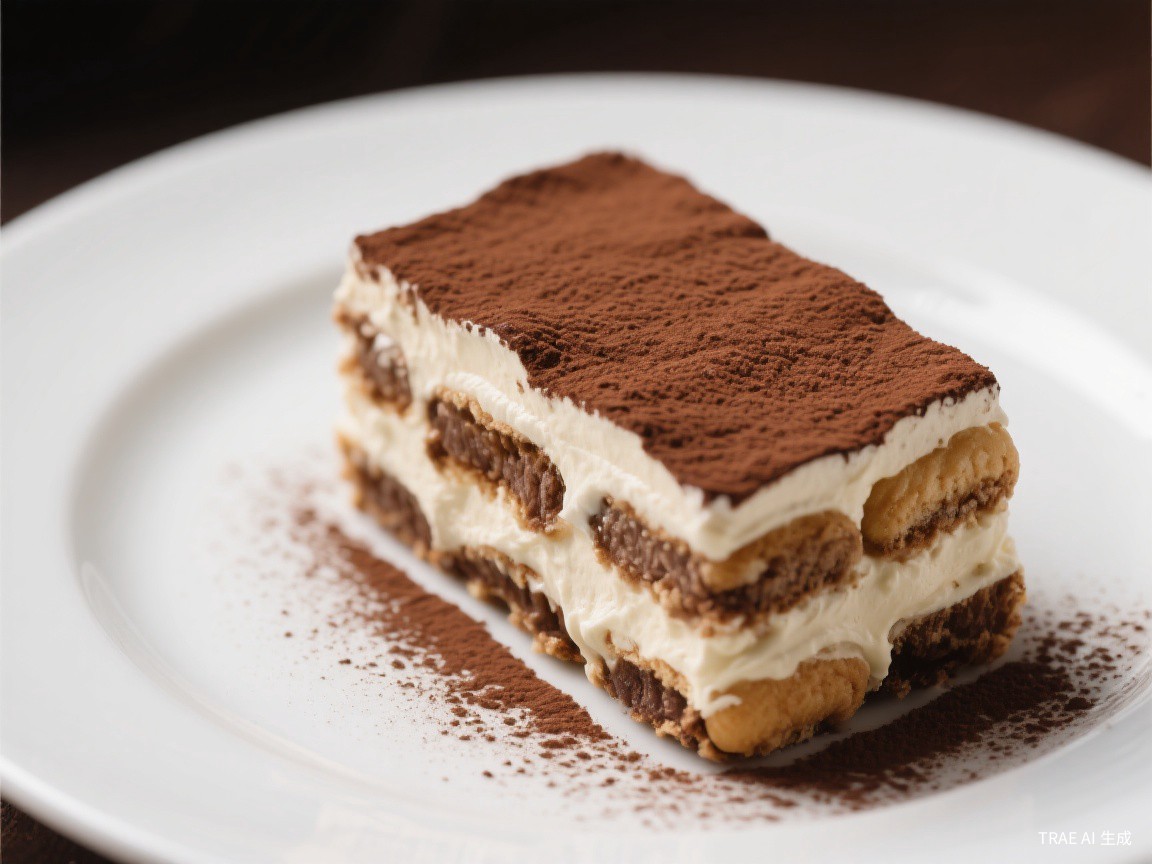
Assembly is straightforward but requires attention. Start with a thin layer of cream on the bottom of your dish—this prevents the first layer of ladyfingers from sliding. Then add your dipped cookies in a single layer, breaking them as needed to fill gaps.
Spread half your mascarpone cream over the ladyfingers, using an offset spatula to create an even layer. Repeat with another layer of dipped cookies and the remaining cream. The traditional finish is a generous dusting of cocoa powder, applied just before serving to maintain its texture.
The Resting Period
Patience is the final ingredient. Tiramisu needs time—ideally at least six hours, preferably overnight—in the refrigerator. During this rest, the flavors meld and the ladyfingers soften to the perfect cake-like consistency while maintaining their structure.
The dessert actually improves over the first two days, as the coffee continues to permeate the layers. After that, it begins to decline. Tiramisu is best consumed within three days of making, though it rarely lasts that long.
Variations Worth Exploring
While purists insist on the classic formula, creative variations have their place. Some add a splash of amaretto or coffee liqueur to the soaking liquid. Others incorporate shaved chocolate between layers. A few modern versions use matcha or fruit in place of coffee, though these venture far from tradition.
- Alcohol-free version: Simply omit the Marsala; the dessert remains delicious
- Chocolate layer: Add a thin layer of ganache between the cream and cookies
- Seasonal fruit: Fresh berries can complement the coffee notes beautifully
- Individual portions: Serve in glasses for elegant dinner party presentation
Common Pitfalls
The most common mistake is over-soaking the ladyfingers. Remember: a quick dip is all you need. The cookies will continue absorbing moisture from the cream during refrigeration. Soggy ladyfingers result from impatience during assembly.
Another frequent error is overwhipping the mascarpone. Unlike heavy cream, mascarpone doesn't benefit from extended beating. Whip just until smooth and combined, then stop. If the cream looks grainy or separated, you've gone too far.
A Dessert Worth Mastering
Tiramisu represents everything wonderful about Italian desserts: quality ingredients treated with respect, technique that serves flavor rather than showing off, and a result that feels both luxurious and comforting. It's a dessert that rewards attention to detail while remaining forgiving enough for home cooks to master.
When you serve a properly made tiramisu—layers distinct, flavors balanced, texture somewhere between cake and cream—you're sharing a piece of Italian culinary philosophy. Simple doesn't mean easy, and restraint often produces the most memorable results.
Master the Art of Tiramisu
Download our illustrated guide with troubleshooting tips and make-ahead instructions.
Get the Free Guide