Few dishes embody the soul of French home cooking quite like onion soup. What appears deceptively simple—a bowl of broth with floating bread and melted cheese—reveals itself as a masterclass in patience, technique, and the transformative power of heat on humble ingredients.
The Art of Caramelization
The heart and soul of French onion soup lies in its onions, and not just any onions will do. You need a substantial quantity—at least three pounds for a proper pot of soup. Yellow onions are traditional, offering the perfect balance of sweetness and depth when properly caramelized. Some cooks add a red onion for color complexity, but yellow remains the foundation.
The caramelization process is where patience becomes your most valuable ingredient. This isn't a fifteen-minute affair. Proper caramelization requires forty-five minutes to an hour of constant attention. The onions must be sliced uniformly—about a quarter inch thick—so they cook evenly. Too thin, and they'll burn before developing flavor. Too thick, and they'll remain fibrous and raw in the center.
Chef's Tip
The secret to perfect caramelization is controlling your heat. Start on medium-high to release moisture, then reduce to medium-low for the long transformation. Add a pinch of sugar to jumpstart the process, and a splash of water whenever the onions stick—this deglazes the pan and speeds up browning.
Understanding the Maillard Reaction
What you're witnessing during caramelization is the Maillard reaction—a chemical process where amino acids and sugars react under heat to create hundreds of new flavor compounds. This is why properly caramelized onions taste nothing like raw onions. They've become something entirely new: sweet, complex, deeply savory, with hints of the broth they'll eventually become.
The color progression tells the story. Pale white becomes translucent, then golden, then amber, finally reaching a deep mahogany that borders on brown. Each stage brings new flavors. Stop too early, and your soup will lack depth. Go too far, and bitterness will overwhelm the sweetness.
Building the Broth
While onions are the star, the broth provides the supporting structure. Traditional recipes call for beef stock, and homemade is always preferable. A rich beef stock made from roasted bones provides the gelatin and depth that transforms onion soup from good to transcendent.
However, many home cooks achieve excellent results with high-quality store-bought beef broth, enhanced with a splash of wine and fresh herbs. The key is reducing the broth slightly before adding the caramelized onions, concentrating flavors before the final simmer.
"Onion soup is the ultimate test of a cook's patience. Rush the onions, and you've made onion water. Give them the time they deserve, and you've created magic."
— Chef Jacques Pépin
The Wine Question
Dry white wine is traditional in French onion soup, though some regions prefer red. A splash of Cognac or brandy adds another dimension of warmth. The alcohol cooks off during simmering, leaving behind complex flavor compounds that complement the sweetness of the onions.
For the wine, choose something you'd actually drink. The old adage about never cooking with wine you wouldn't serve holds especially true here, where the wine's character becomes part of the soup's foundation.
The Cheese and Bread Ritual
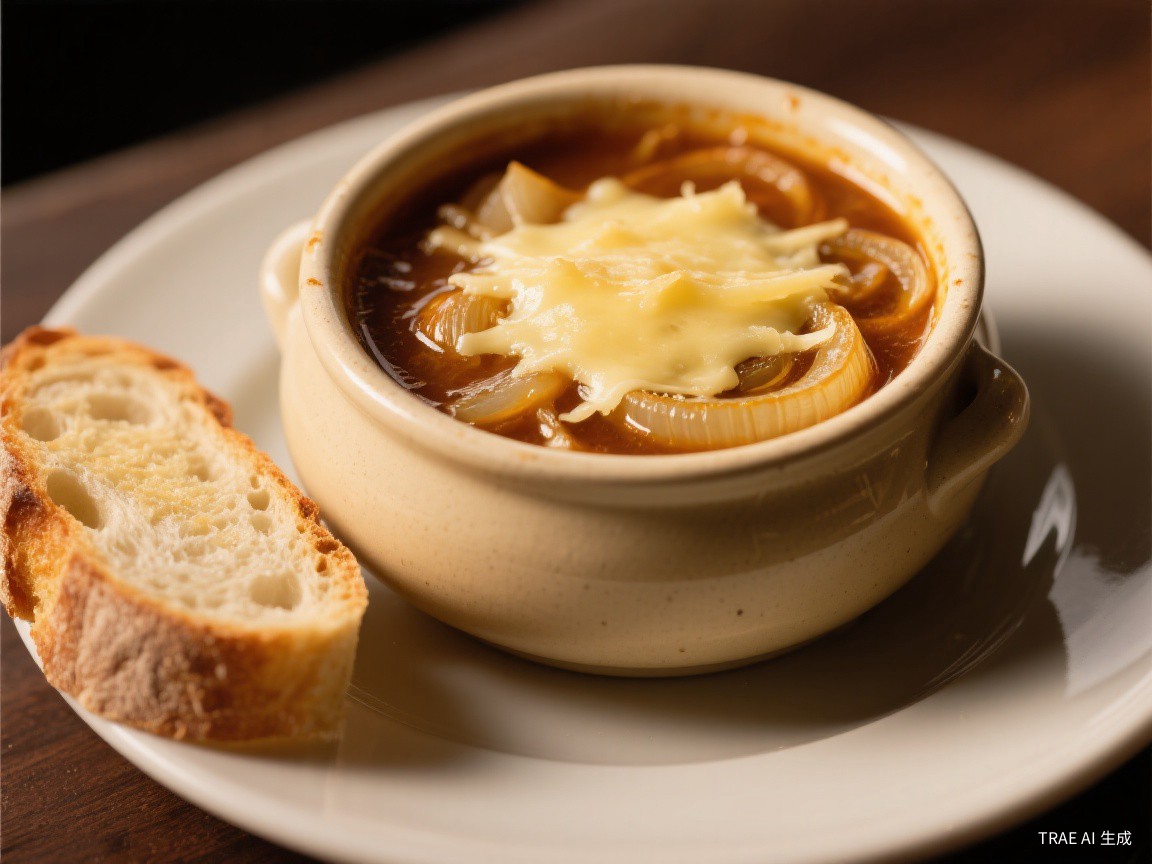
No discussion of French onion soup is complete without addressing its iconic topping. The traditional cheese is Gruyère, a Swiss cheese that melts beautifully and develops a gorgeous golden crust under the broiler. Some recipes call for Comté or Emmental, but Gruyère remains the gold standard.
The bread matters equally. A day-old baguette, sliced thick and toasted until golden, provides the perfect vessel. The bread should be sturdy enough to soak up broth without dissolving completely, creating a textural bridge between the liquid soup and the crisp cheese cap.
Achieving the Perfect Gratinée
- Use oven-safe bowls: Traditional crocks with handles are ideal, but any broiler-safe dish works
- Toast the bread first: This prevents sogginess and adds another layer of flavor
- Grate your own cheese: Pre-grated cheese contains anti-caking agents that affect melting
- Broil until bubbling: The cheese should be golden brown with spots of darker caramelization
A Dish with History
French onion soup's origins trace back to Roman times, when onions were abundant and cheap, making them a staple for the working class. The modern version, topped with bread and cheese, emerged in 18th century France. Legend attributes it to King Louis XV, who created the dish from limited ingredients while hunting, though historians debate this tale.
Making It Your Own
While tradition provides a template, French onion soup welcomes personal interpretation. Some cooks add a splash of sherry vinegar for brightness. Others incorporate fresh thyme or bay leaves during simmering. A few adventurous souls add a dollop of Dijon mustard to the broth for subtle heat.
The onions themselves can vary. Shallots add a more delicate sweetness. Leeks contribute a milder, grassier note. Some modern versions even incorporate roasted garlic for additional depth. The key is maintaining balance—no single element should overwhelm the others.
Common Mistakes to Avoid
- Rushing the onions: This is the most common error. Give them the time they need.
- Using too much liquid: The soup should be rich and concentrated, not watery.
- Skipping the wine: That splash of acid is essential for balance.
- Under-seasoning: Properly salted broth is crucial for bringing flavors together.
- Serving immediately: The soup improves if made a day ahead and reheated.
The Final Bowl
When you finally lift that first spoonful, breaking through the golden cheese cap into the steaming broth beneath, you'll understand why this humble dish has endured for centuries. The sweetness of the onions, the depth of the broth, the crunch of the bread, the richness of the cheese—it's a symphony of simple ingredients elevated by technique and patience.
French onion soup teaches us that great cooking doesn't require exotic ingredients or complicated procedures. It requires understanding, attention, and respect for the process. Master this dish, and you've mastered a fundamental truth of cooking: that time and patience transform the ordinary into the extraordinary.
Ready to Master French Onion Soup?
Download our complete guide with step-by-step photos and timing charts for perfect caramelization.
Get the Free Guide