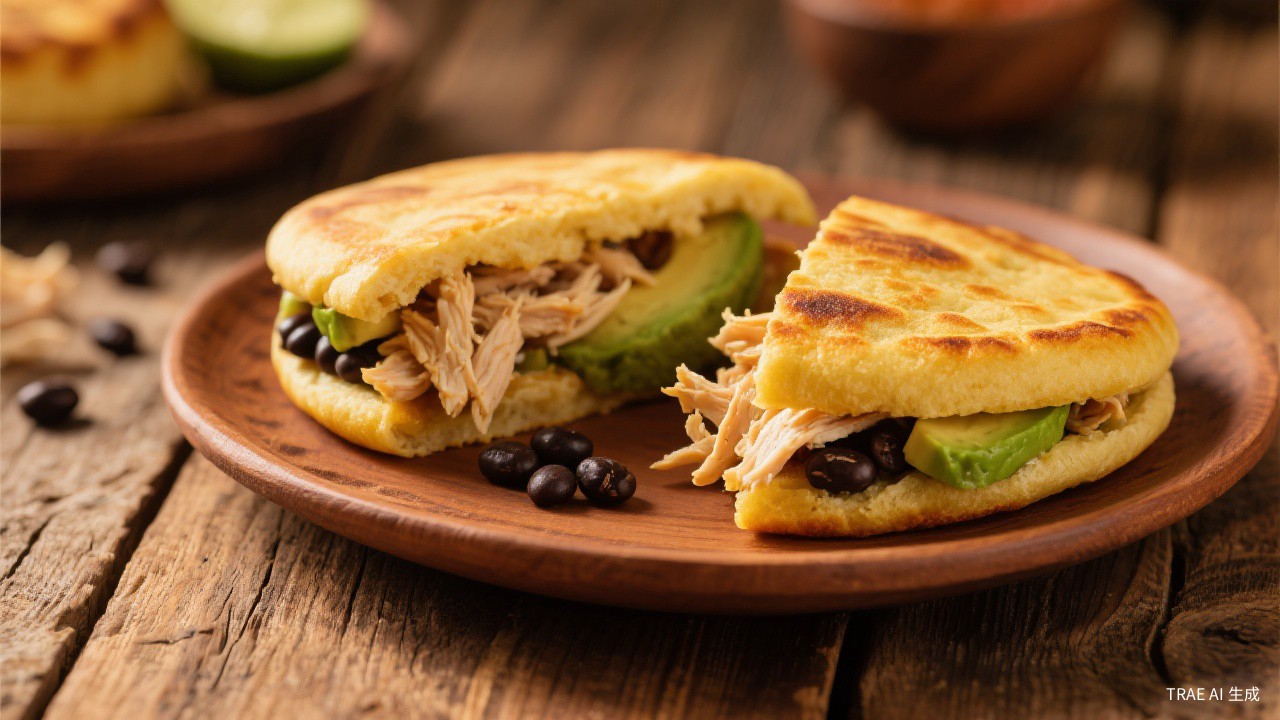
Long before the Spanish arrived on the shores of northern South America, the indigenous peoples of what is now Venezuela were grinding corn into meal, shaping it into rounds, and cooking it on clay slabs over open fire. They called these corn cakes "arepa," and they were sustenance itself—simple, filling, and endlessly adaptable. Today, the arepa remains Venezuela's most essential food, eaten at every meal, filled with everything from black beans and cheese to shredded beef and avocado, a daily ritual that connects modern Venezuelans to their deepest culinary roots.
Pre-Columbian Origins
The arepa's history stretches back thousands of years. Archaeological evidence suggests that corn-based flatbreads were being produced in the region as early as 3,000 years ago. Indigenous groups including the Arawak, Carib, and Timoto-Cuica peoples cultivated corn as a staple crop and developed sophisticated methods for processing it, including nixtamalization—a technique of treating corn with alkaline solution that increases its nutritional value.
The word "arepa" itself is believed to derive from the indigenous term for the clay griddle on which the cakes were cooked. What is certain is that these early arepas were simpler than their modern descendants—plain corn cakes, perhaps seasoned with salt, cooked until firm on the outside and soft within.
When Spanish colonizers arrived in the 16th century, they encountered the arepa and adopted it enthusiastically. Over the centuries, the arepa evolved from a simple indigenous staple into a national symbol, absorbing influences from European, African, and Caribbean cuisines while retaining its essential identity as Venezuela's daily bread.
"The arepa is Venezuela. It is breakfast, lunch, and dinner. It is street food and home cooking. It is the taste of home for every Venezuelan, no matter where in the world they find themselves."
— Chef Elena
Masarepa: The Modern Foundation
The single most important development in arepa history was the invention of masarepa—pre-cooked cornmeal—in the 1950s. Before this, making arepas required soaking dried corn overnight, grinding it by hand, and kneading the resulting masa into dough—a labor-intensive process.
In 1954, the Venezuelan company Empresas Polar introduced Harina P.A.N., a pre-cooked white cornmeal that could be simply mixed with water and salt to produce perfect arepa dough. This revolutionized Venezuelan home cooking, making arepas accessible to everyone. Today, Harina P.A.N. is found in Venezuelan households around the world and remains the gold standard.
Chef's Tip
The ratio of water to masarepa is critical. Start with one cup of warm water for every cup of cornmeal, then adjust gradually. The dough should be smooth, pliable, and slightly tacky—not wet and sticky, not dry and crumbly. Let the dough rest for five minutes before shaping; this allows the cornmeal to fully hydrate and produces a more tender arepa.
Masarepa vs. Fresh Masa
While masarepa is the practical choice for most home cooks, some traditionalists prefer fresh masa made from scratch. Fresh masa produces an arepa with a more complex corn flavor and a denser, more rustic texture. However, the convenience of masarepa makes it the overwhelming choice for everyday cooking.
Griddle vs. Oven: The Cooking Debate
How you cook your arepa is a matter of personal preference. The traditional approach is to cook on a griddle or comal—a flat, dry surface that produces a beautifully charred, crispy exterior while keeping the interior soft. This method requires careful attention and frequent turning.
The oven method involves a two-step process: first searing on a griddle for a few minutes per side, then transferring to a hot oven (around 400 degrees Fahrenheit) to finish cooking through. This is more forgiving and produces a more consistently cooked interior.
The Beloved Fillings
While the arepa itself is a simple corn cake, it is the fillings that transform it into a complete meal. Venezuela has developed an extraordinary repertoire of arepa fillings, each with its own name, its own loyal following, and its own story. These fillings range from humble combinations of cheese and beans to elaborate preparations involving shredded meats, avocado, and complex sauces.
Reina Pepiada
Perhaps the most famous of all arepa fillings, the reina pepiada was created in 1955 at Los Hermanos Alvarez, a Caracas restaurant, to honor Susana Duijm, who had just been crowned Miss World. The filling consists of a creamy chicken salad made with shredded chicken, mayonnaise, avocado, and a squeeze of lime. The name translates roughly to "the curvaceous queen," a playful reference to the beauty queen's figure.
Domino
The domino is the simplest and most democratic of Venezuelan arepas: white cheese and black beans, the colors evoking the spots on a domino tile. Despite its simplicity, a well-made domino is deeply satisfying—the creaminess of the cheese contrasting with the earthiness of the beans, all enclosed in the warm, crispy corn shell.
La Pelúa
La pelúa, which translates to "the hairy one," is a filling of shredded beef (carne mechada) and yellow cheese. The name comes from the appearance of the shredded beef, which hangs from the cheese like strands of hair. This is a hearty, protein-rich filling particularly popular for lunch.
The Arepera Culture
In Venezuela, the arepa is not just food—it is a social institution. Areperas, restaurants dedicated entirely to the arepa, are found on virtually every street corner. These range from humble street-side stalls to sleek, modern restaurants with extensive menus offering dozens of different fillings. The best areperas have a devoted following, with customers willing to wait in long lines for their favorites.
The arepera experience is deeply social. Venezuelans gather at areperas at all hours—breakfast, lunch, late-night dinners. The arepa brings people together, transcending class, age, and background. In a country that has faced significant challenges in recent years, the arepa remains a constant source of comfort, identity, and pride.
Colombian vs. Venezuelan Arepas
The arepa is enjoyed in both Venezuela and Colombia, but the two traditions have diverged significantly over the centuries. Understanding these differences is essential for anyone who wants to appreciate the full scope of arepa culture.
- Size: Venezuelan arepas tend to be larger and thicker, designed to be split open and filled. Colombian arepas are often smaller and thinner, sometimes eaten as an accompaniment.
- Cornmeal: Venezuelan arepas are made exclusively with white masarepa. Colombian arepas may use white or yellow cornmeal, and sometimes incorporate cheese or butter directly into the dough.
- Fillings: Venezuelan arepas are famous for their elaborate fillings, eaten as complete meals. Colombian arepas are more commonly topped with butter, cheese, or hogao (a tomato and onion sauce).
- Sweet varieties: Colombian cuisine includes sweet arepas, such as arepa de chocolo made with fresh sweet corn, which are less common in Venezuela.
Making Arepas at Home
The beauty of the arepa lies in its accessibility. With just three ingredients—masarepa, water, and salt—you can create a canvas for virtually any filling. The dough comes together in minutes, the shaping is intuitive, and the cooking is forgiving.
Start with the classic reina pepiada or domino, then experiment with your own combinations. The arepa asks only that you bring curiosity and an appetite. In return, it offers a taste of Venezuela—a warm, crispy, endlessly satisfying experience that will quickly become part of your own cooking repertoire.
Ready to Master Venezuelan Arepas?
Download our complete guide with dough techniques, filling recipes, and step-by-step instructions for the perfect arepa every time.
Get the Free Guide