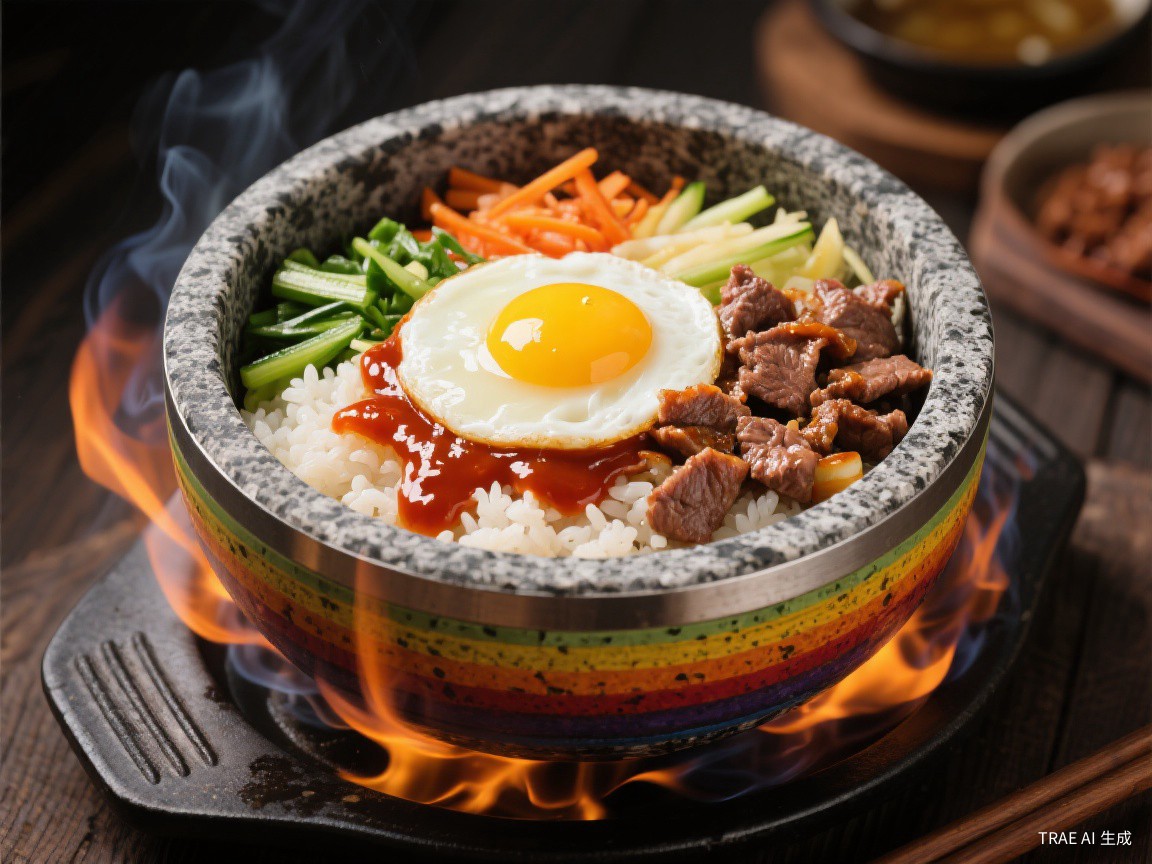
At first glance, bibimbap appears to be a simple rice bowl—a bed of white rice topped with an arrangement of seasoned vegetables, meat, and a fried egg, served with a fiery red sauce on the side. But to see bibimbap this way is to miss its extraordinary depth. This is a dish rooted in centuries of Korean philosophy, a culinary expression of the belief that harmony—of flavors, colors, textures, and nutrients—is the foundation of a good life. Every element in a bowl of bibimbap has a purpose, a reason for being there, and a relationship to every other element on the plate.
The Five-Color Philosophy: Obangsaek
The visual arrangement of bibimbap is not arbitrary or merely decorative. It is governed by the Korean philosophy of obangsaek, the five-color system that assigns specific meanings and health benefits to five colors: green, red, yellow, white, and black. This concept has its roots in traditional Korean medicine and the yin-yang theory of balance.
In the context of bibimbap, each color represents both a direction and an element of the body:
- Green (dong/east): Represents wood, growth, and the liver. Spinach, cucumbers, and gourds fill this role.
- Red (nam/south): Represents fire, passion, and the heart. Gochujang, carrots, and chili flakes provide the red.
- Yellow (jung/center): Represents earth, nourishment, and the spleen. Egg yolks, squash, and potatoes contribute yellow tones.
- White (seok/west): Represents metal, purity, and the lungs. Rice, bean sprouts, and radishes provide white elements.
- Black (buk/north): Represents water, wisdom, and the kidneys. Shiitake mushrooms, fernbrake, and seaweed bring the dark tones.
A properly composed bowl of bibimbap contains all five colors, creating not only a visually stunning presentation but also a nutritionally complete meal. This is food as medicine, food as philosophy, food as art—inseparable concepts in the Korean culinary tradition.
"Bibimbap teaches us that a meal is not just about feeding the body. It is about creating balance—between hot and cold, spicy and mild, soft and crunchy. When you mix the bowl, you are not just combining ingredients. You are creating harmony."
— Chef Wei
Namul: The Seasoned Vegetables
The namul—the individually seasoned vegetable preparations that form the bulk of the bibimbap toppings—are where much of the dish's complexity resides. Each vegetable is prepared separately, seasoned with its own combination of sesame oil, soy sauce, garlic, and sometimes sugar or vinegar.
Spinach namul is perhaps the most common, made by blanching fresh spinach until just wilted, then shocking it in cold water, squeezing out excess moisture, and tossing it with sesame oil, minced garlic, and salt.
Chef's Tip
The key to great namul is restraint with seasoning. Each vegetable should taste like itself, enhanced rather than overwhelmed by its dressing. Use the highest-quality toasted sesame oil you can find—it makes an enormous difference. Korean sesame oil, made from roasted seeds, has a deeper, more complex flavor than the Chinese or Japanese varieties.
Preparing Fernbrake and Shiitake
Two of the more distinctive namul are kosari (fernbrake) and pyogo (shiitake mushroom). Fernbrake requires extended soaking—often overnight—followed by a long simmer until tender, then seasoning with soy sauce, sesame oil, and garlic. Its earthy, slightly chewy texture provides the black element.
Shiitake mushrooms are sliced thin and sauteed with soy sauce and a touch of sugar, which caramelizes and intensifies their natural umami. Together with the fernbrake, they form the darker, more savory counterpoint to the brighter vegetables in the bowl.
The Gochujang Sauce
No discussion of bibimbap is complete without addressing its signature condiment: gochujang. This fermented red chili paste is a cornerstone of Korean cuisine, made from glutinous rice, fermented soybeans, red chili powder, and salt. The fermentation process develops a flavor profile that is simultaneously sweet, savory, spicy, and slightly funky, with an umami depth that is difficult to replicate.
For bibimbap, gochujang is typically thinned with sesame oil, rice vinegar, and sometimes honey to create a sauce that can be drizzled over the bowl. The key is to use enough to bring the bowl together without overwhelming the individual flavors of the namul.
Dolsot vs. Regular Bibimbap
Bibimbap comes in two primary forms: regular bibimbap, served in a simple metal or ceramic bowl, and dolsot bibimbap, served in a heavily heated stone pot. The dolsot version is the more dramatic of the two—the stone pot retains enormous heat, cooking the rice that touches its surface into a crispy, golden crust called nurungji, while the toppings sizzle and the egg cooks from the bottom up.
The nurungji—the layer of crispy rice at the bottom of the dolsot—is for many Koreans the best part of the dish. Before adding the rice, the stone pot should be brushed with sesame oil, which fries the bottom layer into a lacy, golden crust. Some restaurants serve the dolsot with a raw egg that the diner breaks themselves.
The Art of Mixing
There is a proper way to eat bibimbap, and it begins with mixing. Using your spoon—the primary eating utensil in Korean cuisine—you break the egg, add the gochujang sauce, and then fold everything together, working from the edges toward the center. The goal is to coat every grain of rice with the sauce, creating a unified mixture where each bite contains a little bit of everything.
Purists will tell you that the mixing should be done just before eating, not in advance. Premature mixing causes the vegetables to release moisture and the rice to become soggy. In a dolsot, mixing too early means losing the nurungji before it has fully developed its crunch.
The Jeonju Bibimbap Tradition
While bibimbap is eaten throughout Korea, the city of Jeonju, in the southern province of Jeolla, is widely regarded as its spiritual home. Jeonju bibimbap is distinguished by several features: the use of bean sprout broth to cook the rice; the inclusion of a wider variety of namul, sometimes up to thirty different vegetables; and the use of raw beef (yukhoe) or a raw egg yolk instead of a fried egg.
Jeonju bibimbap is also traditionally served in a brass bowl, which conducts heat differently than stone. The city takes enormous pride in its signature dish, and there are entire streets in Jeonju lined with bibimbap restaurants, each claiming to serve the most authentic version.
Bibimbap Beyond Borders
In recent years, bibimbap has become one of the most recognized Korean dishes worldwide, beloved for its visual appeal, nutritional completeness, and the satisfying act of mixing the bowl before eating. Korean airlines serve it as an in-flight meal. It appears on restaurant menus from New York to Sydney. Food trucks and fast-casual chains have adapted it for Western palates.
While purists may wince at some adaptations, the global embrace of bibimbap speaks to the universality of its appeal. A bowl of perfectly balanced rice, vegetables, and sauce is a concept that translates across cultures, a reminder that the best food is often the simplest—ingredients treated with respect, arranged with care, and eaten with gratitude.
Ready to Master Bibimbap?
Download our complete guide with namul recipes, gochujang sauce ratios, and dolsot techniques for authentic Korean bibimbap at home.
Get the Free Guide