Long before poke bowls became a fixture of every trendy lunch spot from Los Angeles to London, Hawaiian fishermen were cubing their freshest catch and dressing it with nothing more than sea salt, seaweed, and crushed kukui nuts. The word poke itself means "to slice" or "to cut crosswise" in Hawaiian, and that simple act of cutting fresh fish is the soul of a dish that has traveled far from its island origins while carrying the spirit of the Pacific with it.
The Real Hawaiian Poke vs. the Mainland Bowl Shop
If you have only ever eaten poke from a mainland fast-casual chain, you have experienced something fundamentally different from what Hawaiians know and love. Traditional Hawaiian poke is not a bowl of rice buried under toppings. It is the fish itself, seasoned and served—often simply in a cup or on a plate, sometimes over a small scoop of rice, but never as the elaborate architectural construction that mainland shops have popularized.
The classic preparations are remarkably restrained. Shoyu ahi, perhaps the most widely known style, dresses cubed yellowfin tuna with soy sauce, sesame oil, green onions, and perhaps a touch of inamona—the roasted and crushed kukui nut that lends a smoky, earthy depth unlike anything else in the culinary world. Limu poke incorporates limu kohu, a type of native Hawaiian seaweed with a slightly bitter, oceanic flavor that pairs beautifully with the sweetness of raw fish. Spicy ahi, while more modern, has its own Hawaiian lineage with the addition of local chili peppers and mayonnaise.
What mainland poke shops often get wrong is the over-accessorizing. When you pile on mango, edamame, crispy onions, sriracha aioli, pickled radish, and three kinds of seeds, the fish becomes an afterthought. In Hawaii, the fish is the entire point. Everything else exists to support it, not overshadow it.
"Poke is not a trend. It's not a bowl. It's a way of eating fish that Hawaiians have practiced for generations. The fish speaks for itself—you just have to listen."
— Chef Kainoa
Sourcing Ahi Tuna: The Most Important Decision You Will Make
You cannot make great poke with mediocre fish. This is non-negotiable. The tuna must be sashimi-grade, which means it has been handled and stored at proper temperatures from the moment it was caught to the moment you buy it. In Hawaii, this is easier—fresh-caught ahi is available at virtually every supermarket and fish market. On the mainland, you need to develop relationships with trusted fishmongers.
Look for deep red flesh with a translucent quality and no discoloration or brown spots. The fish should smell clean, like the ocean, with no fishy or ammonia notes. If you press it gently with your finger, it should spring back immediately. Yellowfin (ahi) is the gold standard for poke, though bigeye tuna offers a richer, fattier alternative that some prefer. Skipjack (aku) is used in traditional preparations but has a stronger flavor that not everyone appreciates.
Chef's Tip
Always keep your fish on ice from the moment you bring it home until the moment you cut it. Place a bowl of cubed fish over another bowl filled with ice while you prepare your seasonings. The colder the fish, the cleaner the cut and the better the texture. Never let raw fish sit at room temperature for more than a few minutes during preparation.
What "Sashimi Grade" Actually Means
The term "sashimi grade" is not federally regulated in the United States, which means it is largely up to the supplier to determine. In practice, reputable fish markets apply this label to fish that has been flash-frozen at sea to kill parasites, then thawed carefully for sale. If you are purchasing from a trusted source, this is safe to eat raw. If you have any doubts, ask your fishmonger directly how the fish was handled and whether it is intended for raw consumption.
For the most authentic experience, buy your tuna the same day you plan to make poke. Freshness is not a luxury—it is the defining characteristic of the dish. I have seen fishermen on Oahu slice into a just-caught ahi on the dock, cube it, toss it with soy sauce and sesame oil from a cooler, and eat it standing in the sun. That immediacy is what poke is all about.
The Soy Sauce and Sesame Oil Foundation
The shoyu-based marinade is the backbone of most poke preparations, and getting it right requires understanding the interplay between salt, umami, sweetness, and nuttiness. Japanese-style soy sauce (shoyu) is preferred over Chinese-style soy sauce for its cleaner, more balanced flavor. Kikkoman is the standard in Hawaii, and most local households keep a bottle in the refrigerator at all times.
The ratio matters more than any specific recipe. A good starting point is roughly three parts soy sauce to one part toasted sesame oil, adjusted to taste. The sesame oil should be toasted, not plain—it provides the characteristic nutty aroma that defines shoyu ahi. A small amount of sugar or honey balances the saltiness, while a squeeze of fresh lime juice adds brightness that lifts the entire dish.
Green onions (scallions) are almost universal, sliced thin and folded in just before serving so they retain their crisp bite. Some cooks add a small amount of grated fresh ginger or a dash of rice vinegar for additional complexity, though purists argue these are unnecessary distractions from the fish itself.
Rice: The Unsung Foundation
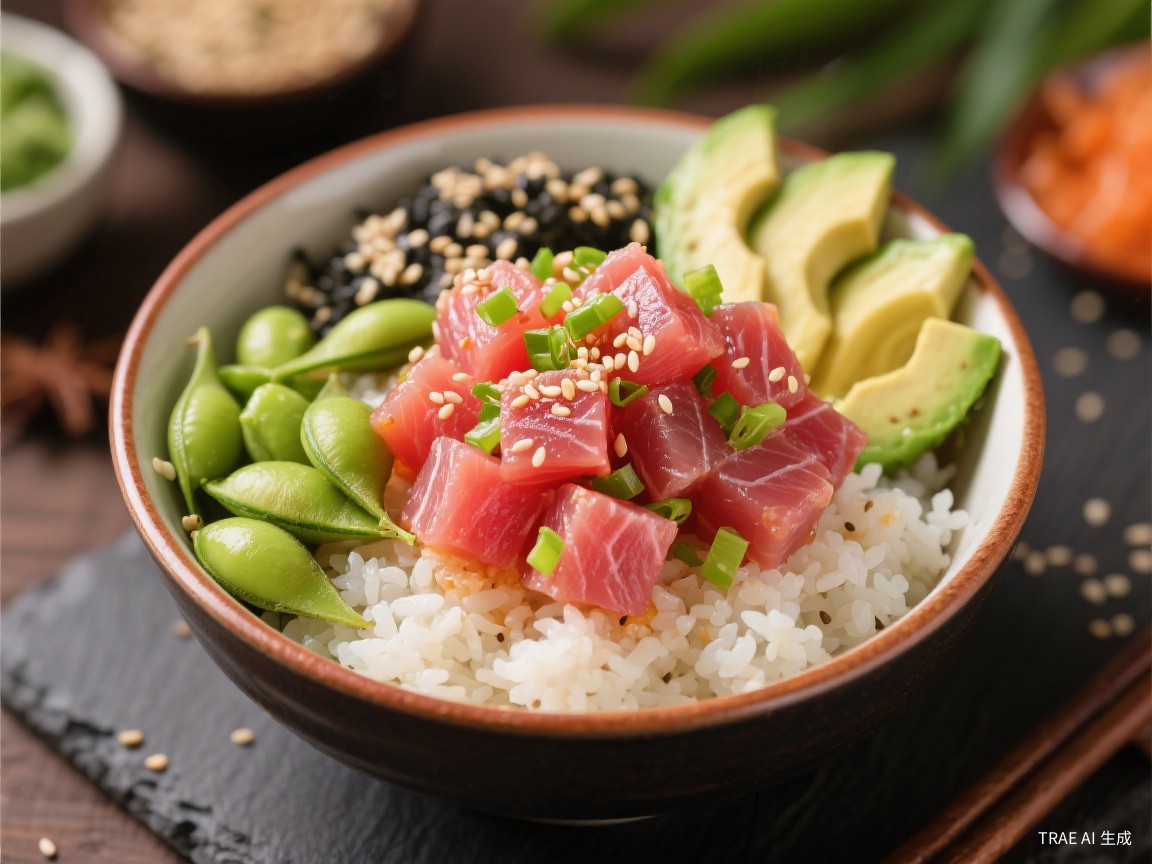
While traditional Hawaiian poke is often served without rice, the modern poke bowl has made rice an essential component—and getting the rice right is more important than most people realize. Short-grain Japanese rice (sometimes called sushi rice) is the only appropriate choice. Its plump, sticky grains hold together and provide a neutral, slightly sweet base that complements the seasoned fish without competing with it.
Wash the rice thoroughly—three to four changes of water until it runs nearly clear—to remove excess surface starch that would make the rice gummy. Cook it with slightly less water than you normally would, since you want individual grains that cling together rather than a mushy paste. After cooking, let it rest covered for ten minutes, then season lightly with rice vinegar, a pinch of sugar, and a touch of salt. This subtle seasoning mirrors the approach used in sushi rice and creates a cohesive foundation for the bowl.
- Short-grain rice only: Long-grain varieties like jasmine or basmati lack the stickiness needed to support toppings
- Wash thoroughly: Three to four rinses until water runs clear
- Season lightly: Rice vinegar, sugar, and salt in modest proportions
- Serve warm or room temperature: Cold rice is stiff and unappetizing
- Don't overpack the bowl: A loose, airy bed of rice allows the fish to settle naturally
Modern Toppings: What Works and What Does Not
The explosion of poke bowl shops has introduced a dizzying array of toppings, some inspired and some frankly baffling. The key is restraint and intentionality. Every topping should earn its place by either complementing the fish or providing a contrasting texture that enhances the overall eating experience.
Excellent additions include thinly sliced cucumber for crunch, avocado for creaminess, pickled ginger for a bright acidic counterpoint, and toasted sesame seeds for visual appeal and nutty flavor. Macadamia nuts, a nod to Hawaii's agricultural heritage, add a buttery crunch that pairs beautifully with ahi. Edamame provides protein and a pleasant pop of green. Shredded nori or furikake seasoning ties the bowl back to its Japanese-influenced roots.
Toppings to approach with caution include anything excessively sweet (mango can work in small amounts, but candied walnuts do not), anything overwhelmingly spicy (sriracha should be a light drizzle, not a flood), and anything with a texture that fights the fish rather than complementing it. Crunchy fried onions, for instance, can overwhelm the delicate texture of cubed tuna.
The Art of Assembly
- Start with rice: A moderate portion—about one cup—mounded slightly in the center of the bowl
- Add the poke: Arrange the seasoned fish prominently, not hidden beneath toppings
- Layer textures: Place crunchy elements (cucumber, nuts) next to creamy ones (avocado)
- Add color: Use pickled ginger, sesame seeds, or nori for visual contrast
- Serve immediately: Poke waits for no one—the fish should be cold and the rice warm
A Living Tradition
Poke continues to evolve, both in Hawaii and beyond. On the islands, new preparations emerge regularly—poke with poke bowls with kimchi, poke with local avocado varieties, poke with Hawaiian sea salt harvested from ancient beds on Molokai. These innovations grow naturally from the tradition rather than being imposed upon it.
What remains constant is the reverence for the fish. Whether you are eating a traditional limu poke on the north shore of Oahu or a carefully assembled bowl at home, the experience should always begin and end with the quality of the seafood. Everything else is accompaniment. Everything else is supporting cast. The fish is the star, and when it is truly fresh, truly well-prepared, it needs very little help to shine.
Ready to Make Authentic Poke at Home?
Download our complete guide with sourcing tips, seasoning ratios, and step-by-step assembly instructions.
Get the Free Guide