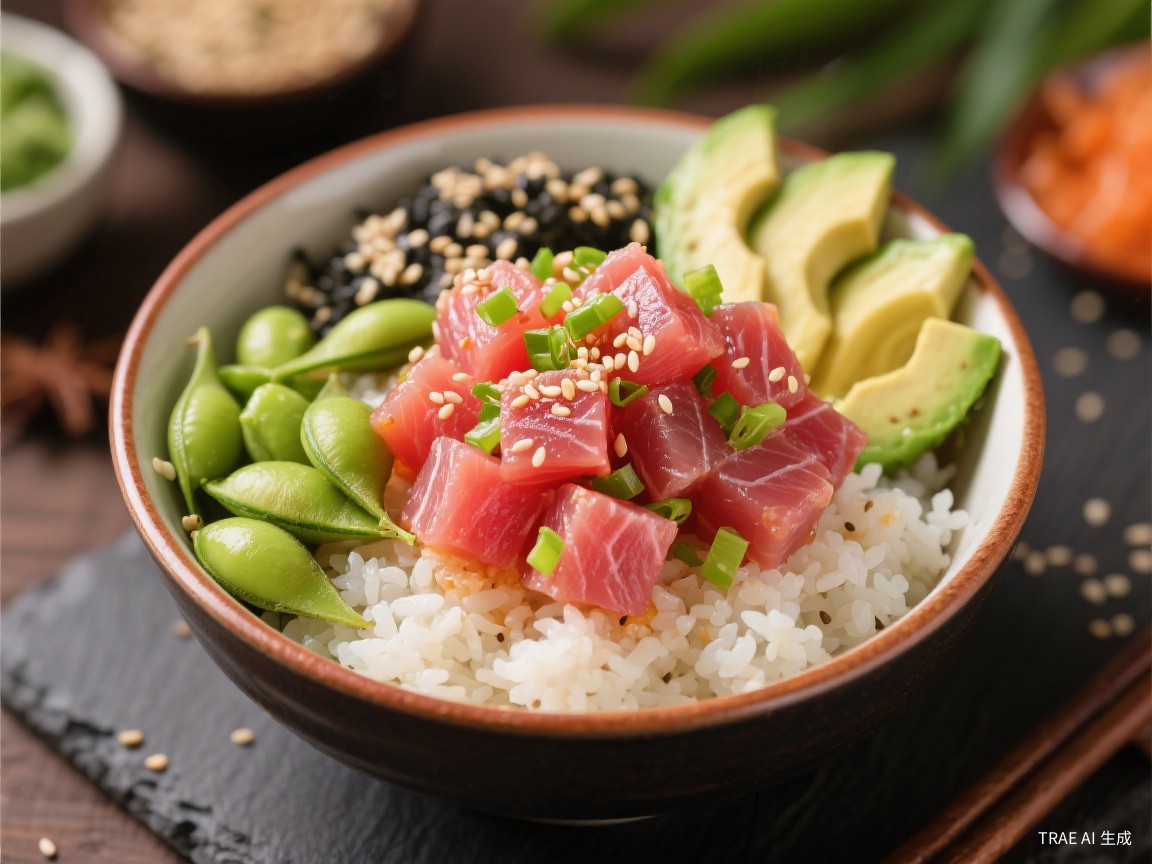
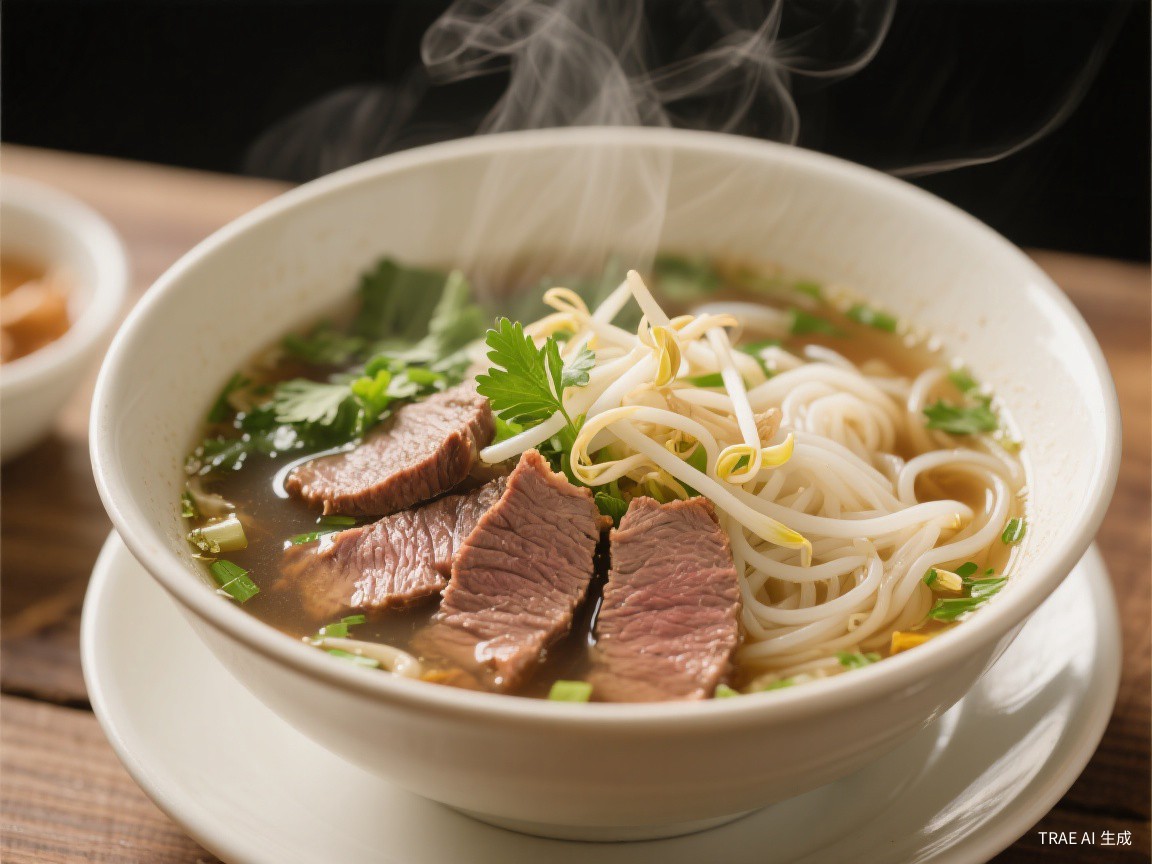
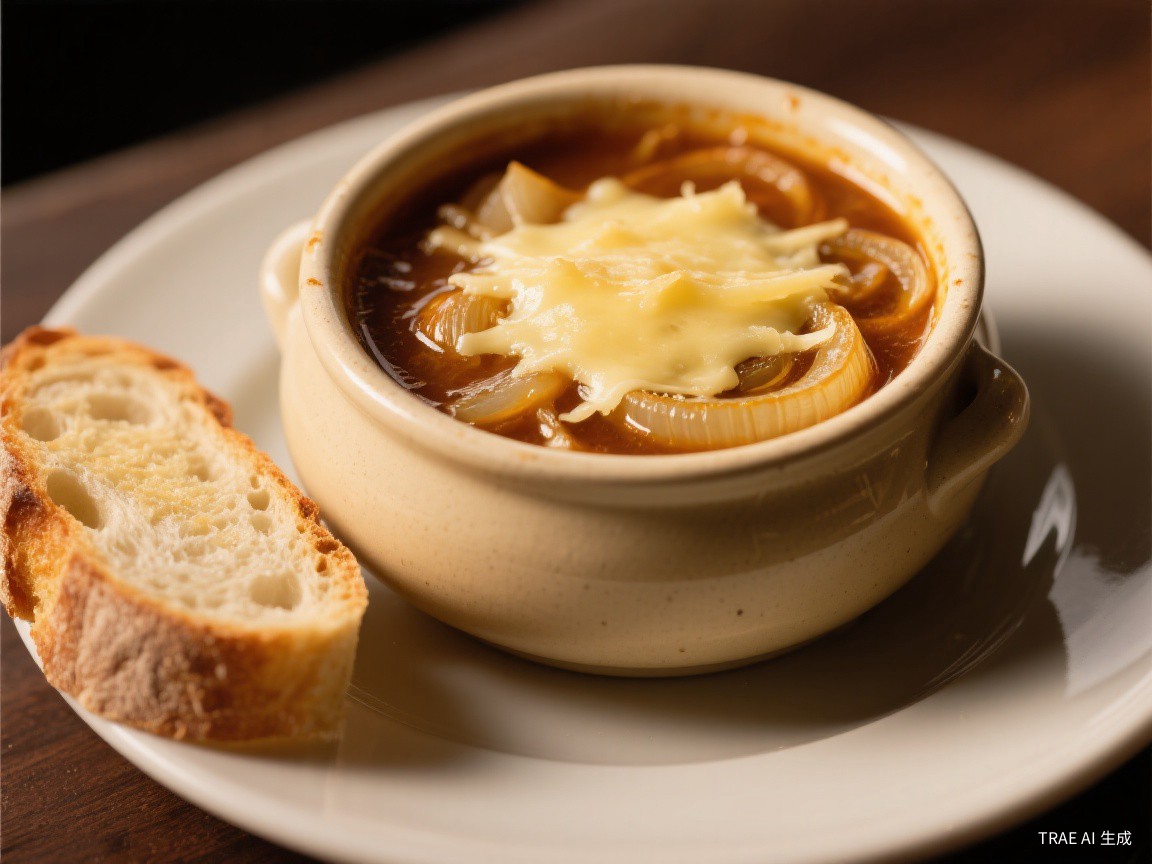
There is a moment in every tonkotsu ramen shop when the kitchen door swings open and a wave of dense, pork-scented steam rolls out into the dining room. It hits you before you see the bowls—a warm, almost viscous cloud that carries the weight of eighteen hours of rolling boil. This is not a soup you sip delicately. This is a soup that demands your full attention, a bowl of broth so rich and emulsified that it coats the spoon, the lips, the inside of your mouth with a layer of pork fat and collagen that lingers long after the last noodle is gone.
The Birth of Hakata-Style Tonkotsu
While ramen's broader history traces back to Chinese wheat noodles brought to Japan in the late nineteenth century, tonkotsu ramen as we know it is a distinctly Japanese invention—and a relatively recent one at that. The story begins in 1947 in Hakata, a ward in the city of Fukuoka on the southern island of Kyushu. A man named Nagahama Tokio opened a street stall called Nankin Senryo, serving pork bone broth ramen to the dockworkers and laborers who populated the port city's busy streets.
Hakata was a working-class district, and the ramen reflected that. It was cheap, filling, and intensely flavored—the kind of food that could sustain a man through a long shift of physical labor. The broth was boiled furiously, for hours on end, extracting every last bit of flavor and body from pork bones that would otherwise have been discarded. This aggressive boiling technique was born not from culinary sophistication but from necessity: street vendors needed to keep their broth hot and ready to serve at all hours, and a constant rolling boil achieved both goals simultaneously.
What those early vendors did not realize was that their rough-and-ready approach was creating something extraordinary. The violent agitation of the boiling water was emulsifying the pork fat and collagen into the broth, creating a creamy, opaque liquid unlike any other ramen style in Japan. Where Tokyo-style shoyu ramen was clear and refined, Hakata tonkotsu was thick, cloudy, and primal. It was ramen's answer to butter—rich, satisfying, and slightly indulgent.
"Tonkotsu is the punk rock of ramen. It doesn't ask for permission. It doesn't try to be elegant. It just hits you with everything it has and dares you to put the spoon down."
— Chef Kenji
The Rolling Boil: Technique Over Recipe
If there is a single technique that defines tonkotsu ramen, it is the rolling boil. Not a gentle simmer, not a low bubble—this is a full, aggressive, continuous boil maintained for twelve to eighteen hours. The water churns violently, bones tumble against each other, and the broth transforms from clear to milky white over the course of many hours. Understanding why this happens requires a brief dive into food science.
Pork bones, particularly femur and knuckle bones, contain large amounts of collagen—a structural protein that, when heated in water for extended periods, breaks down into gelatin. Gelatin dissolves into the broth, giving it body and a silky mouthfeel. But gelatin alone does not create the characteristic milky opacity of tonkotsu. That comes from the emulsification of fat. The violent boiling action shatters fat globules into microscopic droplets that suspend permanently in the broth, much like the fat in homogenized milk. The result is a liquid that is technically an emulsion—fat, water, and dissolved proteins held together by the sheer force of constant agitation.
Chef's Tip
Never let your tonkotsu broth drop below a rolling boil once it has turned white. If the boil slows, the emulsion will begin to separate and the broth will turn greasy. Keep the heat high, and add boiling water (never cold) when the liquid level drops too low. Cold water shocks the emulsion and can cause it to break irreversibly.
The Science of Collagen Extraction
Collagen begins to break down into gelatin at around 160 degrees Fahrenheit (71 degrees Celsius), but full extraction requires sustained heat over many hours. The collagen in connective tissue and bone marrow is remarkably resilient—it is, after all, the protein that gives animal joints their structural integrity. Breaking it down completely takes time, patience, and consistent temperature.
The bones you choose matter enormously. Femur bones, cut crosswise by your butcher to expose the marrow cavity, provide the richest source of collagen and fat. Knuckle bones, with their dense network of connective tissue, contribute additional gelatin and body. Neck bones and rib bones add meaty flavor but less collagen. A proper tonkotsu broth uses a combination—roughly sixty percent femur bones and forty percent knuckle bones, supplemented with a small amount of fatback or pork skin for additional richness.
Marrow Bones vs. Femur: Choosing the Right Cut
Not all pork bones are created equal, and understanding the differences is essential for producing the broth you want. Marrow bones—typically femur bones cut into short sections—are prized for the rich, fatty marrow they contain. When boiled vigorously, this marrow melts into the broth, contributing enormous flavor and the luxurious mouthfeel that defines premium tonkotsu.
Whole femur bones, especially when split lengthwise by the butcher, offer a different advantage. The exposed bone surface area is dramatically increased, allowing water to penetrate deeper and extract more minerals and gelatin. The trade-off is less marrow per bone, since much of it has been removed during splitting.
- Femur bones (split): Maximum surface area for collagen extraction, cleaner flavor
- Marrow bones (cross-cut): Richer, fattier broth with deeper pork flavor
- Knuckle bones: Highest gelatin content, essential for body and silkiness
- Neck bones: Meaty flavor contribution, good for secondary stock
- Pork fatback: Optional addition for extra richness and emulsification
My recommendation for home cooks is to ask your butcher for a mix of split femur bones and knuckle bones, with a few cross-cut marrow sections for good measure. Most butchers will oblige, especially if you explain you are making ramen broth. If your local butcher cannot provide these cuts, Asian grocery stores often stock pork bones specifically for soup and stock-making.
Thin Straight Noodles: The Hakata Signature
Hakata-style tonkotsu is served with thin, straight noodles—quite different from the wavy, curly noodles associated with Tokyo or Sapporo styles. These noodles are typically made with a higher proportion of kansui (alkaline mineral water) than other ramen varieties, giving them a distinctive yellow hue and a firm, slightly elastic bite. The thin gauge allows them to cook quickly—often just sixty to ninety seconds—which is critical because tonkotsu noodles must be served immediately after cooking to maintain their texture.
In Fukuoka, there is even a custom called "kaedama," which allows diners to order a second helping of noodles to add to their remaining broth. The noodles arrive in a small separate basket, and you slide them into your bowl yourself. This practice speaks to the Hakata philosophy: the broth is precious, and no self-respecting ramen lover would let it go to waste.
Mayu: The Black Garlic Oil That Completes the Bowl
No discussion of tonkotsu ramen is complete without mentioning mayu—the fragrant black garlic oil that is drizzled over the finished bowl. Mayu is made by frying whole garlic cloves in sesame oil until they are deeply blackened and nearly burnt, then straining the oil and blending the charred garlic into a paste. The result is an intensely smoky, slightly bitter oil that cuts through the richness of the pork broth and adds a layer of complexity that is difficult to describe but impossible to forget.
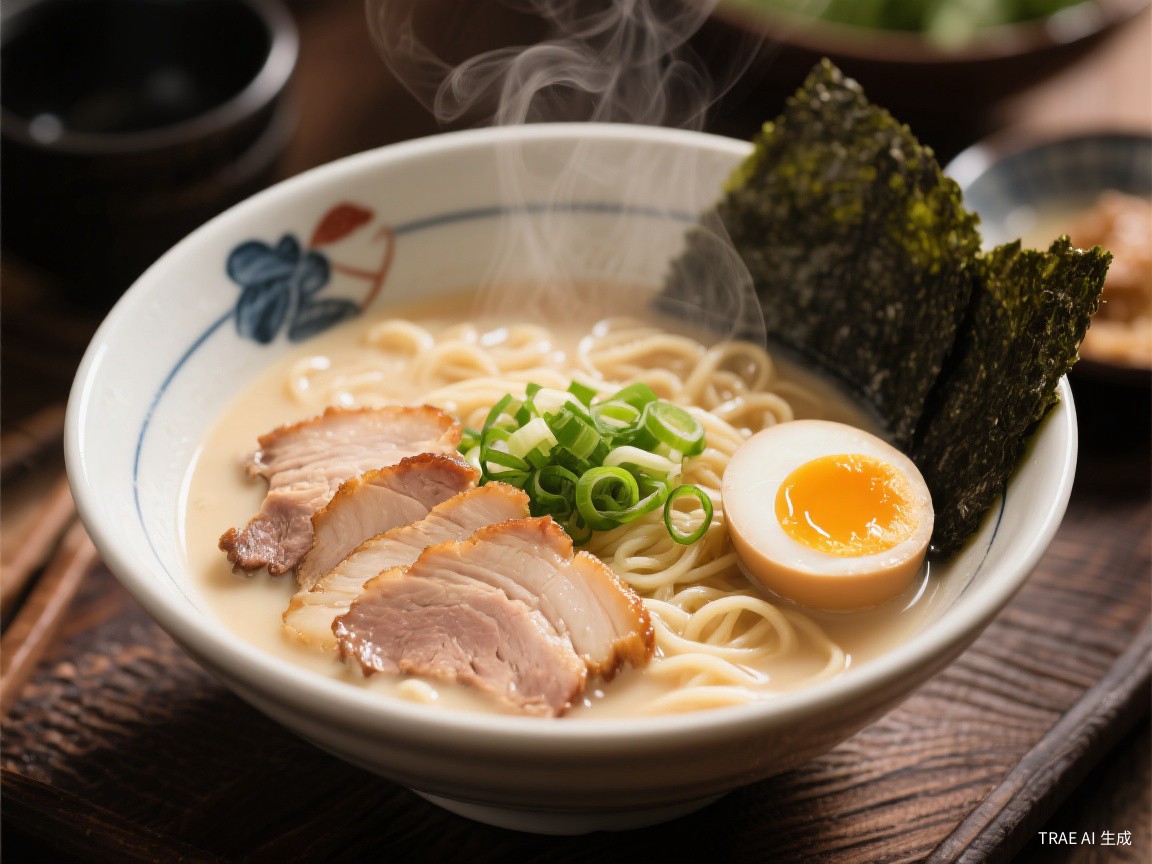
A few drops of mayu across the surface of the bowl, along with sliced chashu pork, pickled mustard greens (takana), wood ear mushrooms, and a soft-boiled egg marinated in soy sauce and mirin, transform a bowl of broth and noodles into a complete sensory experience. Each element plays its part—the creamy broth, the firm noodles, the smoky oil, the sweet pork, the tangy greens—creating a harmony that is greater than the sum of its parts.
Common Mistakes to Avoid
- Using low heat: A gentle simmer will not emulsify the fat. You need a full rolling boil.
- Adding cold water: Always replenish with boiling water to maintain the emulsion.
- Skipping the initial blanch: Blanch bones in boiling water for ten minutes, then rinse thoroughly to remove impurities.
- Overcooking the noodles: Thin Hakata-style noodles cook in sixty to ninety seconds. Set a timer.
- Serving lukewarm broth: Tonkotsu should be served piping hot. Heat your bowls before ladling.
The Bowl That Changed Ramen Forever
Tonkotsu ramen has come a long way from the street stalls of postwar Hakata. Today, it is one of the most recognized and beloved ramen styles in the world, with dedicated shops in virtually every major city. Yet the essence remains unchanged: pork bones, water, heat, and time. No shortcuts, no substitutes, no clever workarounds. Just the relentless, honest alchemy of boiling bones until they give up everything they have.
When you sit down with a properly made bowl of tonkotsu ramen—the broth opaque and steaming, the noodles glistening, the mayu glistening in dark droplets across the surface—you are tasting the result of eighteen hours of commitment. It is a dish that rewards patience above all else, and in a world of instant gratification, that makes it something genuinely special.
Ready to Make Tonkotsu at Home?
Download our complete guide with bone sourcing tips, timing charts, and the authentic Hakata method.
Get the Free Guide