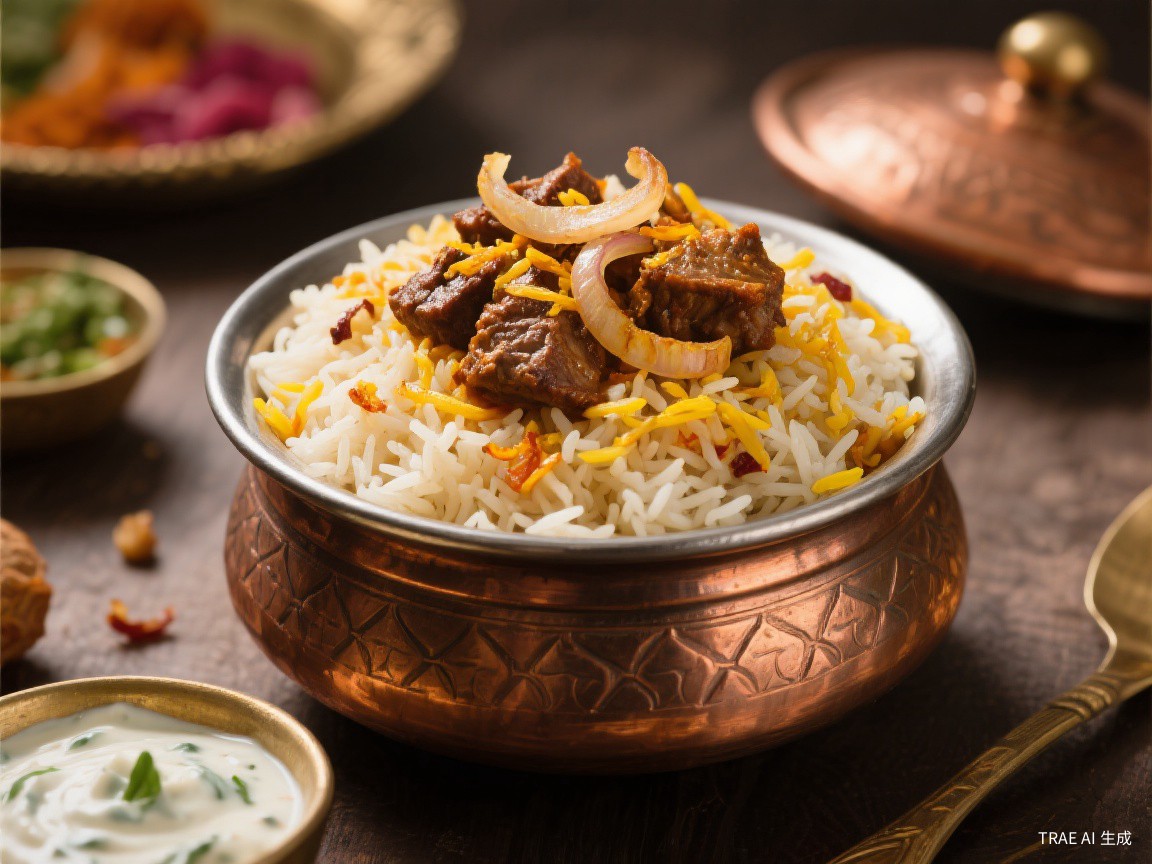
Hyderabadi biryani is not merely a dish—it's an institution. This magnificent layered rice preparation, born in the royal kitchens of the Nizams, represents the pinnacle of Indian cuisine. Fragrant basmati rice, tender meat, and a symphony of spices come together in a technique called "dum," where the pot is sealed and the contents cook in their own steam, creating flavors that penetrate every grain of rice.
A Royal Heritage
The story of Hyderabadi biryani begins in the 16th century, when the Mughal empire expanded into the Deccan plateau. The Nizams of Hyderabad, rulers of immense wealth and sophisticated taste, developed a cuisine that blended Mughlai traditions with local Telangana influences. Their chefs created dishes of extraordinary refinement, and biryani became the centerpiece of royal feasts.
What distinguishes Hyderabadi biryani from other regional versions is the "kacchi" method, where raw marinated meat is layered with partially cooked rice, then sealed and cooked together. This technique, developed over generations, allows the meat juices to infuse the rice while the rice absorbs the complex spice blend. The result is a dish where every element is perfectly cooked yet deeply interconnected in flavor.
Chef's Tip
Age your basmati rice for at least a year before using it for biryani. Aged rice has less moisture content, resulting in longer grains that stay separate and fluffy after cooking.
The Rice: Foundation of Excellence
The quality of rice can make or break a biryani. Authentic Hyderabadi biryani uses aged long-grain basmati, preferably from the foothills of the Himalayas. The grains should be at least 7mm long, with a pearly white color and a delicate fragrance even before cooking. When held up to light, each grain should appear translucent without chalky spots.
Proper preparation of the rice is crucial. Soak the grains for at least 30 minutes before cooking—this allows them to absorb water evenly and cook uniformly. When par-boiling, add whole spices like cardamom, cloves, and bay leaves to the water. The rice should be cooked to about 70% doneness; it will finish cooking during the dum phase. Test by pressing a grain between your fingers—it should break into 2-3 pieces, not mash completely.
Essential Rice Preparation Steps
- Selection: Choose aged, extra-long basmati rice.
- Cleaning: Pick through for stones and broken grains.
- Washing: Rinse gently until water runs clear.
- Soaking: 30 minutes minimum, up to 2 hours.
- Par-boiling: With whole spices and salt until 70% done.
The Meat and Marinade
While goat (mutton) is traditional, lamb or chicken work beautifully. The meat must be marinated overnight in a mixture that typically includes yogurt, ginger-garlic paste, lemon juice, and a complex spice blend. This long marination serves dual purposes: it tenderizes the meat and allows the flavors to penetrate deeply.
The marinade for Hyderabadi biryani often includes a paste of green papaya or raw pineapple—natural enzymes that break down tough fibers without the need for commercial tenderizers. Red chili powder provides color and heat, while turmeric adds earthiness and a golden hue. The yogurt should be thick and well-drained; watery yogurt dilutes the marinade and affects the final texture.
"A biryani tells a story in layers—the spices speak of trade routes, the technique speaks of royal kitchens, and the love that goes into it speaks of home. Every grain should be a journey."
— Chef Sanjeev Kapoor
The Spice Symphony
What elevates biryani from rice and meat to something transcendent is the spice blend. Whole spices play a crucial role—cardamom, cloves, cinnamon, star anise, and black cumin are typically used. These are not ground but added whole, releasing their essential oils gradually during cooking and creating layers of flavor that unfold with each bite.
The signature element of Hyderabadi biryani is the "potli ka masala"—a bouquet garni of spices tied in muslin and cooked with the rice. This includes nutmeg, mace, star anise, and sometimes dried rose petals. The bundle is removed before serving, leaving behind its aromatic essence without leaving whole spices in the finished dish.
The Dum Technique
"Dum" means breath in Urdu, and dum pukht cooking relies on steam trapped within a sealed pot. For biryani, this technique is essential. After layering the marinated meat and par-cooked rice, the pot is sealed with dough or a tight-fitting lid weighted down. The contents cook slowly over low heat, the steam circulating and infusing everything with flavor.
Traditional cooks use wheat flour dough to seal the rim of the pot, creating an airtight seal. The pot is then placed on a griddle (tawa) over very low heat, with some cooks even placing hot coals on the lid to provide heat from above. This slow cooking, typically 45 minutes to an hour, allows the flavors to marry while ensuring the meat becomes meltingly tender and the rice achieves perfect doneness.
Signs of Perfect Dum Cooking
- Aroma: A rich, complex fragrance escapes when the seal is broken.
- Steam: Visible steam should rise from the rice.
- Rice texture: Grains are fully cooked but remain separate.
- Meat tenderness: Falls off the bone with gentle pressure.
- Moisture: The bottom should be slightly saucy, not dry or watery.
The Art of Layering
Layering is where biryani becomes art. Start with the marinated meat at the bottom of a heavy-bottomed pot. Add fried onions (birista), mint leaves, coriander, and saffron-infused milk. Then carefully spread the par-cooked rice over everything. Top with more fried onions, ghee, and a final drizzle of saffron water.
The saffron deserves special attention. It should be soaked in warm milk for at least 30 minutes before use, releasing its golden color and distinctive aroma. Drizzle this over the rice in random patterns—this creates the beautiful variegated coloring that characterizes a well-made biryani. Some cooks also add a few drops of rose water or kewra water for additional fragrance.
Accompaniments and Serving
Hyderabadi biryani is traditionally served with mirchi ka salan—a tangy, spicy curry made with green chilies and peanuts. This provides a saucy counterpoint to the relatively dry biryani. Raita, a yogurt-based side with cucumber or boondi, offers cooling contrast. A simple salad of onion, cucumber, and lemon completes the meal.
When serving, dig deep into the pot to get all the layers in each portion. The rice at the bottom will have absorbed the most meat juices and spices, while the top layer will be fluffier and more fragrant. Mix gently on the plate—don't stir vigorously, which would break the grains. Serve hot, with the accompaniments on the side.
Common Mistakes to Avoid
Even experienced cooks can stumble with biryani. Overcooking the rice during the par-boiling stage is common—remember, it should be only 70% done. Using too much water in the final cooking results in mushy rice; the sealed pot creates enough steam from the marinade and rice moisture. Opening the pot during dum cooking releases the steam and interrupts the process.
Another mistake is skimping on the ghee. While health-conscious cooks might reduce the amount, ghee is essential for both flavor and texture. It coats the rice grains, keeping them separate, and carries the fat-soluble flavors of the spices. A generous hand with ghee is the mark of a proper biryani.
A Dish Worth Mastering
Hyderabadi biryani is not a quick weeknight dinner. It's a project, a labor of love that rewards patience and attention. But when you lift the lid on that first successful attempt, when the aroma fills your kitchen and each grain of rice is perfectly separate and deeply flavored, you'll understand why this dish has captivated food lovers for centuries. It's India on a plate—complex, beautiful, and utterly delicious.
Ready to Master Indian Cuisine?
Download our complete guide to Indian spices and cooking techniques, with recipes for biryani, curries, and breads.
Get the Free Guide