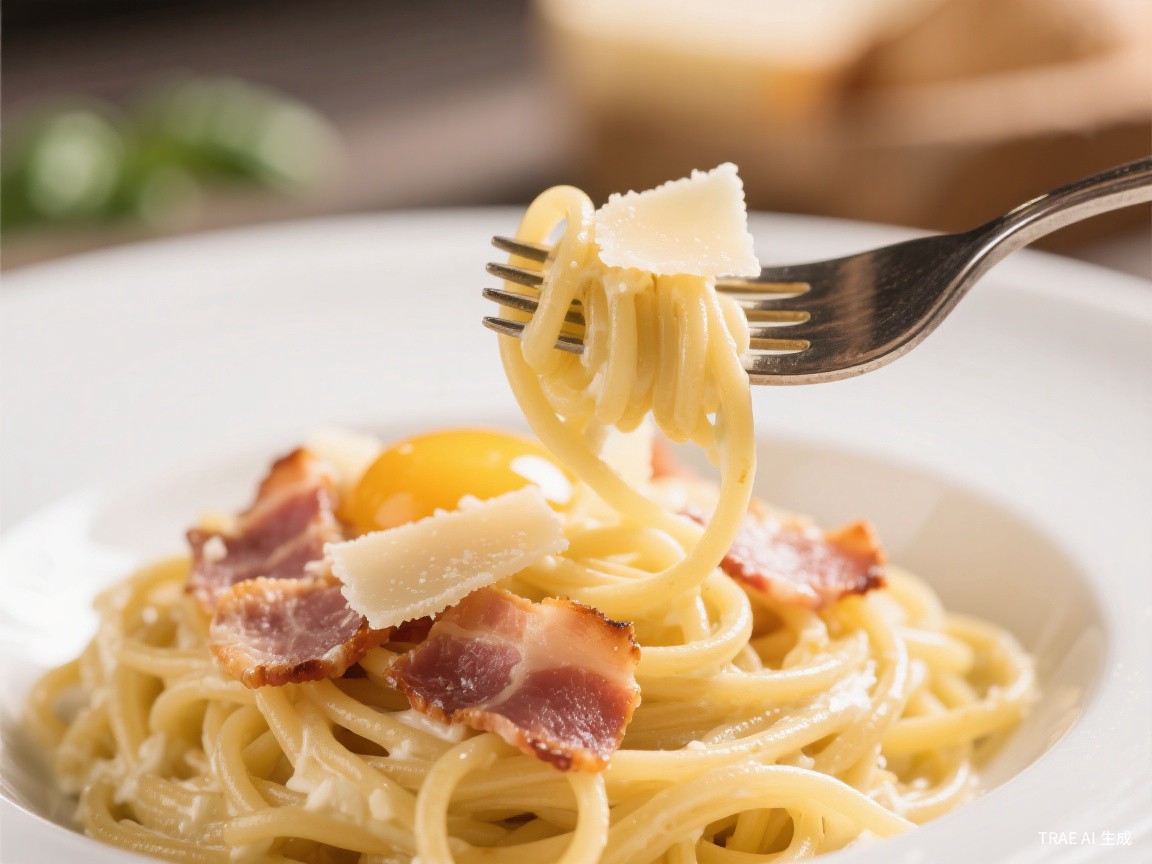
There is a moment in the preparation of cacio e pepe that separates the merely competent cook from the true practitioner of the craft. It arrives when you lift the pasta from its pot with tongs and drop it—not into a separate pan, not into a waiting bowl, but directly into a cold mixing bowl where a mound of finely grated Pecorino Romano and a generous quantity of cracked black pepper sit waiting. The pasta is dripping with starchy cooking water, and as it hits the cheese, something remarkable begins to happen. The cheese does not melt into a greasy puddle or seize into a clumpy mess. Instead, it transforms into a silky, creamy sauce that coats every strand of pasta in a luminous sheen. This is the emulsion, and it is the reason cacio e pepe has endured as one of Rome's greatest culinary achievements.
Three Ingredients, Infinite Complexity
Cacio e pepe translates literally to "cheese and pepper," and its ingredient list is disarmingly short: pasta, Pecorino Romano cheese, and black pepper. No butter, no cream, no olive oil, no garlic, no onion. Three ingredients. That is all. Yet within those three ingredients lies a dish of such extraordinary depth and satisfaction that it has been served in Roman trattorias for centuries and has recently become one of the most talked-about pasta dishes in the world.
The genius of cacio e pepe is that it is simultaneously a peasant dish and a technical masterpiece. It was born in the countryside outside Rome, where shepherds needed a meal that was filling, portable, and made from ingredients they could carry with them. Dried pasta, aged cheese, and peppercorns were all durable, lightweight, and shelf-stable. Combined over a fire with water from a stream, they produced a meal that was far greater than the sum of its parts. Today, that same combination challenges even professional chefs, because the margin between perfection and disaster is razor-thin.
Pecorino Romano: Not All Cheese Is Created Equal
The "cacio" in cacio e pepe is Pecorino Romano, a hard, salty sheep's milk cheese that has been produced in the Lazio region of Italy for over two thousand years. The Roman historian Pliny the Elder wrote about it, and its production methods have remained largely unchanged since antiquity. It is sharp, piquant, and intensely savory—far more assertive than Parmigiano-Reggiano, which is why Parmigiano cannot substitute for it in this dish despite what some recipes suggest.
True Pecorino Romano carries a Protected Designation of Origin (DOP) certification, which means it must be made from the milk of sheep raised in specific regions—Sardinia, Lazio, and the province of Grosseto in Tuscany—and aged for a minimum of eight months. The cheese is pressed, salted, and aged in cool, humid caves where it develops its characteristic hard rind and crumbly, granular interior. Its flavor is bold and salty with a sharp, slightly tangy finish and an underlying sweetness that emerges as you eat it.
Chef's Tip
Buy your Pecorino Romano as a whole wedge and grate it yourself immediately before cooking. Pre-grated cheese contains anti-caking agents—typically cellulose or potato starch—that interfere with emulsion formation. The cheese must be grated as finely as possible, almost to a powder. A Microplane zester produces the ideal texture, though the fine side of a box grater works well too. The finer the cheese, the smoother and more stable your sauce will be.
Fresh vs. Aged Pecorino
Within the world of Pecorino Romano, there are subtle but important distinctions. Younger pecorino, aged around eight months, is slightly softer and milder, with a creamier texture that makes emulsion easier. Older pecorino, aged twelve months or more, is harder, sharper, and more crumbly, with a more pronounced saltiness that some purists prefer. For your first attempts at cacio e pepe, a moderately aged pecorino—around eight to ten months—offers the best balance of flavor and workability. As you gain confidence, you can experiment with older, sharper cheeses and adjust the quantities to suit your palate.
"Cacio e pepe is the dish that reveals whether a cook truly understands pasta. Anyone can boil noodles and add sauce. But to create a creamy, cohesive sauce from nothing but cheese, pepper, and starchy water—that requires understanding what pasta water actually is and what it can do."
— Chef Marco's mentor, Trattoria Da Enzo, Rome
The Pepper: Why Tellicherry Makes a Difference
Black pepper is the second named ingredient, and while any black pepper will produce a serviceable dish, the quality of your peppercorns has a measurable impact on the final result. Tellicherry peppercorns, grown on the Malabar Coast of India, are considered the finest black peppercorns in the world. They are allowed to ripen longer on the vine than standard black peppercorns, developing a larger size, a more complex flavor, and a noticeably fruitier, more aromatic character.
In cacio e pepe, the pepper should be freshly cracked—not ground from a pre-filled shaker, which has lost most of its volatile oils. Toast the cracked peppercorns briefly in a dry skillet before adding them to the pasta. This simple step, which takes less than a minute, transforms the pepper's flavor from sharp and one-dimensional to warm, fragrant, and deeply complex. The toasting releases essential oils and caramelizes some of the pepper's natural sugars, creating a nuanced heat that lingers pleasantly rather than assaulting the palate.
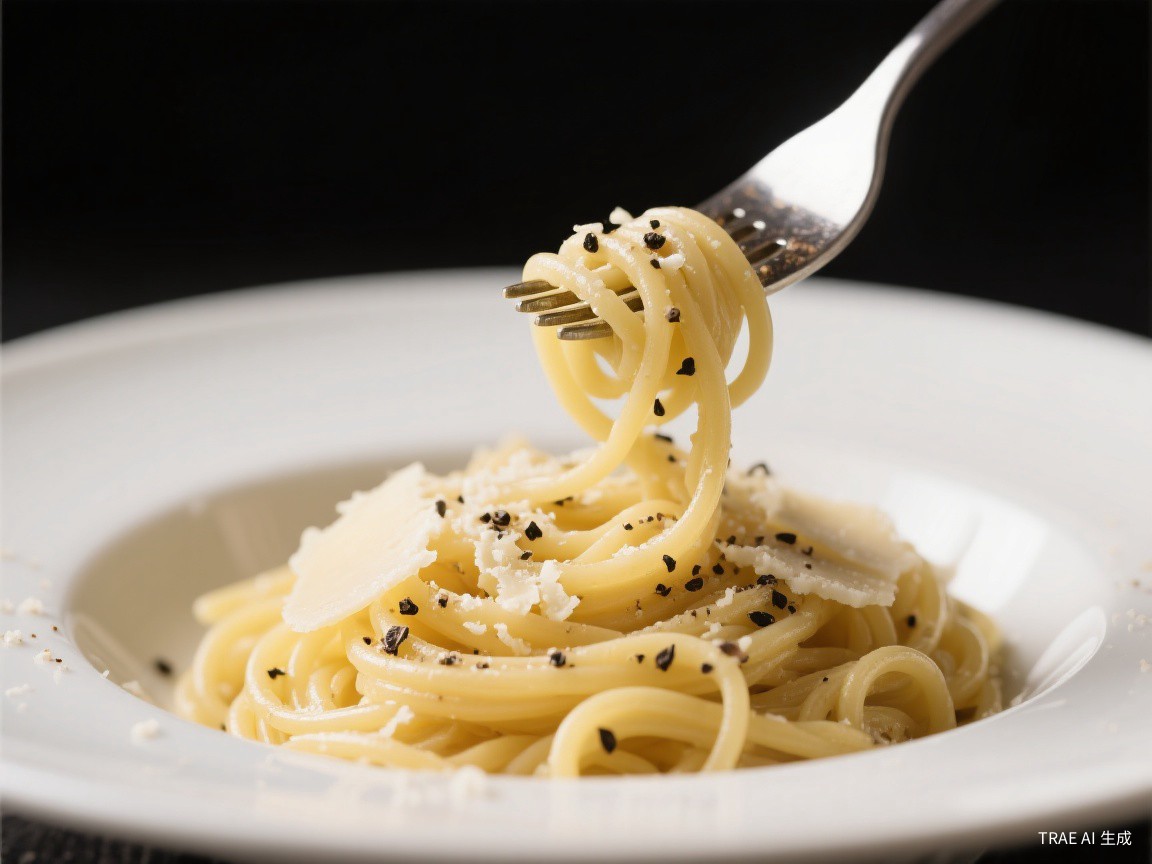
The Emulsion: Understanding Pasta Water Science
The emulsion is the heart of cacio e pepe, and understanding the science behind it is the key to consistent success. Pasta water is not simply water—it is a suspension of starch granules that have leached from the pasta during cooking. These starches, primarily amylose and amylopectin, act as emulsifiers when heated, binding the fat in the cheese with the water to create a stable, creamy sauce. This is the same principle at work in a vinaigrette, where mustard acts as the emulsifier binding oil and vinegar.
The critical factor is starch concentration. If your pasta water is too dilute—because you used too much water or did not cook the pasta long enough—the emulsion will be weak and the sauce will be thin and watery. If the water is too concentrated, the sauce can become gummy and paste-like. The ideal approach is to cook your pasta in significantly less water than most recipes suggest—about three quarts for a pound of pasta rather than the standard six—and to reserve at least two cups of the cooking water before draining. This concentrated, starchy water is your sauce base, and it is the single most important variable in the dish.
The Two-Bowl Technique
- Bowl one (cold): Contains the finely grated Pecorino Romano and cracked pepper. The cold temperature prevents the cheese from melting prematurely.
- Transfer the pasta: Using tongs, lift the pasta directly from the cooking water into the cold bowl, bringing a generous amount of starchy water along.
- Toss vigorously: The residual heat of the pasta melts the cheese while the starchy water creates the emulsion. Toss continuously for sixty to ninety seconds.
- Add water gradually: If the sauce is too thick, add more pasta water a tablespoon at a time until the desired consistency is reached.
- Serve immediately: Cacio e pepe waits for no one. The emulsion is stable for only a few minutes before it begins to separate.
Common Pitfalls and How to Avoid Them
The most frequent failure mode in cacio e pepe is clumping—the cheese seizes into rubbery, unappetizing lumps that cling to the pasta in patches rather than forming a smooth sauce. This happens when the cheese is exposed to heat that is too intense or when the ratio of cheese to starchy water is wrong. If the pasta is too hot when it hits the cheese, the proteins in the Pecorino denature rapidly and squeeze out their fat, creating an oily, separated mess with rubbery cheese bits floating in it.
The solution is temperature control. The cold bowl technique described above is the most reliable method, but there is an alternative approach used in many Roman restaurants: the pan method. In this version, the drained pasta is added to a large skillet where the pepper has been toasted, then a ladleful of pasta water is added, followed by the Pecorino. The key difference is that the pan is removed from the heat entirely before the cheese goes in, and the sauce is finished by tossing the pasta vigorously off the heat, allowing the residual warmth to melt the cheese gently while the motion creates the emulsion.
Chef's Tip
If your sauce does clump, do not panic. Remove the pasta from the bowl, add a small splash of cold water, and whisk vigorously. The temperature drop will help the proteins relax and the emulsion reform. It will not be quite as silky as a first-attempt success, but it will still be delicious. Cacio e pepe is forgiving of imperfection if you understand the science of what went wrong.
Pasta Selection: Shape Matters
Traditional cacio e pepe is made with tonnarelli, a thick, square-cut egg pasta that is similar to spaghetti but with a rougher surface texture that holds the sauce beautifully. If tonnarelli are unavailable, high-quality spaghetti—preferably bronze-die extruded, which has a rougher surface than Teflon-extruded—is an excellent substitute. The rough surface creates microscopic channels that trap the sauce, while the smooth surface of Teflon-extruded pasta allows it to slide right off.
Some modern restaurants serve cacio e pepe with rigatoni or mezze maniche, whose tubular shape captures the sauce inside as well as outside. These shapes work well and are perhaps even more forgiving for beginners, since the sauce does not need to cling as perfectly to the pasta's surface when it is also sitting inside the tube. Whatever shape you choose, cook it one minute less than the package directions indicate—the pasta will finish cooking in the sauce, absorbing starch water and flavor in those final sixty seconds.
A Final Note on Simplicity
- Resist the urge to add butter: It is not traditional and it masks the cheese's flavor
- Resist the urge to add cream: The creaminess must come from the emulsion alone
- Resist the urge to add garlic: Cacio e pepe is about cheese and pepper, nothing more
- Resist the urge to add parsley: Garnishes are unnecessary and distract from the dish's purity
- Trust the process: Three ingredients, properly handled, produce something extraordinary
Ready to Master Italian Pasta?
Download our complete guide to Roman pasta dishes with step-by-step techniques for carbonara, gricia, and amatriciana.
Get the Free Guide