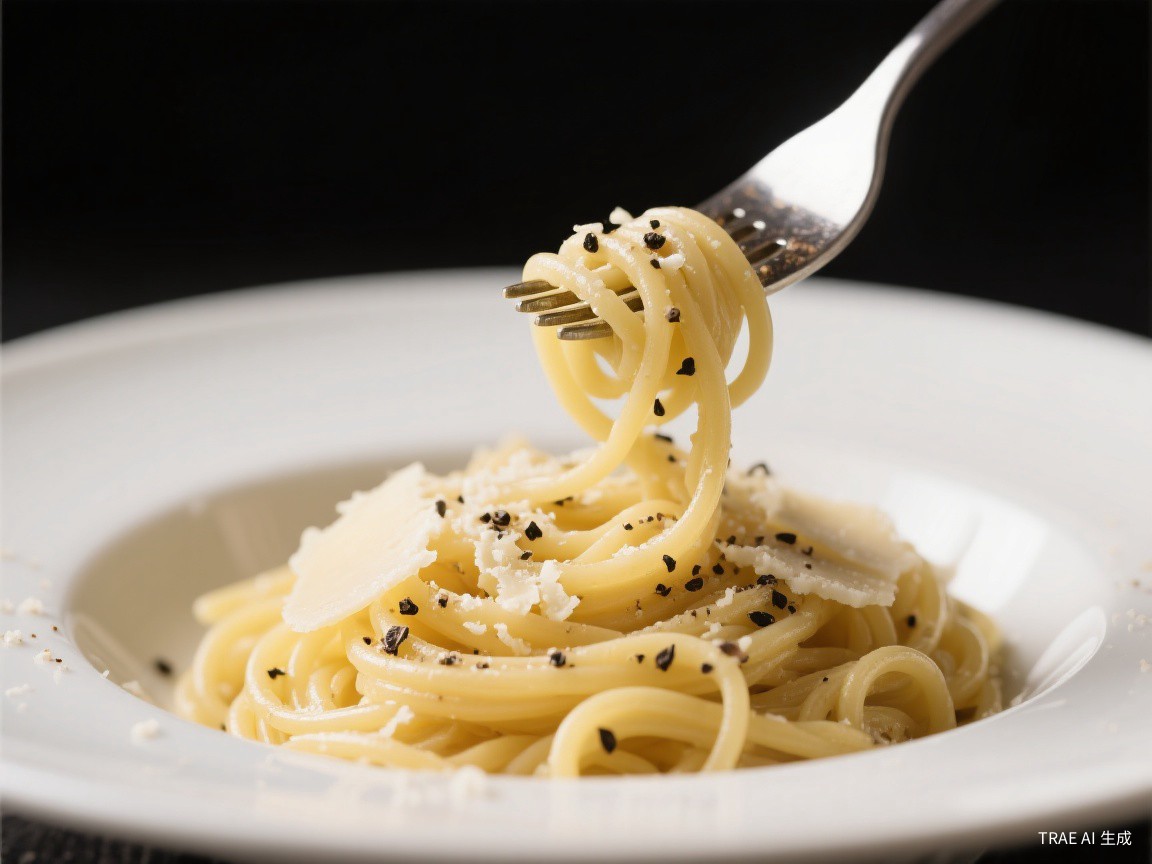
I once watched a man in a trattoria in Trastevere send a plate of carbonara back to the kitchen because it arrived with a visible creaminess that he identified instantly as cream. The waiter apologized, the kitchen remade the dish, and the man ate it in reverent silence. This happened in Rome, where carbonara is not merely a recipe but a cultural contract—a four-ingredient pact between cook and diner that demands absolute fidelity. No cream, no garlic, no onion, no bacon. Just guanciale, Pecorino Romano, eggs, black pepper, and pasta. Five ingredients. Anything else is something else entirely.
The Cream Debate: Why It Matters
If there is one subject that unites every Italian nonna, Roman chef, and pasta purist on earth, it is this: cream has no place in carbonara. The creamy texture that defines great carbonara comes not from dairy cream but from the emulsion of egg yolks, Pecorino Romano cheese, and starchy pasta water. This emulsion, when executed correctly, produces a sauce of extraordinary silkiness—a coating that clings to every strand of pasta without being heavy or cloying. Adding cream destroys this delicate balance, masking the flavors of the guanciale and Pecorino under a blanket of unnecessary richness.
The cream misconception likely originated in mid-twentieth century Italian-American restaurants, where cooks unfamiliar with the emulsion technique added cream as an insurance policy against scrambled eggs. It was a pragmatic solution to a technical problem, and it produced a dish that was certainly edible—perhaps even enjoyable—but it was not carbonara. The American-Italian carbonara became its own creature, popular and widespread, and it is the version most non-Italian eaters first encounter. Unlearning it is the first step toward understanding what carbonara actually is.
"Carbonara is not a sauce you make separately and pour over pasta. It is a transformation that happens in the pan, in the final thirty seconds, when heat and motion and starch create something that did not exist before. If you are adding cream, you have already given up."
— Chef Marcella Hazan
Guanciale vs. Pancetta: The Meat That Makes It
The traditional and correct meat for carbonara is guanciale—cured pork jowl (guancia means "cheek" in Italian). Guanciale is different from pancetta and bacon in several critical ways. First, it is cured with salt, pepper, and sometimes garlic or rosemary, but it is not smoked. Smoke is a flavor that does not belong in carbonara. Second, guanciale has a significantly higher fat-to-meat ratio than pancetta—roughly sixty to seventy percent fat—which means that when rendered slowly, it produces a generous quantity of golden, translucent pork fat that becomes the cooking medium for the entire dish.
That fat is not waste; it is the foundation of the sauce. The rendered guanciale fat coats the pasta, carrying the flavors of the cured meat into every bite. It also provides the lubrication that allows the egg-cheese emulsion to flow smoothly rather than clumping. Pancetta, while acceptable as a substitute if guanciale is unavailable, has less fat and a more subdued flavor. Bacon, even unsmoked, is too lean and too aggressively cured to work well—the salt levels throw off the entire seasoning balance.
Chef's Tip
Cut the guanciale into strips about one-third inch wide and two inches long—larger than you might think necessary. During cooking, the strips will shrink significantly as the fat renders. Starting with larger pieces ensures you end up with substantial, chewy nuggets of meat in the finished dish rather than tiny, overcooked shards. Cook the guanciale over medium-low heat, stirring occasionally, until the fat is fully rendered and the meat pieces are golden and slightly crisp at the edges but still tender in the center—about eight to ten minutes.
Sourcing Guanciale
Finding quality guanciale outside of Italy can be challenging, but the situation has improved dramatically in recent years. Italian specialty shops, well-stocked cheese counters, and online purveyors now carry it regularly. If you must use pancetta, choose the thick-cut, rolled variety rather than the thin sliced deli style, and add an extra tablespoon of olive oil to compensate for the lower fat content. Under no circumstances should you use bacon—the smoky flavor will permeate every element of the dish and fundamentally alter its character.
The Egg-Cheese Emulsion: Technique Is Everything
This is the moment that separates carbonara from scrambled eggs with pasta. The technique requires understanding, precision, and confidence—because once you understand it, the actual execution takes about thirty seconds. The goal is to combine beaten eggs and grated Pecorino Romano with hot pasta and starchy pasta water to create a creamy emulsion without ever allowing the eggs to curdle or scramble.
Here is the critical principle: the pan must be off the heat when the egg mixture meets the pasta. Not on low heat. Not on warm. Off. Completely off the burner. The residual heat of the pasta and the pasta water is sufficient to thicken the eggs into a silky sauce. If the pan is too hot, you get carbonara with scrambled egg bits—which is still edible, but it is not the dish you are trying to make.
Prepare your egg mixture while the pasta cooks: whisk together two whole eggs and three egg yolks (per four servings) with a generous quantity of finely grated Pecorino Romano—about one cup. Add a generous amount of freshly cracked black pepper. The mixture should be thick, almost like a paste. When the pasta is ready, reserve at least one cup of the starchy cooking water before draining. This water is liquid gold—it contains the starch that will help your emulsion form and stabilize.
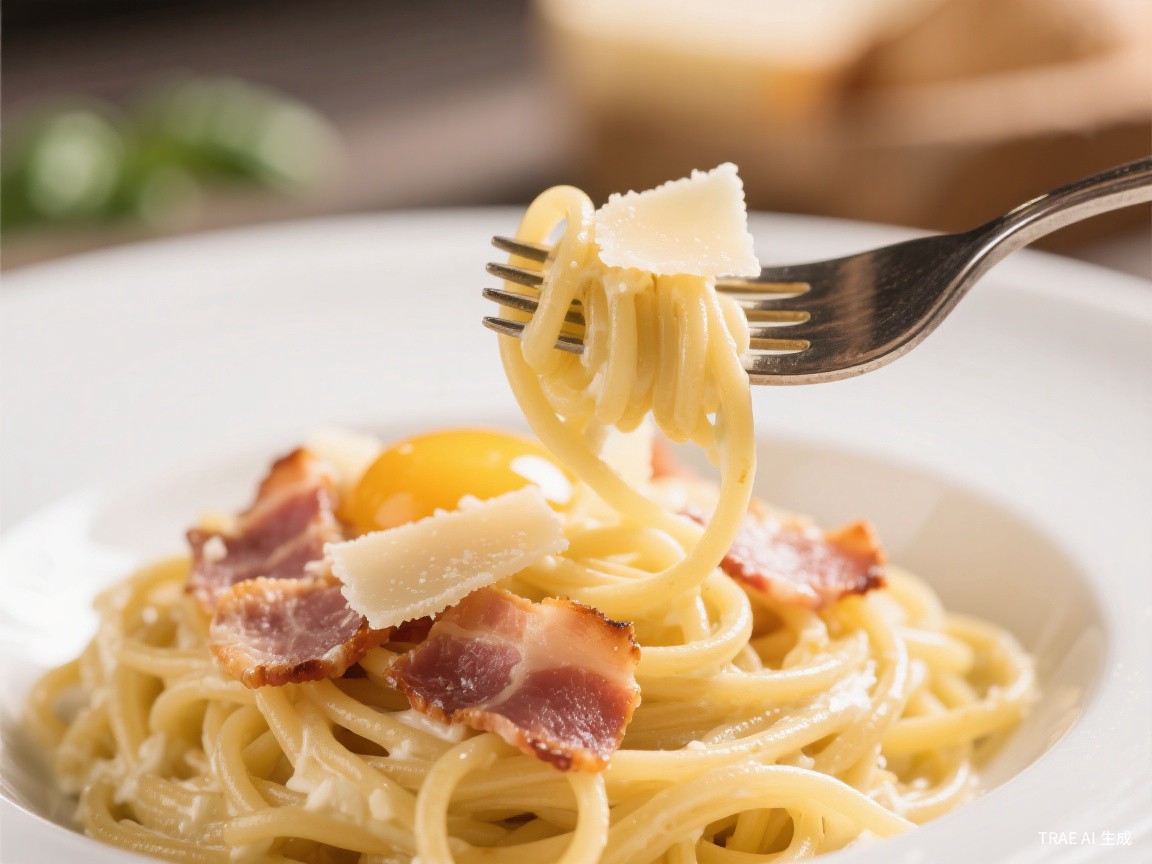
The Final Assembly
- Drain the pasta: When the spaghetti or rigatoni is two minutes from al dente, transfer it directly from the boiling water to the pan with the rendered guanciale using tongs. Do not drain into a colander—bring the pasta wet, dripping with starchy water.
- Toss and cook: Toss the pasta in the guanciale fat over medium heat for about one minute, allowing it to finish cooking and absorb the pork flavors. Remove the pan from the heat.
- Add the egg mixture: Pour the egg-Pecorino mixture over the hot pasta. Immediately begin tossing vigorously, adding reserved pasta water one splash at a time. The motion and the starchy water will create the emulsion.
- Watch the texture: You are looking for a glossy, creamy coating that clings to the pasta. If it looks too thick, add more pasta water. If it looks too loose, toss over gentle heat for a few seconds.
- Serve immediately: Carbonara waits for no one. Plate it the moment the texture is right, with an extra grating of Pecorino and a final crack of black pepper.
Pecorino Romano: The Sharp, Salty Soul
Pecorino Romano is a hard, salty sheep's milk cheese made in Lazio, Sardinia, and Tuscany. Its sharp, tangy, slightly gamey flavor is essential to carbonara's identity. Parmigiano-Reggiano, while a magnificent cheese in its own right, is too mild and sweet for carbonara—it softens the dish when it should be bold. Some recipes use a fifty-fifty blend of Pecorino and Parmigiano, which is an acceptable compromise for those who find pure Pecorino too assertive, but the traditional Roman version uses Pecorino exclusively.
Grate the Pecorino finely using a microplane or the finest side of a box grater. The finer the grate, the more smoothly it will incorporate into the egg mixture and the more evenly it will distribute through the sauce. Pre-grated cheese in a tub will not work—it contains anti-caking agents that prevent proper melting and create a grainy texture. Buy a wedge and grate it yourself, every single time.
Spaghetti vs. Rigatoni: The Pasta Question
In Rome, carbonara is most commonly made with spaghetti or rigatoni, and the choice between them is one of the few areas where genuine debate exists among Romans themselves. Spaghetti is the classic choice—its long strands provide maximum surface area for the sauce to cling to, and the twirling motion of eating spaghetti creates a satisfying interplay between pasta and sauce in every bite. Rigatoni, with its ridged exterior and hollow center, traps the sauce inside the tubes and along the ridges, creating small bursts of flavor with each bite.
Both are correct. The choice comes down to personal preference and, frankly, mood. I reach for spaghetti when I want elegance and simplicity, and rigatoni when I want something more rustic and substantial. Whichever you choose, cook it in well-salted water (it should taste like the sea) and undercook it by about two minutes—the pasta will finish cooking in the pan with the guanciale fat and will continue to soften slightly as you toss it with the egg mixture.
- Grana Padano: A milder alternative to Parmigiano, acceptable in a blend but never alone
- Black pepper: Use Tellicherry peppercorns if possible—their complex, fruity heat elevates the dish
- Pasta water: Never discard it until the dish is plated; it is your emulsion insurance
- Serving bowls: Warm your bowls in a low oven before plating—cold bowls will cause the sauce to seize
A Dish of Simplicity and Precision
Carbonara is often described as a simple dish, and in terms of ingredients, it is. Five components, no elaborate techniques, no hours of simmering. But this simplicity is deceptive. Carbonara is simple the way a sonnet is simple—rigidly constrained, demanding precise execution, and capable of extraordinary beauty when done well and spectacular failure when done poorly. Every ingredient must be the best version of itself. Every step must be executed with intention. And the final thirty seconds—the emulsion—require the kind of focused attention that separates good cooking from great cooking.
When you get it right, and you will with practice, you will understand why Romans treat this dish with such reverence. The silkiness of the sauce, the crunch of the guanciale, the sharp bite of Pecorino, the warmth of the black pepper—it is a perfect dish. Not perfect in the way of complexity or innovation, but perfect in the way of absolute rightness. Every element belongs. Nothing is missing. Nothing is extra. That is the true Roman carbonara, and it is worth every bit of effort to learn.
Ready to Master True Carbonara?
Download our step-by-step visual guide to the egg emulsion technique and never make scrambled egg pasta again.
Get the Free Guide