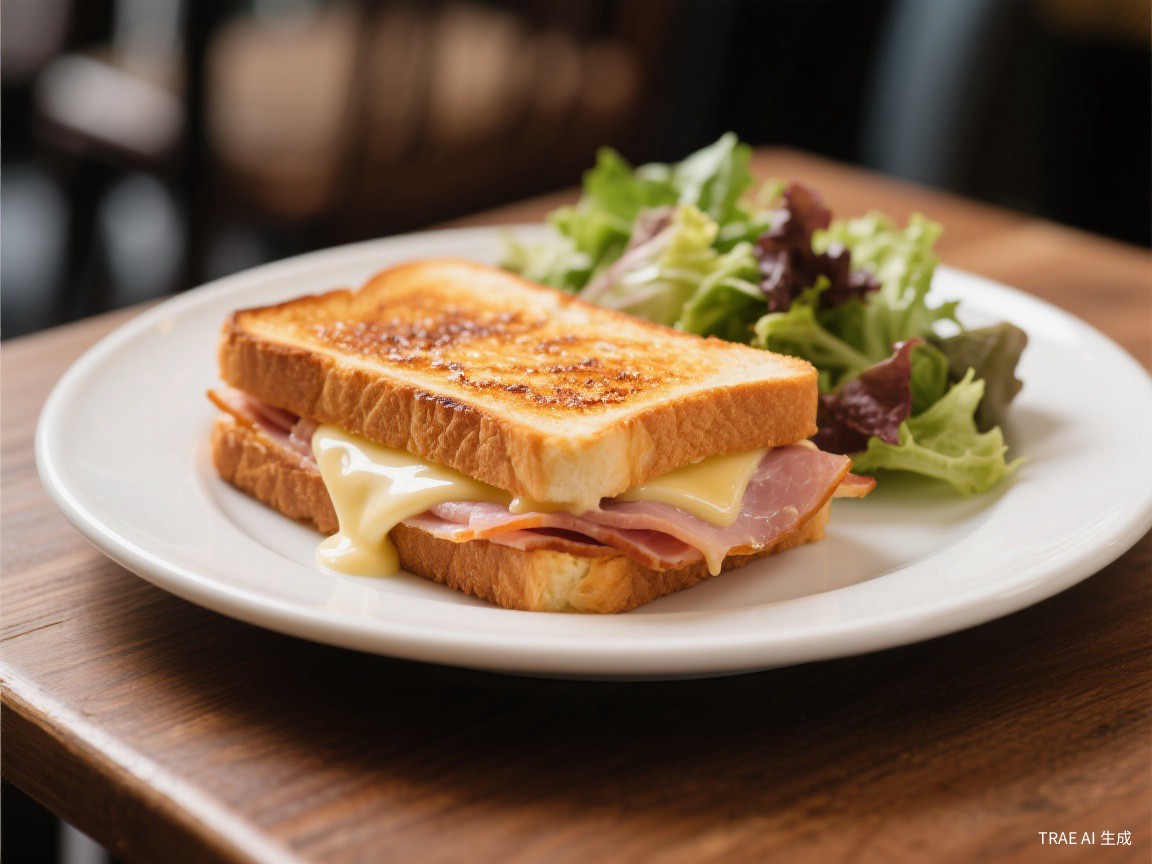
Walk into any cafe in Paris, and you'll likely find the Croque Monsieur on the menu. This isn't your ordinary ham and cheese sandwich—it's a masterclass in French comfort food, where quality ingredients and careful technique transform simple components into something sublime. The name literally means "mister crunch," and that satisfying crunch of golden, cheese-topped bread is just the beginning of its charms.
A Brief History
The Croque Monsieur first appeared in Parisian cafes around 1910, though its exact origins are debated. One story claims it was created accidentally when workers left their lunch too close to a radiator. Another credits a Parisian brasserie with inventing it as a quick meal for hurried customers. What's certain is that by the 1950s, it had become a staple of French cafe culture.
The sandwich's enduring popularity lies in its perfect balance of textures and flavors. Crispy bread, creamy bechamel, salty ham, and nutty Gruyere create layers that satisfy on every level. It's simultaneously elegant and comforting—exactly what great bistro food should be.
Chef's Tip
Use thick-cut bread that's a day or two old. Fresh bread can become soggy under the bechamel, while slightly stale bread holds its structure better and creates a crispier result.
The Essential Components
Every great Croque Monsieur begins with quality ingredients. The bread should be pain de mie—a soft, white sandwich bread with the crusts removed. In France, this is readily available, but any good quality white bread will work. Avoid sourdough or whole grain varieties, which would overpower the delicate balance of flavors.
The ham should be Parisian-style or Jambon de Paris—a mild, wet-cured ham that's cooked rather than smoked. Virginia ham or Black Forest ham can substitute, though their smokiness changes the character slightly. What matters most is that the ham is thinly sliced and of good quality.
Choosing the Right Cheese
- Gruyere: The classic choice, nutty and slightly sweet with excellent melting properties.
- Comte: A French alternative with similar characteristics but more complexity.
- Emmental: Milder and sweeter, melts beautifully.
- Beaufort: A premium French Alpine cheese for an elevated version.
The Bechamel: Heart of the Croque
What distinguishes the Croque Monsieur from a mere grilled ham and cheese is the bechamel sauce. This creamy white sauce, one of the French mother sauces, adds richness and creates that signature golden topping when broiled. Making bechamel is straightforward, but a few techniques ensure success.
Start with equal parts butter and flour to make a roux. Cook it for a minute or two to remove the raw flour taste, but don't let it brown. Gradually whisk in warm milk, stirring constantly to prevent lumps. The sauce should be thick enough to coat the back of a spoon. Season with salt, white pepper, and a pinch of nutmeg—the nutmeg is traditional and adds a subtle warmth that complements the cheese.
"A Croque Monsieur without bechamel is just a sandwich. The sauce is what transforms it into something worthy of a Parisian cafe."
— Chef Jacques Pepin
Assembly and Technique
Building the perfect Croque Monsieur is an exercise in layering. Start by buttering one side of each bread slice—this will be the outside that gets grilled. On the inside of one slice, spread a layer of Dijon mustard. This might seem like a small detail, but the sharpness of the mustard cuts through the richness and adds complexity.
Layer thinly sliced ham on the mustard, followed by a generous amount of grated Gruyere. Top with the second bread slice, buttered side out. Now comes the French touch: spread a layer of bechamel over the top of the sandwich and sprinkle with more cheese. This cheese-topped bechamel will bubble and brown under the broiler, creating the signature golden crust.
Cooking Methods
Traditional Croque Monsieur is cooked in two stages. First, the sandwich is grilled on both sides until golden and the cheese inside has melted. This can be done in a pan with butter, in a panini press, or under a broiler. Then, the bechamel-topped sandwich goes under the broiler until the sauce bubbles and the cheese browns.
For home cooks, a simpler method works well: assemble the entire sandwich with bechamel and cheese on top, then bake at 400°F for about 10-15 minutes until heated through and golden. Finish under the broiler for a minute or two to achieve that perfect browned top. The key is ensuring the sandwich is hot throughout while achieving a crispy exterior.
Step-by-Step Cooking Guide
- Prepare components: Make bechamel, grate cheese, slice ham.
- Assemble: Layer mustard, ham, and cheese between buttered bread.
- Grill: Cook sandwich until golden on both sides.
- Top: Spread bechamel and sprinkle with additional cheese.
- Broil: Until the topping is golden and bubbling.
The Croque Madame Variation
No discussion of the Croque Monsieur is complete without mentioning its famous variation: the Croque Madame. The only difference is a fried egg perched on top, its runny yolk creating an instant sauce when broken. The name supposedly comes from the egg's resemblance to a woman's hat, though the true origin of this naming convention remains charmingly unclear.
For a Croque Madame, fry the egg while the sandwich broils, then carefully slide it onto the finished Croque Monsieur. The egg should have set whites but a runny yolk—over-easy is the ideal preparation. Some versions place the egg directly on the bechamel before broiling, but this risks overcooking the yolk.
Serving Suggestions
In France, the Croque Monsieur is typically served as a light lunch, accompanied by a simple green salad dressed with vinaigrette. The acidity of the salad provides welcome contrast to the rich sandwich. A few cornichons (French pickles) on the side add crunch and tang.
For a more substantial meal, serve with a bowl of French onion soup or a cup of cafe au lait. The sandwich pairs beautifully with a crisp white wine like a Chablis or a light red like a Beaujolais. For a non-alcoholic option, sparkling water with lemon cleanses the palate between bites.
Variations and Modern Takes
While the classic version remains beloved, creative variations have emerged. The Croque Provencal adds tomato and herbes de Provence. The Croque Norvegien substitutes smoked salmon for ham. Some cafes offer a Croque Auvergnat with blue cheese and potato. These variations show how the basic concept adapts to different flavors while maintaining its essential character.
Modern interpretations might use different breads, cheeses, or fillings, but the combination of grilled sandwich and bechamel topping remains the defining feature. Whether you stick to tradition or experiment with variations, mastering the classic Croque Monsieur gives you a foundation for endless creativity.
Ready to Master French Cafe Classics?
Download our guide to essential French sauces, including bechamel, hollandaise, and more.
Get the Free Guide