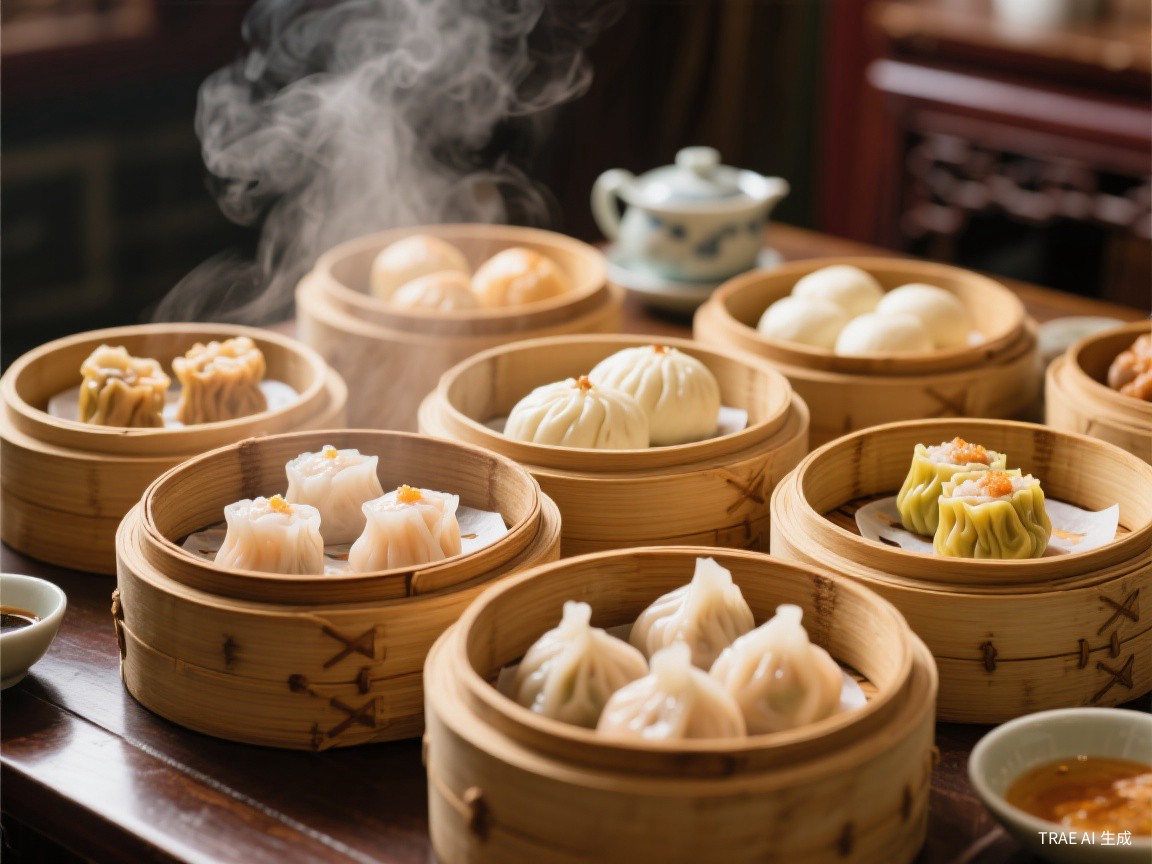
Walk into any traditional Cantonese restaurant on a Sunday morning and you'll witness a scene of joyful chaos: families gathered around lazy Susans, steaming bamboo towers stacked high, the air thick with the aroma of tea and freshly steamed dumplings. This is dim sum, a culinary tradition that transforms a simple meal into a communal celebration of craft, flavor, and togetherness.
Yum Cha: The Art of Tea Drinking
Before we talk about dumplings, we must talk about tea, because dim sum as a cultural practice begins and ends with the tea ceremony known as yum cha—literally "drink tea" in Cantonese. The tradition of yum cha dates back over a thousand years to the ancient teahouses along the Silk Road, where weary travelers would stop for rest and refreshment. Over centuries, these teahouses began offering small bites of food alongside their tea selections, and gradually the food became as important as the beverage itself.
In modern dim sum culture, the tea you choose is not merely a beverage—it's a digestive aid, a palate cleanser between courses, and a social ritual. Your server will ask what tea you'd like the moment you sit down, and your choice signals something about your experience level. Pu-erh, a fermented dark tea with an earthy, almost medicinal flavor, is the traditional choice and pairs well with the rich, savory dishes. Chrysanthemum tea offers a lighter, floral alternative that many prefer for its cooling properties. Jasmine tea, with its delicate perfumed aroma, is popular with newcomers. Oolong strikes a balance between the robustness of pu-erh and the delicacy of jasmine, making it perhaps the most versatile option on the menu.
"Yum cha is not about the food alone. It is about the time spent together—the conversations, the laughter, the shared experience of discovering each small dish as it arrives at the table."
— Chef Wei
The Tea Pouring Ritual
There's an etiquette to tea service at dim sum that every beginner should know. When your teapot needs refilling, leave the lid slightly ajar or balanced on the handle—this is the universal signal to your server. When someone pours tea for you, tap two fingers lightly on the table near your cup as a gesture of thanks. This finger-tapping tradition supposedly originated with a Qing Dynasty emperor who, while traveling incognito at a teahouse, poured tea for his companions. Unable to bow without revealing his identity, they tapped their fingers instead, and the gesture has persisted ever since.
The Bamboo Steamer Tradition
The bamboo steamer is the soul of dim sum cuisine. These stacked circular baskets, made from tightly woven bamboo strips, have been used in Chinese cooking for thousands of years, and they remain the preferred cooking vessel for dim sum for good reason. Unlike metal steamers, bamboo absorbs excess moisture, preventing the dumplings from becoming soggy while imparting a subtle, woody fragrance that becomes part of the flavor profile.
Each basket is lined with perforated parchment paper or cabbage leaves to prevent sticking, and the stacking design allows multiple items to cook simultaneously over a single pot of boiling water. The bottom basket receives the most intense heat, so items that require longer cooking times are placed there, while more delicate dumplings occupy the upper tiers. A skilled dim sum chef knows exactly how long each item needs—thirty seconds too long and the wrapper tears; thirty seconds too short and the filling is raw.
Chef's Tip
When making dim sum at home, invest in high-quality bamboo steamers and always line them with perforated parchment paper cut to fit. Never use wax paper or aluminum foil, which trap moisture and ruin the texture. Let the steam build fully before placing the baskets over the water.
The Essential Dim Sum Classics
A typical dim sum menu can include dozens of items, but certain dishes are considered essential—the ones every table must order. Understanding these classics is your first step toward dim sum mastery.
Har Gow: The Translucent Jewel
Har Gow, or shrimp dumplings, are often considered the ultimate test of a dim sum chef's skill. The wrapper is made from a mixture of wheat starch and tapioca flour, which produces a dough that is nearly transparent when steamed, revealing the pink shrimp filling within. Achieving this translucency requires precise technique: the dough must be kneaded with boiling water to activate the starches, then worked quickly before it cools and becomes difficult to shape.
The filling is deceptively simple—shrimp, bamboo shoots, scallions, and a touch of sesame oil—but the shrimp must be fresh, never frozen, and cut into large chunks rather than minced. A properly made har Gow should contain seven to ten pleats along its crescent-shaped edge, each one even and delicate. When you bite into it, the wrapper should offer a slight resistance before yielding to the succulent, springy shrimp inside.
Siu Mai: The Open-Topped Treasure
If har Gow is the jewel of dim sum, siu mai is its workhorse—the dish that appears on every table, every brunch, every dim sum service. These open-topped dumplings are made with a thin wonton wrapper formed into a cup shape and filled with a mixture of ground pork, shrimp, mushrooms, and scallions. The top is left exposed, showing the filling, and is typically garnished with a bright orange dot of fish roe or a single green pea.
The filling for siu mai must be light and bouncy, achieved by vigorously stirring the ground pork mixture in one direction until it becomes sticky and cohesive. This technique, known as "velveting" the meat, creates a texture that is far more appealing than a dense, heavy filling. The wonton wrapper should be thin enough to be nearly translucent at the edges but sturdy enough to hold its cup shape during steaming.
Char Siu Bao: The Fluffy Cloud
Char siu bao, or barbecue pork buns, are the most immediately approachable dim sum item for newcomers. These pillowy white buns are filled with a sweet, savory mixture of roasted barbecue pork (char siu) suspended in a glossy sauce made from oyster sauce, soy sauce, sugar, and cornstarch. The dough is leavened with yeast and a small amount of baking powder, which gives it an exceptionally light, airy texture that contrasts beautifully with the dense, flavorful filling.
There are two distinct styles of char siu bao. The steamed version, familiar to most Western dim sum diners, has a soft, white exterior. The baked version, popular in Hong Kong bakeries, features a golden-brown crust with a sweet glaze. Both are delicious, but the steamed version is the one you'll find in traditional dim sum restaurants, served in bamboo baskets alongside the other classics.
Turnip Cake (Lo Bak Go)
Turnip cake is one of the few dim sum items that isn't steamed in a bamboo basket. Instead, it's made by combining grated daikon radish with rice flour, dried shrimp, Chinese sausage, and shiitake mushrooms, then steaming the mixture in a pan until firm. The resulting cake is cut into thick slices and pan-fried until golden and crispy on the outside while remaining soft and custardy within.
Despite its name, turnip cake contains no turnips—it's made from daikon radish, which is sometimes called Chinese white turnip. The radish provides moisture and a subtle sweetness that balances the savory additions. A well-made turnip cake should have visible pieces of sausage and mushroom throughout, with a crispy exterior that shatters when you bite into it, giving way to the tender, layered interior.
The Art of Tea Pairing
Just as wine pairs with Western cuisine, tea pairs with dim sum, and the right combination elevates both the food and the beverage. The general principle is to match the weight of the tea to the weight of the dish.
- Pu-erh tea pairs best with rich, fatty items like pork ribs, chicken feet, and fried dumplings, as its earthy depth cuts through the richness
- Jasmine tea complements lighter steamed items like har Gow and fish balls, enhancing their delicate flavors without overwhelming them
- Chrysanthemum tea is ideal alongside fried or spicy dishes, as its cooling properties balance the heat
- Oolong tea is the most versatile option, pairing well with nearly everything on the table
- Green tea works best with vegetable-based dim sum items, where its fresh, grassy notes complement the clean flavors
Dim Sum Etiquette for Beginners
Dim sum has its own set of social customs that can feel intimidating to newcomers, but they're easy to learn and following them shows respect for the tradition.
- Let the elders order first: In Chinese culture, the most senior person at the table typically selects the first round of dishes
- Share everything: Dim sum is a communal experience. Each dish is placed in the center of the table for everyone to enjoy
- Use chopsticks to transfer food: Never use your personal chopsticks to serve yourself from a shared plate—use the communal serving chopsticks provided
- Pace yourself: Dim sum is meant to be a leisurely meal. Don't fill up on the first few baskets, as the best items often arrive later
- Tap for tea: Remember the two-finger tap when someone pours tea for you
Your First Dim Sum Experience
There's no wrong way to enjoy dim sum, but a strategic approach helps. Start with the steamed classics—har Gow, siu mai, and char siu bao—to appreciate the craftsmanship. Move on to rice noodle rolls and turnip cake for textural variety. Try at least one item you've never heard of, whether it's chicken feet, tripe, or a seasonal special. End with a sweet item like egg tarts or mango pudding to cleanse the palate.
Above all, embrace the experience. Dim sum is about more than the food—it's about the shared table, the lazy Susan spinning with new discoveries, the steam rising from bamboo baskets, and the simple pleasure of spending a morning surrounded by good company and extraordinary small bites. Once you've experienced it, you'll understand why Cantonese families have been gathering for yum cha for over a thousand years, and why the tradition shows no sign of fading.
Ready to Explore Dim Sum?
Download our printable dim sum menu guide with pronunciation guide and ordering suggestions for your first visit.
Get the Free Guide