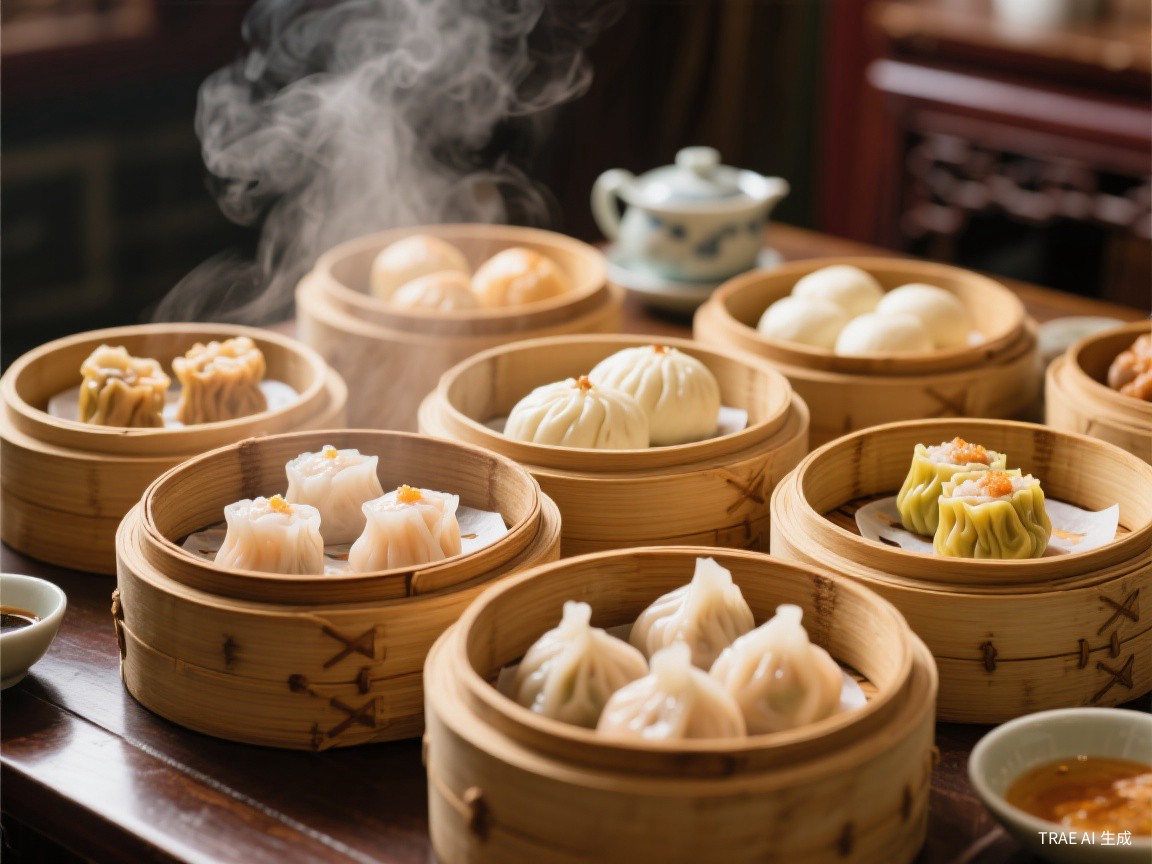
In the bustling tea houses of Guangzhou and Hong Kong, a centuries-old tradition unfolds daily. Carts laden with steaming bamboo baskets weave between tables as diners select delicate morsels by pointing and nodding. This is dim sum—literally "touching the heart"—and it represents one of the world's most refined culinary traditions.
The Origins of Dim Sum
Dim sum's roots trace back to the Silk Road, when travelers along the trade routes would stop at tea houses for rest and refreshment. Small snacks were served alongside tea to complement the beverage and provide sustenance for weary travelers.
By the Song Dynasty (960-1279 AD), these tea house snacks had evolved into a sophisticated cuisine. The tradition flourished in Guangdong province, where the combination of abundant ingredients, skilled chefs, and a culture that valued leisurely dining created the perfect environment for dim sum to develop.
The Art of Yum Cha
Yum cha—"drinking tea"—is the proper term for a dim sum meal. The tea is not merely a beverage but an integral part of the experience. It aids digestion, cleanses the palate between dishes, and provides a social focal point around which conversation flows.
Tea Etiquette
When someone pours tea for you, tap two fingers on the table as a silent thank you. This gesture dates back to an emperor who traveled incognito and needed a way to thank his servants without revealing his identity.
The Classics: Understanding Dim Sum Varieties
A typical dim sum menu offers dozens of items, but certain classics have stood the test of time:
Har Gow (Shrimp Dumplings)
The holy grail of dim sum chefs. A perfect har gow features a translucent wrapper that reveals pink shrimp inside, with at least seven pleats sealing the top. The wrapper must be delicate enough to see through but strong enough to hold the filling without breaking.
Siu Mai (Pork and Shrimp Dumplings)
Open-topped dumplings with a distinctive yellow wrapper, topped with orange roe or green pea. The filling combines pork, shrimp, and mushrooms in a texture that's springy rather than dense.
Char Siu Bao (BBQ Pork Buns)
Fluffy white buns filled with sweet-savory barbecued pork. The dough should be cloud-like, and the filling should be generous without making the bun soggy.
"A dim sum chef spends years mastering just one item. Har gow alone requires learning to make the wrapper, prepare the filling, and pleat perfectly—all skills that take decades to truly master."
— Chef Chan Yan Tak, Four Seasons Hong Kong
The Symbolic Meaning
Many dim sum items carry symbolic significance, especially during festivals and celebrations:
- Spring rolls: Resemble gold bars, symbolizing wealth
- Dumplings: Shaped like ancient money, representing prosperity
- Sweet rice cakes: Symbolize growth and progress in the new year
- Whole fish: The word for fish sounds like "abundance" in Chinese
The Dim Sum Experience Today
Modern dim sum ranges from traditional push-cart service to Michelin-starred innovations. In Hong Kong, restaurants like Tim Ho Wan have earned stars for their affordable dim sum, proving that excellence doesn't require luxury prices.
The tradition continues to evolve, with chefs incorporating non-traditional ingredients and creating new interpretations. Yet the core remains unchanged: small, carefully crafted dishes meant to be shared, savored, and enjoyed at a leisurely pace with good company.
How to Order Like a Pro
- Start with tea: Choose your variety—pu-erh, jasmine, or oolong are traditional.
- Order gradually: Don't order everything at once. Start with steamed items, then move to fried dishes.
- Share everything: Dim sum is communal. Order for the table and pass dishes around.
- Save sweets for last: Egg tarts and mango pudding come at the end of the meal.