Long before white-tablecloth restaurants defined fine dining, ordinary people gathered at curbside stalls, market corners, and roadside carts to eat. Street food is not merely a category of cuisine—it is the original restaurant, the first form of public dining, and arguably the most honest reflection of a culture's culinary soul. From the smoky thermopolia of ancient Pompeii to the neon-lit hawker centers of modern Singapore, street food tells the story of human civilization through the lens of what we eat when we eat together, simply and affordably.
Ancient Beginnings: The First Street Vendors
The story of street food begins not in some romanticized vision of the past, but in sheer necessity. In ancient Rome, the vast majority of urban residents lived in cramped insulae—multi-story apartment buildings without kitchens. Cooking at home was not only impractical but often prohibited due to fire risk. The solution was the thermopolium, a storefront counter serving hot food and drinks to passersby.
Archaeological excavations at Pompeii have revealed over eighty thermopolia, each featuring large earthenware jars called dolia embedded in marble counters. These vessels held lentils, chickpeas, stews, and spiced wines—ready-made meals for workers, travelers, and the urban poor. The thermopolium was the Roman equivalent of a fast-food joint, and its ubiquity tells us something profound: the desire for convenient, affordable prepared food is not a modern invention. It is a fundamental aspect of urban life.
Beyond Rome, similar traditions emerged independently across the ancient world. In China, night markets flourished during the Tang Dynasty, offering noodles, dumplings, and flatbreads to merchants and laborers. In the Ottoman Empire, the simit seller carrying his tray of sesame-crusted bread through Istanbul's streets became an enduring icon. Wherever cities arose, street food followed—because cities have always been places where people work long hours and need to eat quickly and cheaply.
Did You Know?
The word "restaurant" itself comes from the French "restaurer," meaning "to restore." The first establishments bearing this name in 18th-century Paris served restorative bouillons—essentially beef broths sold from street-side counters to laborers in need of nourishment. Fine dining, it turns out, has remarkably humble origins.
The Hawker Center: Singapore's Culinary Democracy
No discussion of street food is complete without examining the hawker center model, which Singapore has elevated to an art form and a point of national identity. Hawker centers are open-air food courts housing dozens of individual stalls, each specializing in a particular dish—Hainanese chicken rice, char kway teow, laksa, roti prata. The variety is staggering, the prices are modest, and the quality can rival any restaurant.
The hawker center as an institution emerged from a process of urban consolidation. In the 1960s and 1970s, Singapore's government relocated thousands of itinerant street vendors into purpose-built facilities, providing them with proper sanitation, running water, and electricity. This was not merely a bureaucratic exercise; it was a visionary act of cultural preservation. By giving street vendors a permanent home, Singapore ensured that the hawker tradition could survive and flourish alongside the city-state's rapid modernization.
"Hawker culture is not just about food. It is about community, about people from different backgrounds sitting together at the same table, eating the same dishes, sharing the same space. It is the most democratic dining experience in the world."
— Chef Violet Oon, Singapore's Godmother of Peranakan Cuisine
In 2020, UNESCO inscribed Singapore's hawker culture on its Representative List of the Intangible Cultural Heritage of Humanity. It was a landmark recognition, acknowledging that street food is not a lesser form of dining but a cultural treasure worthy of protection and celebration. Today, Singapore's hawker centers serve an estimated six million meals daily, a testament to their enduring relevance in one of the world's most affluent societies.
The Food Truck Revolution
While hawker centers represent a government-supported model of street food, the American food truck revolution tells a different story—one of entrepreneurial innovation, social media, and the democratization of gourmet cuisine. The modern food truck movement is generally traced to 2008, when Los Angeles chef Roy Choi launched Kogi BBQ, a Korean-Mexican fusion truck that announced its locations via Twitter and drew hour-long lines wherever it parked.
Kogi's success proved a radical idea: that food trucks could be more than roving hot dog stands. They could be laboratories for culinary creativity, serving dishes that were inventive, culturally hybrid, and genuinely delicious. The taco truck selling lengua and al pastor to construction workers had always been part of America's street food landscape, but Kogi and its successors brought a new energy and ambition to the form.
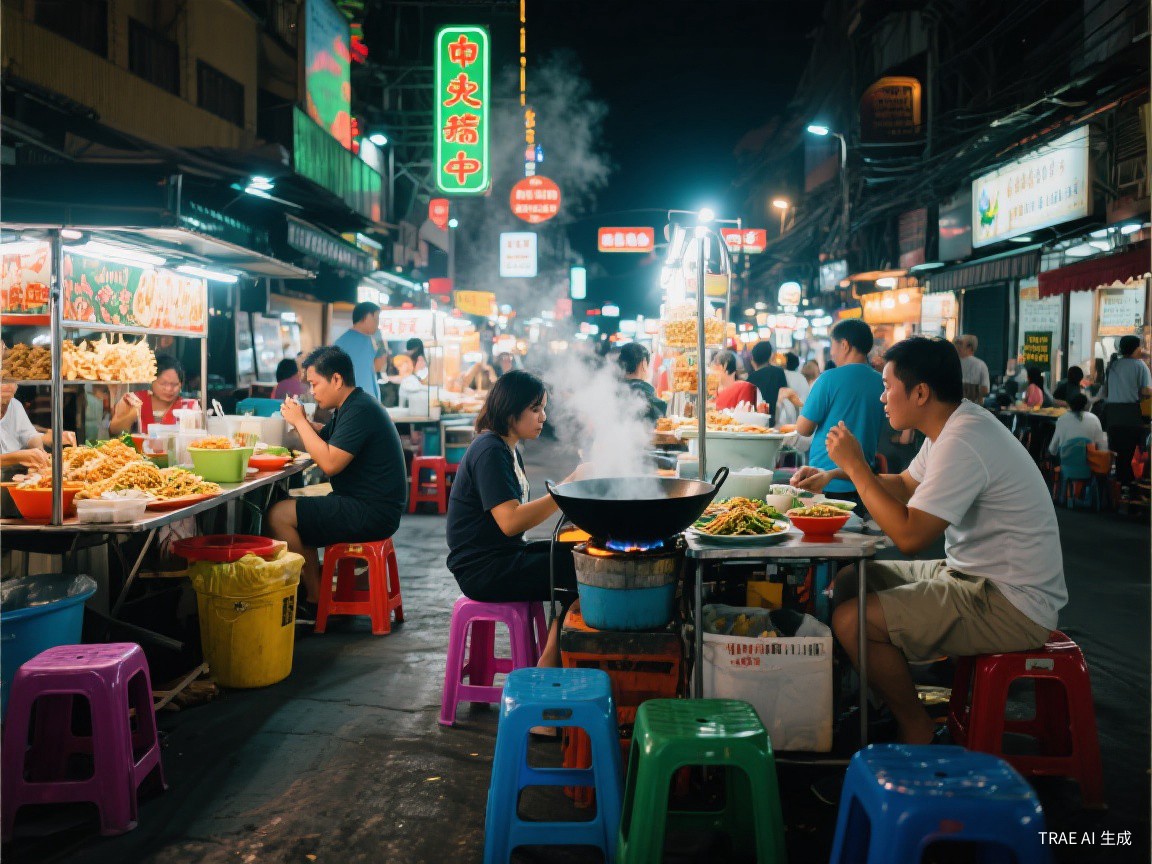
The food truck boom transformed urban dining in the 2010s. Cities across North America and Europe revised their regulations to accommodate mobile vendors. Food truck parks and festivals became community gathering spaces. For many young chefs, a food truck offered a lower-risk entry point into the restaurant industry compared to opening a brick-and-mortar establishment. The model also fostered a spirit of experimentation—when your overhead is low and your audience is loyal, you can afford to take risks.
Street Food and Gentrification: A Double-Edged Sword
As street food has gained cultural cachet, it has also become entangled in the dynamics of gentrification. In cities like Mexico City, Bangkok, and London, traditional street food markets face pressure from rising rents, tourism, and redevelopment. The very authenticity that makes street food appealing to visitors can be threatened by the influx of visitors themselves.
In Mexico City, the once-gritty street food scene around the Mercado de San Juan has become a magnet for food tourists, driving up prices and displacing vendors who have operated there for generations. In Bangkok, government crackdowns on street vendors in popular tourist areas have sparked outrage from both locals and international food writers who see the city's street food culture as irreplaceable. The challenge facing cities worldwide is how to modernize and improve food safety without sterilizing the vibrant, improvisational energy that makes street food special.
The Michelin Guide Embraces Street Food
Perhaps no single event has done more to elevate the status of street food than the Michelin Guide's decision to award stars to hawker stalls. In 2016, two Singaporean hawker stalls—Hill Street Tai Hwa Pork Noodle and Hong Kong Soya Sauce Chicken Rice and Noodle—received Michelin stars, sending shockwaves through the culinary world. Here was the most prestigious restaurant guide on the planet, bestowing its highest honor on establishments where a bowl of noodles cost less than three dollars.
The message was unmistakable: excellence in food is not determined by price, ambiance, or tableware. It is determined by what arrives on the plate—or in the bowl. Since then, Michelin has expanded its street food coverage to cities across Asia, including Bangkok, Hong Kong, and Macau. The guide's recognition has helped shift global perceptions, encouraging diners and critics alike to look beyond restaurant walls for extraordinary cooking.
- Hawker Chan (Singapore): The world's first Michelin-starred hawker stall, famous for its soya sauce chicken, has since expanded internationally while maintaining its humble roots
- Jay Fai (Bangkok): A street-side crab omelet specialist who earned a Michelin star and became a global culinary celebrity, still cooking over charcoal burners
- Various Hong Kong dai pai dongs: Open-air food stalls serving everything from claypot rice to stir-fried clams, recognized for their irreplaceable cultural and culinary value
The Future of Street Food
As we look ahead, street food is evolving in fascinating directions. Technology is playing an increasing role, with apps enabling vendors to reach customers beyond their physical locations and cashless payment systems streamlining transactions. Social media continues to be a powerful marketing tool, allowing obscure vendors to build global followings overnight.
At the same time, there is a growing movement to preserve and protect traditional street food cultures. Organizations like the World Street Food Congress bring together vendors, policymakers, and food lovers to discuss the challenges facing street food and develop strategies for its sustainability. Cities are experimenting with new models—permanent food truck parks, night market districts, and vendor cooperatives—that aim to give street food the infrastructure it needs to thrive without losing its essential character.
Climate change and sustainability concerns are also reshaping street food. Vendors in developing nations, who have long practiced nose-to-tail cooking and minimal waste, are increasingly recognized as models of sustainable food systems. The street food tradition of using every part of an ingredient, adapting to seasonal availability, and cooking with energy-efficient methods offers lessons that the global food industry urgently needs to learn.
Traveler's Tip
The best street food experiences often come from following the locals. If you see a long queue of neighborhood residents at a particular stall, join it. Locals know where the quality is, and their patronage is the most reliable indicator of a vendor worth trying. Avoid stalls with no local clientele, no matter how photogenic they may appear.
Street food endures because it speaks to something fundamental about how humans relate to food. It is immediate, social, affordable, and unpretentious. It connects us to place and tradition in a way that no restaurant experience, however refined, can fully replicate. From the ancient thermopolia of Pompeii to the food trucks of Portland, the story of street food is the story of cities themselves—messy, creative, resilient, and endlessly fascinating.
Explore Global Street Food
Discover our curated guides to the best street food scenes in cities around the world, from Oaxaca to Osaka.
View Street Food Guides