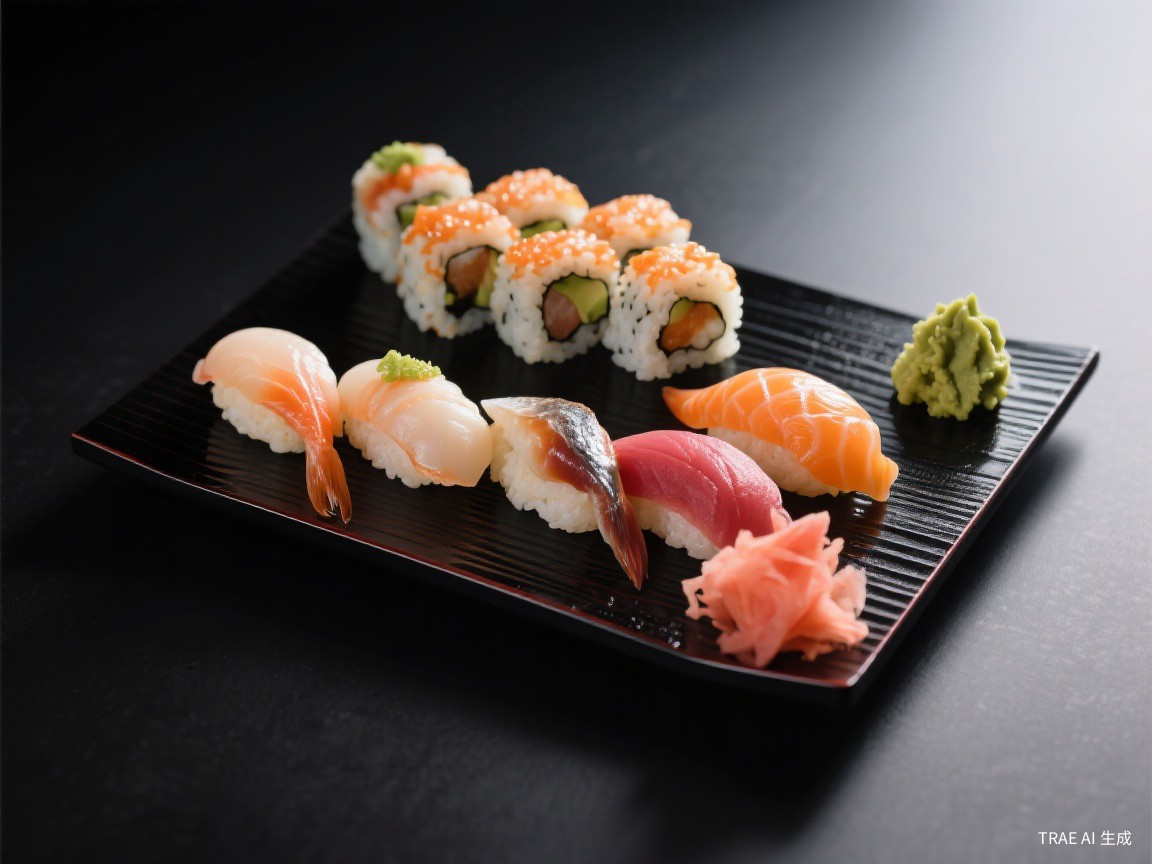
One bite of a madeleine dipped in lime blossom tea, and Marcel Proust's narrator was transported across decades, flooded with memories of his childhood in Combray. This single literary moment, perhaps the most famous passage about food ever written, captures something universally understood: taste and smell possess an uncanny power to unlock the past. Long before neuroscience could explain why, cooks, poets, and everyday eaters knew that food is never just food. It is a time machine, a comfort, a connection to people and places that might otherwise be lost.
Proust's Madeleine: The Literary Benchmark
When Proust published the first volume of "In Search of Lost Time" in 1913, he gave the world a phrase that would outlive his entire seven-volume novel: the "Proustian memory." The episode is deceptively simple. The narrator, middle-aged and melancholic, is offered a cup of tea and a small shell-shaped cake called a madeleine. The moment the cake's flavor touches his tongue, an overwhelming wave of happiness and recognition washes over him. He cannot immediately identify the memory, only the feeling—vast, luminous, and achingly familiar. Gradually, it resolves: the taste of the madeleine is identical to one he experienced as a child, when his aunt Léonie would give him the same cake dipped in tea on Sunday mornings.
What makes Proust's account so enduring is not its literary beauty alone but its psychological precision. He describes the involuntary nature of the memory—the way it arrives unbidden, triggered not by conscious recollection but by a sensory impression. He distinguishes between voluntary memory, which is intellectual and incomplete, and involuntary memory, which is visceral and total. A madeleine, Proust suggests, can do what years of deliberate remembering cannot: it can return us wholly to a moment we thought was gone forever.
"No sooner had the warm liquid mixed with the crumbs touched my palate than a shudder ran through me and I stopped, intent upon the extraordinary thing that was happening to me. An exquisite pleasure had invaded my senses."
— Marcel Proust, In Search of Lost Time
The Neuroscience of Taste and Memory
Modern neuroscience has confirmed what Proust intuited over a century ago. The olfactory system—the apparatus responsible for our sense of smell—is uniquely and directly connected to the brain's memory and emotion centers in ways that our other senses are not. When we see, hear, or touch something, that sensory information passes through a relay station in the brain called the thalamus before reaching the cortex, where conscious perception occurs. Smell bypasses this relay entirely. Olfactory signals travel directly from the nose to the olfactory bulb, which sits adjacent to the amygdala (the brain's emotional processing center) and the hippocampus (the seat of memory formation).
This anatomical shortcut explains why smells—and by extension, flavors, since flavor is a fusion of taste and smell—evoke memories with such immediacy and emotional intensity. A neuroimaging study published in the journal "Neuron" demonstrated that odors trigger significantly more emotional and vivid memories than visual, auditory, or tactile cues. Participants recalled autobiographical memories in response to smells that were older, more emotional, and more specific than those triggered by other sensory inputs.
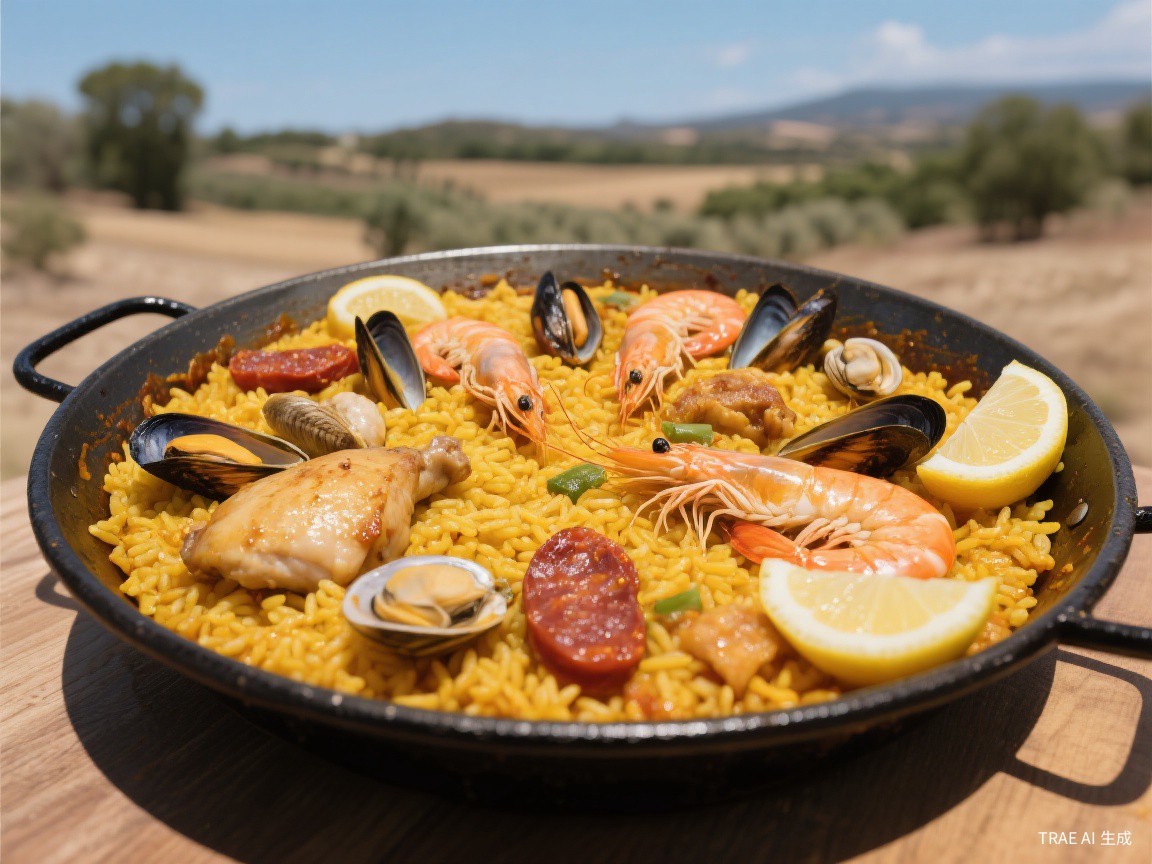
The Hippocampus-Amygdala Connection
The hippocampus plays a crucial role in converting short-term memories into long-term ones, while the amygdala attaches emotional significance to those memories. Because the olfactory system feeds directly into both structures, a smell or taste associated with a meaningful experience—particularly from childhood—can trigger what psychologists call an "autobiographical memory" with remarkable vividness. This is why the smell of cinnamon might instantly return you to your grandmother's kitchen, or the taste of a particular brand of chocolate might summon the feeling of a birthday party you attended at age six.
Childhood food memories are particularly potent because the hippocampus is most active during the first decade of life, encoding experiences with exceptional density. The foods we eat between the ages of three and twelve are, in a neurological sense, the foods we remember best—not because they were necessarily the most delicious, but because they were experienced during the brain's peak memory-encoding period.
Science Corner
Research has shown that food-related memories are among the most resilient and emotionally charged of all autobiographical memories. A study at the University of Turku found that food odors triggered memories that were both older and more emotionally positive than memories triggered by non-food odors, suggesting that our relationship with food memory is uniquely powerful.
Childhood Food Associations: The Comfort Code
The concept of comfort food is deeply rooted in this neurological architecture. Comfort foods are not defined by their nutritional content or even their objective quality—they are defined by their emotional associations. For one person, comfort food might be a bowl of chicken noodle soup; for another, it might be a plate of spicy biryani or a slice of warm apple pie. What these foods share is not a flavor profile but a function: they make us feel safe, loved, and connected to a time when someone cared for us.
Psychologists have identified that comfort food preferences tend to be established in childhood and remain remarkably stable throughout life. A longitudinal study conducted at Cornell University found that people overwhelmingly associate comfort foods with positive childhood experiences, particularly those involving social connection—family dinners, holiday meals, and treats given as rewards or gestures of love. The food itself is secondary to the emotional context in which it was consumed.
This understanding has profound implications for how we think about eating. It explains why a Michelin-starred meal might be technically flawless yet leave us cold, while a simple bowl of pasta made from a recipe handed down by a parent can move us to tears. The pasta is not just pasta. It is a sensory portal to a moment of belonging.
Immigrant Food Nostalgia: Taste as Homeland
For immigrants and diaspora communities, food memory takes on an even deeper significance. When people are displaced from their homeland—whether by choice, necessity, or force—food becomes one of the most powerful and accessible ways to maintain a connection to the culture and place they left behind. The taste of home is not merely a preference; it is an anchor.
Sociologists who study immigrant communities have documented how food traditions are among the most resilient aspects of cultural identity. Language may fade across generations. Religious observance may loosen. But the recipes passed from grandmother to mother to daughter often persist with remarkable fidelity, carrying within them not just flavors but values, rituals, and a sense of continuity. The Vietnamese pho simmered in a kitchen in San Jose, the Jamaican jerk chicken grilled in a backyard in London, the Polish pierogi rolled at a kitchen table in Chicago—each dish is a small act of cultural preservation, a refusal to let the old country disappear entirely.
- Sensory persistence: Food traditions outlast many other cultural markers because they engage multiple senses simultaneously—taste, smell, touch, sight, and even sound (the sizzle of a pan, the crunch of bread)
- Emotional anchoring: The foods of home provide emotional stability during the disorienting experience of relocation and acculturation
- Intergenerational transmission: Cooking and eating together creates a natural context for passing down stories, values, and cultural knowledge
- Identity negotiation: Food allows immigrants to maintain connections to their heritage while also sharing their culture with new communities
The Role of Smell in Memory
While flavor is a multisensory experience, it is smell that does the heaviest lifting when it comes to memory. Our tongues can detect only five basic tastes—sweet, sour, salty, bitter, and umami—but our noses can distinguish over one trillion different odors. This extraordinary olfactory range means that the aromatic dimension of food carries an enormous amount of information, and much of that information is processed by the memory-emotion circuitry of the brain.
Cooking techniques that emphasize aroma—slow braising, toasting spices, caramelizing onions, reducing sauces—are, in a sense, memory-making techniques. They fill a kitchen with volatile compounds that will later serve as triggers for recall. This is part of why home cooking smells so evocative: the aromas of a kitchen in use are among the most emotionally charged scents in human experience, ranking alongside the smell of a loved one's skin or the scent of rain on dry earth.
"Smell is a potent wizard that transports you across thousands of miles and all the years you have lived. The odors of fruits waft me to my southern home, to my childhood frolics in the peach orchard. Other odors, instantaneous and fleeting, cause my heart to dilate joyously or fill it with the grief of parted things."
— Helen Keller
How Restaurants Create Memorable Experiences
Understanding the science of food memory has become increasingly important in the restaurant industry. The most memorable dining experiences are those that engage not just the palate but the full spectrum of sensory and emotional processing. Chefs and restaurateurs who grasp this principle design meals that work on multiple levels: the visual presentation, the ambient sounds, the tactile qualities of the tableware, and of course the aromas and flavors that form the core of the experience.
Some restaurants deliberately incorporate nostalgia into their menus, serving updated versions of childhood classics or regional specialties that trigger collective food memories. Others create entirely new sensory experiences designed to be memorable in their own right—the theatrical presentation of a dish, the unexpected flavor combination, the story told by the server. The goal is not merely to satisfy hunger but to create a memory, because in the age of social media and experiential dining, a meal that is forgotten is a meal that failed.
- Ambient design: Lighting, music, and decor that create a specific emotional atmosphere and encode the meal in memory
- Storytelling: Narratives around ingredients, techniques, and cultural origins that give food meaning beyond flavor
- Sensory layering: Engaging multiple senses simultaneously to create richer, more durable memories
- Personalization: Tailoring dishes to individual preferences or dietary needs to create a sense of being cared for
The Lasting Power of Food Memory
Food memory endures because it is woven into the deepest structures of our brains and the most fundamental experiences of our lives. It is the taste of our mother's cooking, the smell of a holiday kitchen, the first meal we shared with someone we loved. These are not trivial associations. They are the building blocks of identity, the sensory scaffolding upon which we construct our sense of who we are and where we come from.
In a world of constant change and displacement, food offers something rare: continuity. The recipe that has been in a family for generations is more than a set of instructions. It is a living document, carrying within it the accumulated wisdom, love, and memory of everyone who has ever made it. Every time we cook that recipe, we add our own layer to the story. Every time we taste it, we access all the layers that came before.
Proust understood this intuitively. Science has confirmed it. And anyone who has ever been moved to tears by a taste from their past knows it in their bones: food is the most intimate of the arts, the one that enters our bodies and stays with us, not just as nourishment, but as memory itself.
Share Your Food Memories
We'd love to hear about the dishes that transport you. Join our community and share the flavors that define your story.
Join the Conversation