There is a moment in every carnitas cook's life when the pork, after hours of gentle simmering in its own fat, is finally scooped from the pot and spread across a sheet pan to crisp under a broiler. The kitchen fills with an aroma so intoxicating—rendered fat, caramelized meat, warm citrus—that time itself seems to pause. That moment is what makes carnitas not merely a recipe but a ritual, one that has been practiced in the highlands of Michoacan for generations.
Michoacan: The Spiritual Home of Carnitas
If you want to understand carnitas, you must first understand Michoacan. This western Mexican state, stretching from the Pacific coast into the volcanic highlands of the Sierra Madre, is where the dish was born and where it remains an art form. The city of Uruapan, nestled among avocado groves and pine forests, is widely regarded as the carnitas capital of Mexico. Every neighborhood has at least one carnitas stand, and on weekends, families make pilgrimages to their favorite vendor the way others might visit a temple.
The Michoacan tradition of carnitas dates back to the colonial period, when Spanish settlers introduced pigs to the region. The indigenous Purhepecha people, who had long practiced slow-cooking techniques, adapted their methods to this new ingredient. The result was a fusion of Old World protein and New World technique—a dish that would become one of Mexico's most beloved culinary contributions.
What distinguishes Michoacan-style carnitas from other regional variations is the cooking medium. While some regions braise their pork in water or broth, authentic Michoacan carnitas are cooked in lard—the pig's own fat, supplemented with additional pork lard. This confit method produces meat that is incomparably tender on the inside while developing a golden, shatteringly crisp exterior.
"My grandmother cooked carnitas every Saturday in a copper pot that had been in the family for three generations. She said the copper gave the meat a sweetness that iron or aluminum could not. I still use that pot today."
— Chef Elena, Mexican Food Expert
Choosing the Right Cut
The cut of pork you select will determine the character of your carnitas. Purists in Michoacan often use a whole pig, broken down into sections, so that each taco offers a variety of textures—from silky smooth belly to chewy, collagen-rich skin. For home cooks, however, a more practical approach is needed.
Pork shoulder (also known as Boston butt) is the most accessible and reliable choice. It has an ideal ratio of meat to fat, and its connective tissue breaks down beautifully during the long, slow cooking process, basting the meat from within. Some cooks add a piece of pork belly for extra richness, or include ribs for their gelatinous texture. The key is having enough fat to keep the meat moist during the hours of cooking.
The Citrus and Spice Marinade
The marinade for carnitas is deceptively simple, yet each component serves a critical purpose. The foundation is citrus—typically a combination of orange and lime juice—which provides acidity that tenderizes the meat and brightens the rich, fatty flavors. The orange is traditional in Michoacan, where groves of sweet oranges dot the landscape. Some cooks squeeze the juice directly over the meat; others stud the pork with whole cloves of garlic and thick slices of orange, allowing the citrus to slowly release its oils during cooking.
Beyond citrus, the spice palette is restrained: whole black peppercorns, cumin seeds, bay leaves, and dried Mexican oregano. A cinnamon stick is non-negotiable in Michoacan—it lends a warm, woody sweetness that permeates the pork fat and gives the finished carnitas their distinctive aroma. Some families add a few cloves or allspice berries, but the core flavors remain consistent across the region.
Chef's Tip
Use Mexican oregano, not Mediterranean. The two are completely different plants with different flavor profiles. Mexican oregano (Lippia graveolens) has a citrusy, slightly licorice-like quality that complements the orange and lime in the marinade. Mediterranean oregano is more assertively herbal and will overpower the delicate balance of flavors.
The Confit Method: Patience as an Ingredient
The cooking process for authentic carnitas is where most home cooks diverge from tradition. In Michoacan, the pork is submerged in lard and cooked at a very low temperature—around 225 to 250 degrees Fahrenheit—for three to four hours. The lard acts as both cooking medium and flavoring agent, slowly infusing the meat with richness while protecting it from direct heat.
This is, essentially, a confit technique—the same method used in French cooking for duck confit. The parallel is not coincidental. Both traditions discovered independently that cooking meat slowly in its own fat produces results that no other method can match: meat so tender it can be shredded with a spoon, yet so deeply flavored that it needs little embellishment.
During cooking, the pork releases its own juices into the lard, creating a flavorful liquid that bastes the meat continuously. The milk solids in the lard brown slightly, contributing nutty, caramelized notes. The citrus juices caramelize at the bottom of the pot, forming a dark, intensely flavored fond that some cooks stir back into the meat at the end.
The Crisping: Carnitas' Crowning Moment
The transformation from tender braised pork to true carnitas happens in the final minutes, when the cooked meat is shredded or broken into chunks and subjected to high, direct heat. In Michoacan, this is often done by increasing the heat under the copper pot and allowing the lard to splatter and sizzle, frying the exterior of each piece until it is golden and crisp. At home, the most practical method is to transfer the shredded pork to a sheet pan and run it under a hot broiler for five to eight minutes, watching carefully to prevent burning.
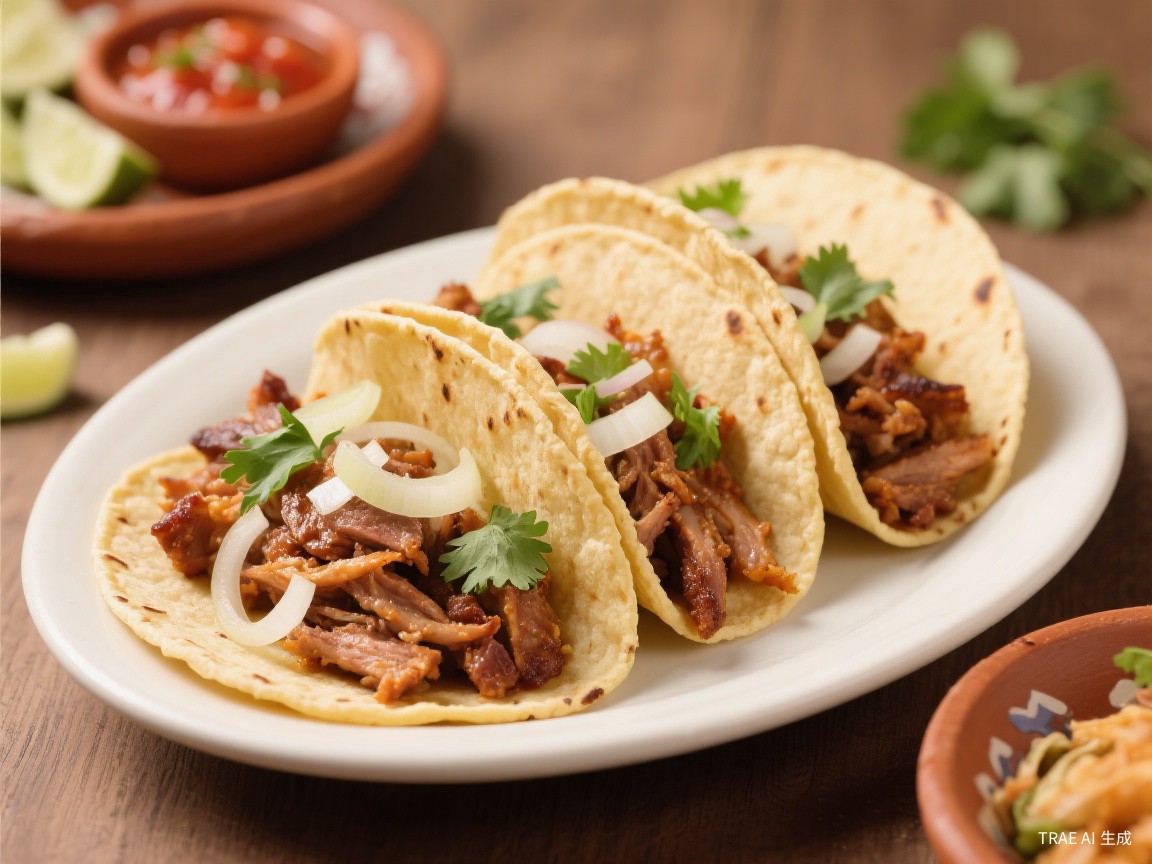
The contrast between the meltingly tender interior and the crackling, caramelized exterior is what defines great carnitas. Skip this step, and you have pulled pork—delicious, perhaps, but not carnitas. The crisp bits, known in Spanish as "chicharron," are the most prized pieces, and in any group of taco eaters, they will be the first to disappear.
- Shred, don't slice: Pull the pork apart with two forks or your fingers for the most natural texture
- Spread evenly: A single layer on the sheet pan ensures uniform crisping
- Watch the broiler: The difference between golden and burnt is about sixty seconds
- Season after crisping: A final pinch of salt on the hot, crispy pork amplifies every flavor
The Toppings: Less Is More
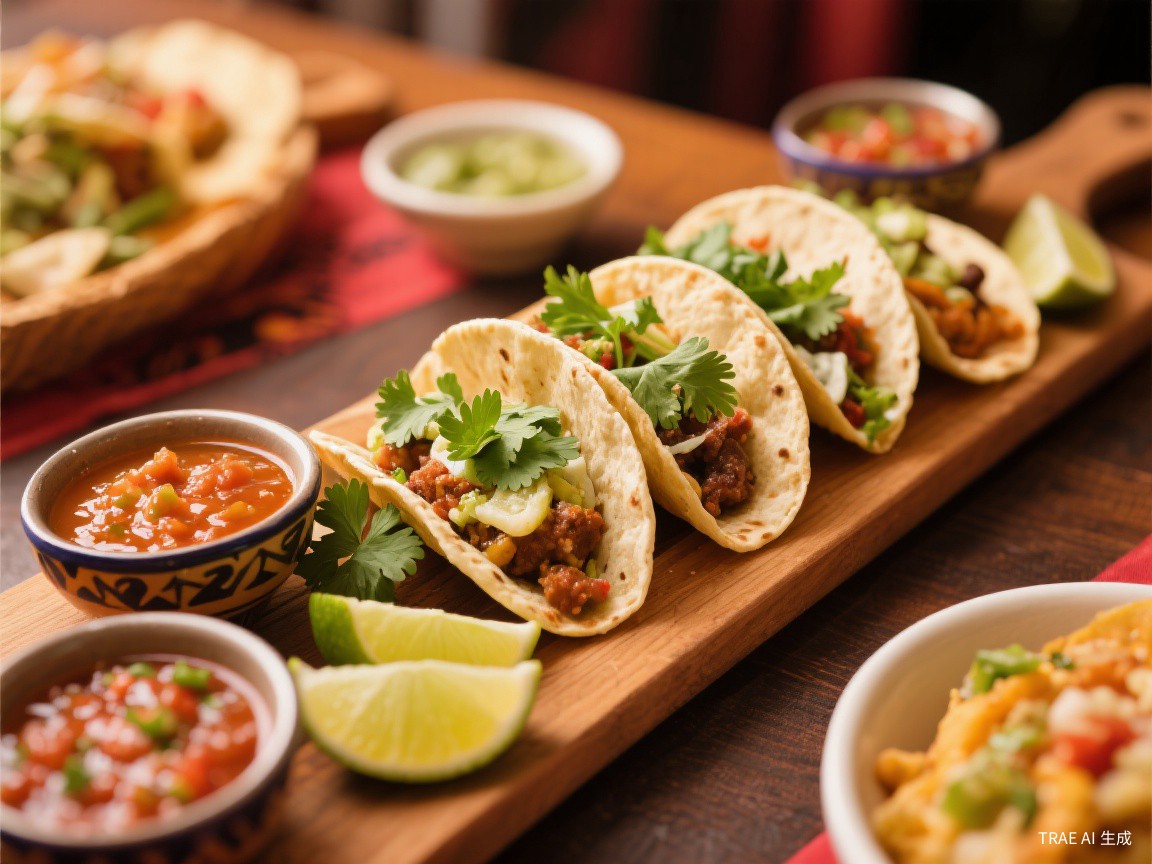
Authentic tacos de carnitas are assembled with a restraint that might surprise those accustomed to loaded Tex-Mex creations. The tortilla—always corn, always small, always warm—is the foundation. A generous spoonful of carnitas goes on top. Then comes a sprinkle of finely diced white onion, a handful of roughly chopped fresh cilantro, and a spoonful of salsa. That is it. No cheese, no sour cream, no lettuce, no guacamole.
The salsa is where personal and regional preferences emerge. In Michoacan, salsa verde (made with tomatillos, serrano chilies, and cilantro) is the most common accompaniment, its bright acidity cutting through the richness of the pork. Salsa roja, made with dried guajillo or ancho chilies rehydrated and blended with garlic and oregano, offers a deeper, smokier counterpoint. Some stands serve both and let the customer choose.
A squeeze of fresh lime over the assembled taco is the final touch—the burst of citrus echoes the orange and lime in the marinade, tying the entire dish together. Small, halved radishes on the side provide a crisp, peppery refreshment between tacos.
The Tortilla Matters More Than You Think
A great taco de carnitas demands a great tortilla. Store-bought corn tortillas are acceptable in a pinch, but if you have access to a tortilleria or are willing to make them from scratch using masa harina, the difference is remarkable. A freshly pressed, lightly charred corn tortilla has a sweetness and a slight chewiness that complements the richness of the carnitas in a way that a packaged tortilla simply cannot. Warm your tortillas on a dry comal or cast-iron skillet until they develop small, dark spots but remain pliable.
Feeding a Crowd: The Carnitas Tradition
In Mexico, carnitas are inherently social food. They are rarely cooked for one. A large batch of carnitas, started on a Saturday morning and ready by early afternoon, becomes the centerpiece of a gathering that extends well into the evening. Friends and family arrive with tortillas, salsas, and cold beers. The carnitas pot sits in the center of the table, and everyone assembles their own tacos, reaching in with tongs or forks to claim the crispiest pieces.
This communal aspect is as important to the tradition as the recipe itself. Carnitas are not meant to be eaten in solitude. They are a dish of celebration, of Sunday afternoons, of families gathered around a shared table. The recipe I share with you here is scaled for a group, because that is how carnitas were meant to be enjoyed.
Ready to Make Authentic Carnitas?
Download our complete Mexican pantry guide with sourcing tips for dried chilies, Mexican oregano, and masa harina.
Get the Free Guide