Standing on a Mexico City sidewalk at midnight, watching a taquero shave glistening ribbons of marinated pork from a towering vertical spit while a pineapple perches precariously on top, dripping its juices into the fire below—this is not merely eating. This is witnessing one of the most beautiful acts of culinary cross-pollination in human history. Tacos al pastor did not exist before the twentieth century. They were born from the collision of two ancient food cultures, and every single bite tells that story.
From Beirut to Mexico City: An Unlikely Journey
The story begins in the 1930s and 1940s, when waves of Lebanese immigrants arrived in Mexico, bringing with them the culinary traditions of the Levant. Among these traditions was shawarma—lamb marinated in spices and slow-roasted on a vertical spit, then shaved into thin slices and served in flatbread. The technique was ancient, efficient, and perfectly suited to the bustling streets of Mexico City, where vendors needed to feed large crowds quickly and affordably.
The adaptation happened gradually and organically. Lamb, expensive and unfamiliar to most Mexican palates, was replaced with pork—abundant, cheap, and beloved. The Middle Eastern spice blend of cumin, cardamom, and turmeric was augmented with dried chilies, particularly guajillo and ancho, which introduced a gentle heat and deep, fruity complexity. And then came the stroke of genius that no one can attribute to a single person: the pineapple. Someone, at some point, placed a whole pineapple on top of the spit, allowing its juices to cascade down the marinated pork as it roasted, creating a caramelized, sweet-savory crust that is now the hallmark of the dish.
"Tacos al pastor are proof that the best food in the world is born not from purity, but from collision. Two cultures met on a street corner in Mexico City, and something entirely new and magnificent was born."
— Chef Enrique Olvera
The Achiote Marinade: The Soul of the Pork
The marinade is what separates tacos al pastor from every other pork taco on earth, and its foundation is achiote—a rust-red paste made from annatto seeds that has been used in Maya cooking for thousands of years. Achiote provides an earthy, slightly peppery flavor and an intense orange-red color that penetrates the pork deeply during marination. Combined with dried guajillo and ancho chilies, white vinegar, garlic, oregano, cumin, and a touch of clove, the marinade creates a flavor profile that is simultaneously smoky, tangy, spicy, and subtly sweet.
Preparing the marinade from scratch is straightforward but requires attention. Toast the dried chilies on a dry comal for about thirty seconds per side until they become fragrant and pliable—do not blacken them, or they will turn bitter. Rehydrate the toasted chilies in hot water for twenty minutes, then blend them with the achiote paste, garlic, spices, and a splash of white vinegar until completely smooth. The consistency should be that of a thick paste, not a watery sauce.
Chef's Tip
Marinate the pork for at least twelve hours, ideally twenty-four. The acid in the vinegar and the enzymes in the pineapple juice (if you add some to the marinade) begin breaking down the muscle fibers, tenderizing the meat and allowing the achiote and chili flavors to penetrate deeply. Thinly sliced pork shoulder (boneless Boston butt) is the traditional cut—its fat content keeps the meat juicy during the high-heat roasting process.
The Spice Balance
Getting the spice balance right is critical. Too much cumin, and the tacos taste like something from a Tex-Mex chain. Too much achiote, and the bitterness overwhelms. The guajillo chilies should dominate the chili component, providing a raisin-like sweetness and moderate heat, while the ancho contributes a dried-fruit depth. A single dried chipotle morita added to the marinade introduces a subtle smokiness that evokes the charcoal fires of the original street vendors. Oregano should be Mexican oregano (Lippia graveolens), which has a more assertive, citrusy character than Mediterranean varieties.
The Trompo: Engineering Meets Flavor
The vertical spit, called a trompo (Spanish for "spinning top"), is the defining visual element of tacos al pastor. In Mexico City, trompos can reach three feet tall, loaded with layers of marinated pork sliced thin and stacked in overlapping shingles around a central metal spike. The pineapple crown sits at the apex, and as the spit rotates, the pork cooks slowly from the outside in, basted continuously by its own rendered fat and the cascading pineapple juice.
The engineering is clever: only the outermost layer of pork is exposed to the heat at any given time. The taquero shaves off the cooked exterior with a long, sharp knife, revealing a fresh layer of raw pork underneath, which immediately begins cooking. This means every customer gets meat that is simultaneously well-caramelized on the outside and freshly cooked on the interior—a textural contrast that is nearly impossible to achieve with any other cooking method.
Recreating the Trompo at Home
Most home cooks do not have a vertical spit in their kitchen, but you can achieve remarkably similar results with a few adaptations. The most effective home method uses your oven's broiler combined with a vertical roasting setup. Thread the marinated pork slices onto a vertical roaster or even a beer-can chicken stand, layering them tightly so they overlap. Place a pineapple half on top and position the entire assembly under a hot broiler, rotating every five to seven minutes. The exterior will caramelize beautifully while the interior stays moist.
An even simpler approach—and one that produces excellent results—is to cook the marinated pork in a very hot cast iron skillet in batches. Slice the pork as thin as possible (freezing it for thirty minutes beforehand helps), then sear in a smoking-hot skillet with a tiny bit of oil. The goal is aggressive caramelization, not gentle cooking. Each batch should take no more than two to three minutes per side. Finish the pork with a squeeze of fresh pineapple juice in the pan, letting it reduce to a sticky glaze that coats every slice.
The Holy Trinity of Toppings
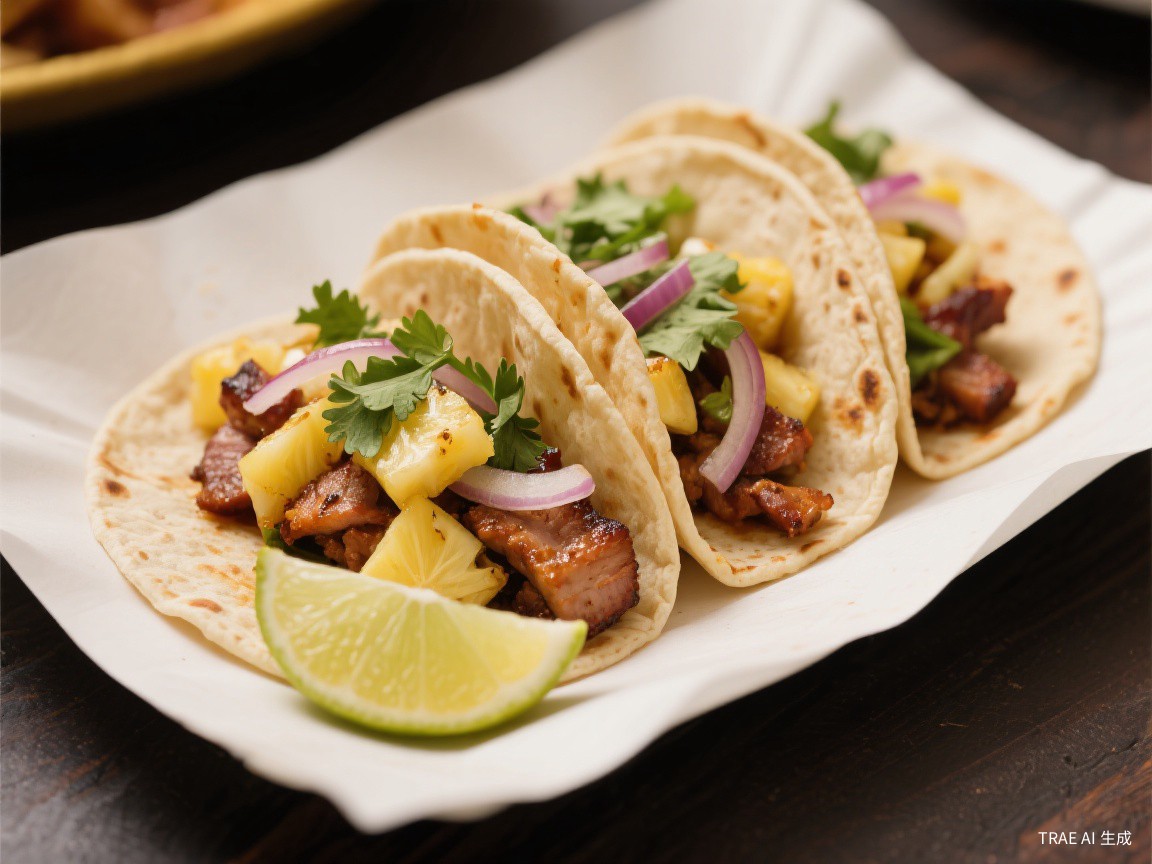
Every taco al pastor is finished with the same three toppings, and omitting any one of them diminishes the experience. First, finely diced white onion—sharp, crunchy, and refreshing against the rich pork. Second, fresh cilantro leaves, roughly chopped, adding their distinctive herbal brightness. Third, small cubes of pineapple, either carved from the spit-roasted crown or freshly cut and quickly seared in a hot pan until caramelized.
The pineapple is not optional. I have seen purists argue about many aspects of Mexican cuisine, but I have never met a Mexico City taquero who serves tacos al pastor without pineapple. The sweet-tart fruit cuts through the richness of the pork and the achiote's earthiness, creating a flavor triad that is greater than the sum of its parts. Some vendors add a squeeze of lime, but in Mexico City, the traditionalists will tell you that lime is for other tacos—al pastor needs only the pineapple's acidity.
- Salsa verde: A tomatillo-based salsa with serrano peppers and cilantro adds bright, herbaceous heat
- Salsa roja: A dried-chili salsa made with guajillo and arbol peppers provides deeper, smokier warmth
- Radish slices: Crisp, peppery radishes cleanse the palate between tacos
- Grilled green onions: Charred whole and served alongside, they add a sweet, smoky bite
The Tortilla: Foundation of the Taco
In Mexico City, tacos al pastor are served on small corn tortillas—about four inches in diameter—made from nixtamalized corn masa. These are not the thick, cakey tortillas you find in many American Mexican restaurants. They should be thin, slightly translucent at the edges, with a pronounced corn flavor and a texture that is soft but sturdy enough to hold the fillings without tearing. Double-stacking two tortillas is standard practice, providing structural insurance against juicy fillings.
If you cannot find fresh masa or a reliable source of quality corn tortillas, make them yourself using masa harina (not cornmeal—masa harina has been treated with lime, which is what gives tortillas their characteristic flavor and pliability). Mix with water, knead briefly, press into thin rounds using a tortilla press lined with plastic, and cook on a dry, very hot comal or cast iron skillet for about sixty seconds per side. The tortilla should puff slightly and develop small brown spots without becoming stiff.
The Street Food Experience
What makes tacos al pastor truly special is not just the recipe—it is the context. In Mexico City, they are eaten standing up, on the street, at any hour of the day or night. The best taqueros operate from small stands called trompos, often nothing more than a cart with the spinning spit, a griddle, and a stack of tortillas. There are no menus, no reservations, no pretension. You walk up, order by the taco (usually two to four per person), and eat immediately while the pork is still sizzling.
The pace is part of the pleasure. Tacos al pastor are fast food in the truest sense—prepared quickly, eaten quickly, and utterly satisfying. But behind that speed lies generations of technique, a story of immigration and adaptation, and a marinade that took the best of two culinary traditions and created something neither could have produced alone.
Ready to Make Tacos al Pastor at Home?
Download our complete guide with the authentic achiote marinade recipe, home trompo techniques, and salsa pairings.
Get the Free Guide