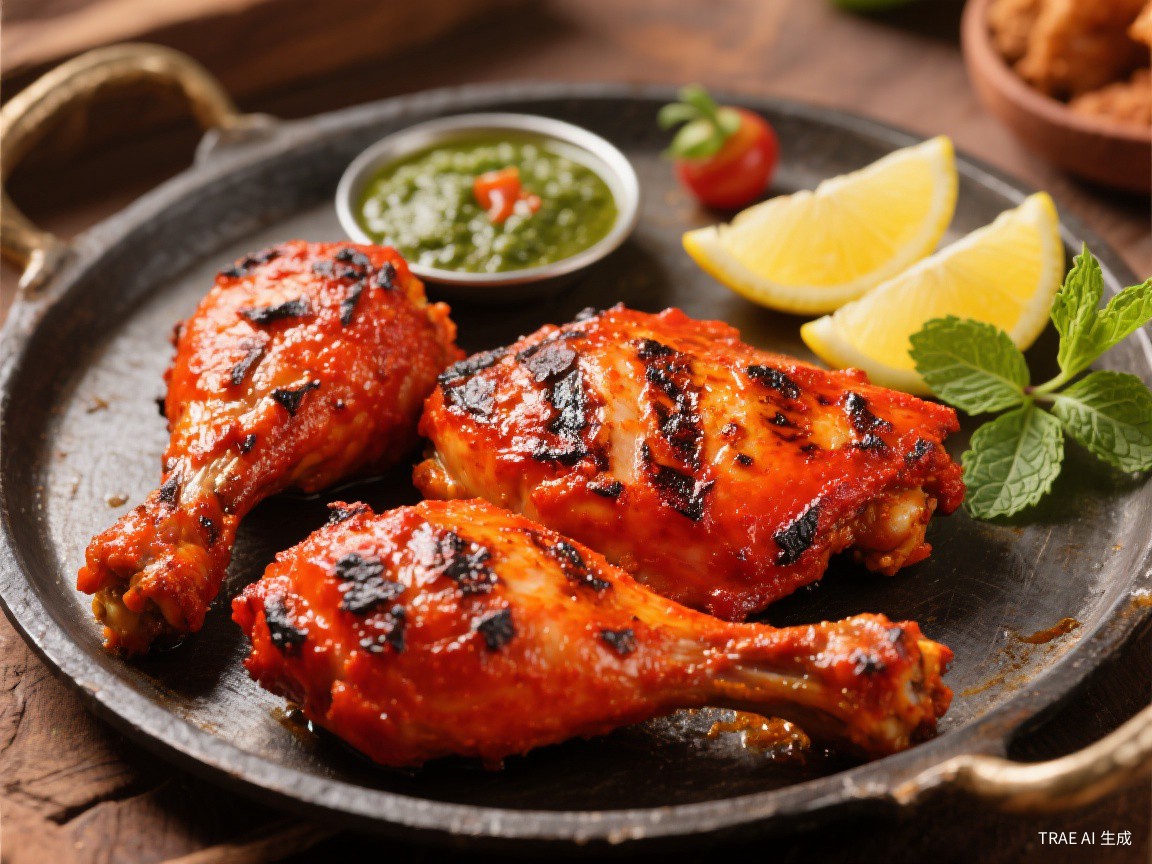
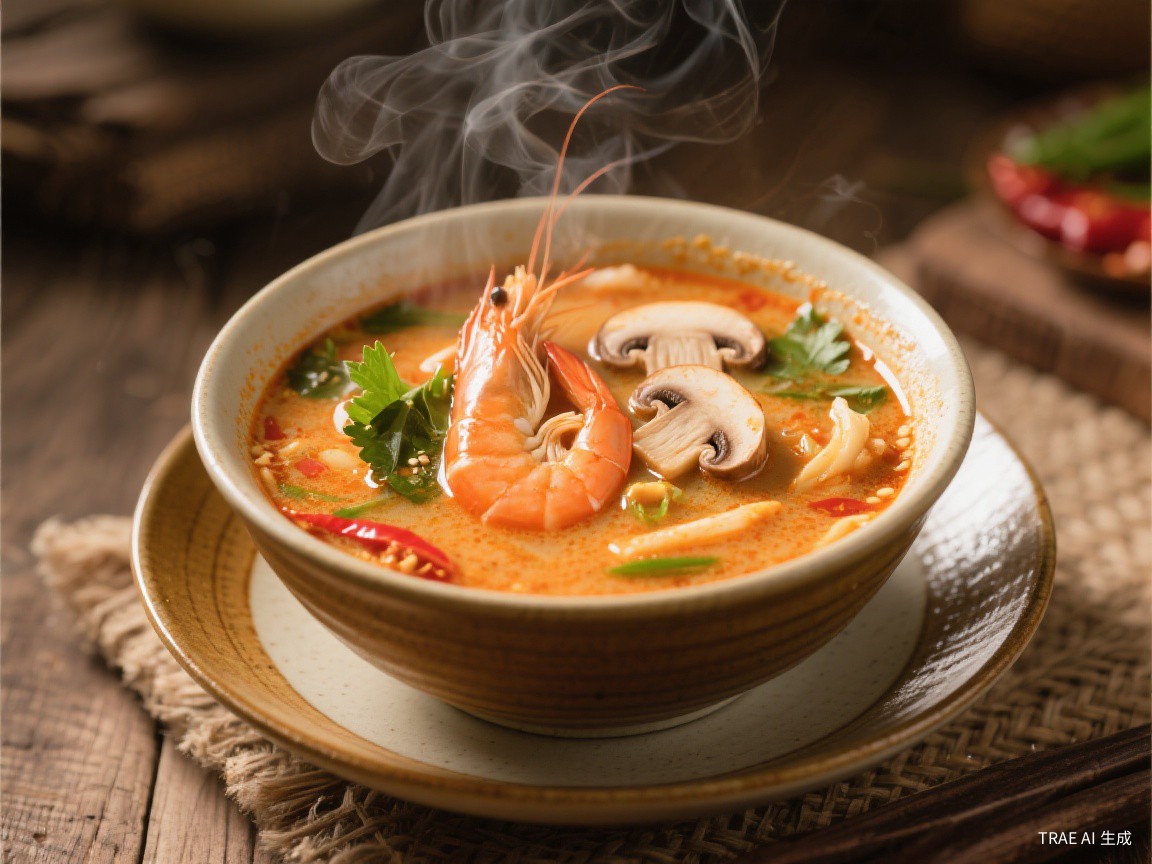
A steaming bowl of tom yum goong arrives at the table and the world narrows to a single point of focus. The broth is a deep, reddish-gold, fragrant with an intensity that seems almost impossible for a liquid. Lemongrass, galangal, and kaffir lime leaves float on the surface like aromatic islands. Plump shrimp, pink and perfectly cooked, nestle among mushrooms and tomatoes. The first sip delivers a simultaneous hit of heat, sourness, and a profound savory depth that lingers long after the bowl is empty. This is not just soup. This is Thailand in a bowl.
Understanding Tom Yum: A Name with Meaning
In the Thai language, the name of this soup tells you everything you need to know about its character. "Tom" refers to the boiling process—the act of cooking ingredients in a liquid. "Yum" means a spicy and sour salad, but when combined with "tom," it describes a soup that balances those two defining flavors: heat and acidity. "Goong" is the Thai word for shrimp. So tom yum goong is, quite literally, a boiled spicy-sour soup with shrimp. Simple words that describe a complex, multi-layered creation.
Tom yum exists in a broader family of Thai soups that share the "tom" prefix. Tom kha gai, perhaps the second most famous Thai soup internationally, is a coconut milk-based variation that substitutes galangal-driven creaminess for tom yum's sharp clarity. Tom saep is a Northeastern Thai sour soup that is even more assertively acidic and spicy. But tom yum goong remains the standard-bearer—the soup that most Thais would name if asked to choose their country's single most representative dish.
Tom Yum vs. Tom Kha: The Crucial Distinction
While tom yum and tom kha share many aromatic ingredients, they are fundamentally different soups with different philosophies. Tom yum is defined by its clarity and its bold, assertive balance of heat and sourness. The broth should be translucent—reddish-gold from the chili paste but never opaque—allowing the ingredients suspended within it to be visible. It is a soup of precision, where each flavor exists distinctly and the balance between them is the measure of the cook's skill.
Tom kha, by contrast, is built on a foundation of coconut milk, which creates a rich, creamy, almost velvety texture. The coconut milk softens the sharp edges of the aromatics, producing a soup that is warming and comforting rather than invigorating and intense. The galangal in tom kha is more prominent, its piney, ginger-like flavor amplified by the fat in the coconut milk. Where tom yum excites, tom kha comforts. Both are masterpieces, but they serve different purposes and satisfy different cravings.
"A perfect tom yum goong should make you sweat, make you pucker, and make you reach for the bowl again—all at the same time. If it does only one of these things, it is not yet complete."
— Chef Niran Supachai
The Holy Trinity: Lemongrass, Galangal, and Kaffir Lime
Three ingredients form the aromatic backbone of every tom yum soup, and understanding each one is essential to achieving authentic results. Together, they create a flavor profile that is unmistakably Thai—a bright, citrusy, herbal complexity that no combination of Western herbs and spices can replicate.
Lemongrass: The Citrus Anchor
Lemongrass (takhrai in Thai) provides the bright, lemony top notes that define tom yum's aroma. Unlike actual lemon, which contributes primarily acidity, lemongrass contributes a complex citrus fragrance with floral and slightly ginger-like undertones. In tom yum, the woody outer stalks are bruised with the back of a knife to release their essential oils and then simmered in the broth. The tender inner core can be finely sliced and added to the soup as an edible garnish, though in most Thai preparations, the lemongrass stalks are used primarily for infusion and are not meant to be eaten.
Galangal: The Earthy Depth
Galangal (kha in Thai) is frequently confused with ginger, and while the two are botanically related, their flavors are markedly different. Galangal has a piney, camphor-like quality with hints of citrus and black pepper, and it lacks ginger's sharp, fiery bite. In tom yum, galangal is sliced into thin rounds and simmered to infuse the broth with its distinctive aromatic depth. Like lemongrass, the galangal slices are typically not eaten—they are there to lend their essence to the liquid.
Chef's Tip
Never substitute ginger for galangal in tom yum. The flavors are fundamentally different, and ginger will produce a soup that tastes wrong to anyone familiar with the authentic version. If you cannot find fresh galangal, frozen sliced galangal is an acceptable alternative. Dried galangal should be used only as a last resort.
Kaffir Lime Leaves: The Floral Finish
Kaffir lime leaves (bai makrut in Thai) contribute an extraordinary double-lime fragrance that is both citrusy and floral, with an almost perfume-like quality that elevates the entire soup. The leaves are torn or bruised to release their oils and dropped into the simmering broth. Their contribution is primarily aromatic rather than flavorful in the traditional sense—they make the soup smell incredible, and that aroma profoundly influences the taste experience. A well-made tom yum should fill the entire kitchen with the scent of kaffir lime within seconds of the leaves hitting the broth.
Nam Prik Pao: The Secret Weapon
Ask any Thai cook what makes their tom yum special, and many will whisper the same two words: nam prik pao. This roasted chili paste, sometimes called "jam" in English, is the secret ingredient that elevates tom yum from a simple herb-infused broth to a complex, deeply flavored soup. Made from dried chilies, garlic, shallots, shrimp paste, palm sugar, and fish sauce—all roasted together until dark and caramelized—nam prik pao contributes a smoky sweetness and a savory depth that rounds out the sharp acidity and heat of the other ingredients.
The paste is stirred into the broth after the aromatics have been infused, dissolving to create the soup's characteristic reddish-gold color. The amount used varies according to taste, but even a modest tablespoon transforms the character of the soup entirely. Without nam prik pao, tom yum is bright and sharp but somewhat one-dimensional. With it, the soup gains layers of flavor that unfold on the palate—smoky, sweet, savory, and umami-rich—all supporting the dominant notes of heat and sourness.
- Roasted chili paste (nam prik pao): The essential flavor builder, providing smoky sweetness and umami depth
- Fish sauce (nam pla): Adds saltiness and a fermented umami quality that no other seasoning can replicate
- Lime juice (nam manao): The primary souring agent, added off the heat to preserve its bright, fresh acidity
- Thai bird's eye chilies (prik kee noo): Fresh chilies for heat, pounded in a mortar to release their fiery oils
Clear vs. Creamy: Two Styles, One Soup
Tom yum goong exists in two distinct styles, and the choice between them reveals much about the cook's philosophy and the occasion. Tom yum nam sai—the clear version—is the more traditional and widely consumed style. The broth is transparent, allowing the ingredients to be seen clearly, and the flavors are sharp, clean, and precisely balanced. This is the version most commonly served in Thai homes and street food stalls, and it is the version that most Thai people think of when they hear the words "tom yum."
Tom yum nam khon—the creamy version—incorporates a small amount of evaporated milk or, less traditionally, coconut milk, which gives the broth a slightly opaque, reddish-orange appearance and a smoother, more rounded mouthfeel. Some versions also include a beaten egg, which is stirred into the hot broth to create delicate ribbons of cooked egg, similar to egg drop soup. The creamy version is particularly popular in restaurant settings, where its richer appearance and milder intensity appeal to a broader range of palates.
Both versions are authentic. The choice between them is a matter of personal preference and context. On a hot Bangkok afternoon, the clear version is refreshing and invigorating. On a cool evening, the creamy version offers comfort without sacrificing the essential tom yum character.
Prawn Head Roasting: The Stock Secret
The most discerning tom yum cooks insist on making their stock from scratch, and the foundation of that stock is the prawn heads and shells. When you buy whole prawns for tom yum, do not discard the heads and shells—they contain an extraordinary concentration of flavor, particularly in the tomalley, the greenish-brown substance inside the prawn head that is essentially prawn liver and pancreas.
The heads and shells are briefly sauteed in a little oil until they turn bright orange-red, then simmered in water with the aromatics to create a stock of remarkable depth and sweetness. This stock forms the base of the soup, providing a prawn intensity that commercial shrimp stock or water simply cannot match. The difference between tom yum made with prawn shell stock and tom yum made with water is the difference between a home-cooked meal and a restaurant-quality experience.
- Remove heads and shells: Peel the prawns, reserving all heads and shells
- Saute until orange: Cook the shells in hot oil for two to three minutes until deeply colored
- Add water and aromatics: Cover with cold water, add bruised lemongrass and galangal
- Simmer briefly: Fifteen to twenty minutes is sufficient—do not overcook or the stock becomes bitter
- Strain carefully: Press on the shells to extract every bit of flavorful liquid
Balancing the Heat
The interplay between heat and sourness in tom yum is the soup's defining characteristic, and achieving the right balance is the cook's greatest challenge. Too much chili and the heat overwhelms everything else, rendering the subtler aromatics invisible. Too much lime juice and the sourness becomes sharp and one-dimensional, masking the savory depth of the prawn stock and nam prik pao.
The traditional approach is to build the soup incrementally, tasting after each addition and adjusting accordingly. The chilies are typically pounded in a mortar with a little garlic to create a rough paste, which is then added to the broth in small amounts. The lime juice is always added off the heat—if boiled, it loses its fresh, bright character and develops a bitter edge. A well-balanced tom yum should make you sweat slightly, pucker your lips, and crave another spoonful, all in rapid succession.
A Bowl That Travels
Tom yum goong has traveled far from its Thai origins, becoming one of the most recognized Thai dishes on the global stage. In Tokyo, it is served in high-end Thai restaurants alongside sake pairings. In London, it appears on brunch menus with modern twists. In Bangkok, it remains exactly what it has always been: a bowl of soup that captures the essence of Thai cuisine in every steaming, fragrant spoonful.
To master tom yum goong is to understand the philosophy that underpins all great Thai cooking: that flavors should not compete but cooperate, that heat and sourness are not opposites but partners, and that the most memorable dishes are often the ones that achieve the most delicate balance. In a single bowl, tom yum goong contains a universe of flavor—bright, deep, hot, sour, savory, and sweet—all existing in perfect, shimmering harmony.
Ready to Master Tom Yum Goong?
Download our complete guide with authentic recipes for both clear and creamy versions, prawn stock instructions, and ingredient sourcing tips.
Get the Free Guide