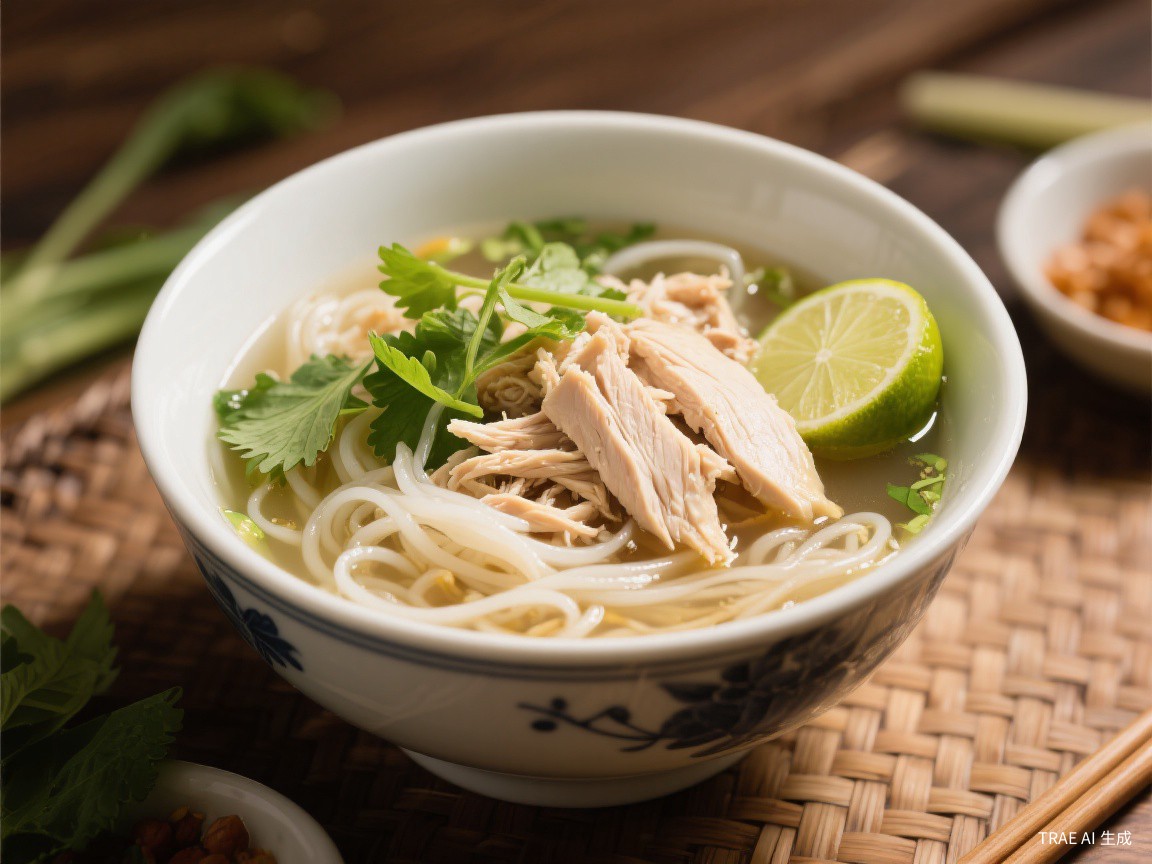
In the narrow alleyways of Hanoi's Old Quarter, where morning fog clings to the power lines and the scent of star anise drifts from open doorways, you will find the truest expression of Vietnamese comfort: a steaming bowl of pho ga. Unlike its beefy cousin pho bo, which commands attention with its dark, robust broth, pho ga whispers. It is gentle, luminous, and deeply nourishing—a soup that my grandmother would prepare on the first cool morning of autumn, filling our small kitchen with an aroma that could wake the dead.
The Philosophy of Clarity
What separates an ordinary chicken noodle soup from pho ga is the relentless pursuit of clarity. A proper bowl of pho ga should have a broth so clear you can read a newspaper through it. This is not merely an aesthetic choice—it is a philosophical one. In Vietnamese cooking, clarity represents purity, intention, and respect for ingredients. A cloudy broth suggests carelessness, impatience, or an overactive hand with the spoon.
Achieving this clarity begins with the chicken itself. You need a whole chicken, preferably a free-range bird with yellow skin, which Vietnamese cooks call ga ta. The bird is rinsed thoroughly, then placed in a large stockpot with cold water. The critical moment comes in the first fifteen minutes: as the water heats, proteins coagulate and rise to the surface as grayish foam. This scum must be skimmed meticulously and continuously. My grandmother used a flat ladle with holes, working in slow, deliberate circles. She never rushed this step, and neither should you.
Chef's Tip
Start your broth with cold water, not warm. Cold water extracts proteins gradually, giving you more time to skim before the boil. Once the water reaches a full boil, immediately reduce to the gentlest simmer—tiny bubbles barely breaking the surface. A rolling boil shatters the chicken bones and clouds the broth irreversibly.
The Parboil Trick
Many professional pho cooks use a parboiling technique that guarantees clarity. The whole chicken is briefly boiled in a separate pot of water for three to five minutes, then removed, rinsed under cold water, and transferred to a clean pot with fresh cold water. This pre-boil releases the majority of impurities and blood from the bones, so the actual broth pot stays clean from the start. It is an extra step, but it is the single most effective method for achieving restaurant-quality clarity at home.
Charred Ginger and Onion: The Smoky Foundation
Every bowl of pho ga carries a subtle smokiness that many diners notice but cannot quite identify. That flavor comes from two ingredients that are transformed by fire: ginger and onion. In Vietnamese, this technique is called hanh mo va gung moi—literally, "roasted onion and fresh ginger." The process is simple but transformative.
A large yellow onion, left unpeeled, and a generous knob of ginger, lightly smashed with the flat side of a knife, are placed directly over an open gas flame or under a broiler. You want them blackened in spots, blistered, and fragrant, with the sugars inside caramelizing against their skins. The charred skins are then rubbed off under running water, revealing softened, sweetened flesh beneath. These go into the broth during the last hour of simmering, infusing it with an earthy sweetness that no amount of raw aromatics could replicate.
"Pho is not just food. It is Vietnam in a bowl—complex, fragrant, and deeply comforting. Every family has their own recipe, and every bowl tells a story of home."
— Chef Linh
The Spice Sachet: Star Anise, Cinnamon, and Clove
While pho ga is milder than pho bo, it still carries the signature spice profile that defines pho. The aromatics are bundled into a small cheesecloth sachet—called a "spice bouquet" in Western kitchens—and dropped into the simmering broth. The classic pho ga spice blend includes:
- Star anise (2-3 whole pods): The dominant spice note, lending a sweet, licorice-like warmth that is unmistakably pho
- Cinnamon stick (1 small piece, about 2 inches): Vietnamese cassia cinnamon is preferred for its bolder, more peppery character compared to standard Ceylon cinnamon
- Whole cloves (3-4): Used sparingly, as their intensity can easily overpower the delicate chicken broth
- Coriander seeds (1 tablespoon, lightly toasted): Adds a citrusy, floral undertone that brightens the entire bowl
- Black cardamom (1 pod, optional): A smoky, camphor note that some Hanoi-style pho shops swear by
The sachet should simmer for no more than forty-five minutes. Over-spicing is the most common mistake home cooks make with pho ga. The spices should whisper, not shout. If you can immediately identify each spice on your palate, you have used too much. The goal is a harmonious background warmth that makes you close your eyes and inhale deeply before every spoonful.
Rice Noodles: The Unsung Hero
The noodles in pho ga are called banh pho—flat, white rice noodles that are the backbone of the dish. They come in various widths, but for pho ga, medium-width noodles (about a quarter inch) are traditional. The wider noodles work better with beef pho, as they can stand up to the heavier broth.
Preparing rice noodles correctly is essential and often overlooked. Fresh noodles should be blanched briefly in boiling water—just ten to fifteen seconds—then drained and shaken dry. Overcooked rice noodles become gummy and will continue to absorb broth in the bowl, turning your soup into a starchy paste. If using dried noodles, soak them in room-temperature water for thirty minutes before blanching. Never boil dried rice noodles from their raw state, as the exterior will turn to mush while the center remains chalky and hard.
Layering the Bowl
Assembly is an art form in Vietnamese cuisine, and pho is no exception. The noodles go in first, arranged in a loose nest at the bottom of a large, deep bowl. Next comes the chicken—sliced paper-thin against the grain, some pieces from the breast, others from the dark meat for contrast. The broth is ladled over everything, and the bowl is immediately garnished with a scattering of thinly sliced white onion and chopped cilantro.
The Herb Plate: A Garden in the Middle of the Table
No bowl of pho ga is complete without its accompanying herb plate, or rau pho. This is not a garnish—it is an integral part of the eating experience. In Vietnam, the herb plate arrives as a small mountain of fresh greens, and diners are expected to tear, pinch, and add them according to their own taste throughout the meal. A proper pho ga herb plate includes:
- Thai basil (hung que): With its anise-scented leaves, this is non-negotiable. Tear the leaves and drop them into the hot broth just before eating
- Sawtooth herb (ngo gai): Also called culantro, this has a long, serrated leaf and an intense, slightly cilantro-like flavor that cuts through the richness of the broth
- Bean sprouts (gia do): Added raw for crunch, or briefly dipped into the broth to soften slightly
- Lime wedges: A generous squeeze of lime brightens the entire bowl and balances the spices
- Chili slices: Bird's eye chilies, sliced thin, for those who crave heat
- Hoisin and sriracha: Placed on the table for those who want them, though purists in Hanoi rarely use either
Regional Differences: Hanoi vs. Saigon
Vietnam's two largest cities each have their own pho culture, and understanding the differences reveals much about the country's culinary geography. Hanoi pho ga is minimalist and restrained—the broth is lighter, the spice sachet more subtle, and the herb plate sparse. Hanoians consider their pho the purest expression of the dish, and they tend to frown upon the addition of hoisin sauce or excessive chili.
Saigon pho ga, by contrast, is more generous and cosmopolitan. The broth is slightly sweeter, often enhanced with a touch of rock sugar. The herb plate is abundant, sometimes including additional herbs like perilla (tia to) and garlic chives (he). Southern diners are more liberal with condiments, and many Saigon pho stalls serve the soup with a side of fried dough sticks (quay) for dipping.
Chef's Tip
For the most authentic experience, eat your pho ga with chopsticks in your right hand and a soup spoon in your left. Lift the noodles and herbs with the chopsticks, and sip the broth from the spoon. Slurping is not only acceptable—it is encouraged, as it cools the noodles and aerates the broth, releasing more aroma.
A Bowl That Heals
In Vietnamese culture, pho ga is more than a meal—it is medicine for the body and soul. When someone is sick, the first dish prepared for them is always chicken pho. When a baby transitions to solid food, the broth is their introduction to the family table. When a family gathers for breakfast on a Sunday morning, it is pho ga that brings them together around the small plastic stools of a neighborhood sidewalk stall.
The beauty of pho ga lies in its humility. It does not demand expensive ingredients or professional technique. It asks only for patience, attention, and a willingness to let simple ingredients speak for themselves. A whole chicken, some charred ginger and onion, a handful of spices, good rice noodles, and fresh herbs—these are the building blocks of a dish that has nourished generations and will continue to do so for as long as there are kitchens in Vietnam.
The next time you lift a steaming bowl of pho ga to your lips, take a moment before that first sip. Breathe in the star anise. Notice the clarity of the golden broth. Tear a leaf of Thai basil and let it float on the surface. Then taste it—not just the soup, but the centuries of tradition, the warmth of family kitchens, and the quiet genius of Vietnamese cooking that turns the simplest ingredients into something extraordinary.
Ready to Master Pho Ga?
Download our complete guide with step-by-step broth clarification techniques and spice blending ratios.
Get the Free Guide