Every Chinese home cook knows a truth that most Western recipe books gloss over: the best fried rice in the world was never made from a recipe. It was made from leftovers, hunger, and the kind of improvisational instinct that comes from cooking the same dish a thousand times. My grandfather used to say that you haven't truly learned to cook until you can make fried rice that tastes different every time but delicious every time. That paradox—consistency within variation—is the soul of this dish.
The Rice: Why Day-Old Is Non-Negotiable
If there is a single rule that separates good fried rice from great fried rice, it is this: use leftover rice. Not rice that has been sitting for an hour, not rice that has been cooled to room temperature, but rice that has spent at least overnight in the refrigerator. The science behind this is straightforward but often misunderstood.
When rice is freshly cooked, each grain is coated in a layer of gelatinized starch—the result of the starch granules absorbing water during cooking and swelling until they burst. This gelatinized starch is sticky, soft, and moist, which is exactly what you want in steamed rice but precisely what destroys fried rice. When you try to stir-fry freshly cooked rice, the wet, sticky grains clump together, absorb oil like a sponge, and steam instead of fry. The result is a greasy, mushy, sodden mess that bears no resemblance to the dry, separate, slightly chewy grains of proper fried rice.
Refrigeration changes the starch chemistry through a process called retrogradation. As the cooked rice cools and sits, the gelatinized starch molecules realign and recrystallize, becoming firmer and less sticky. The grains harden slightly, the surface dries, and excess moisture evaporates. This aged rice—sometimes called "old rice" or "overnight rice" in Chinese—tumbles freely in the wok, each grain separating cleanly and developing a slightly toasted exterior without absorbing excessive oil.
Chef's Tip
When cooking rice specifically for fried rice, reduce the water by ten to fifteen percent compared to what you'd use for eating it plain. Slightly undercooked rice firms up better in the refrigerator and produces grains with more bite. Spread the cooked rice on a sheet pan in a thin layer to cool quickly and evenly before refrigerating—this prevents the grains from compressing under their own weight, which can create dense, gummy patches.
The Rice Varieties That Work Best
- Long-grain jasmine rice: The gold standard for Thai and southern Chinese fried rice; its lower amylopectin content means less stickiness
- Medium-grain rice: Preferred in some northern Chinese styles; produces a slightly chewier, more substantial grain
- Short-grain rice: Challenging for beginners due to higher stickiness, but produces excellent Japanese-style fried rice when handled correctly
- Avoid basmati: Despite its popularity, basmati's elongated grains are too fragile and tend to break during stir-frying
Wok Hei: The Breath of the Wok
The most mystical concept in Chinese cooking is wok hei, which translates roughly as "the breath of the wok." It is that elusive, smoky, slightly charred flavor that distinguishes restaurant fried rice from home-cooked versions, and it is the quality that every serious fried rice enthusiast chases but few fully understand.
Wok hei is not simply smokiness, though smoke is part of it. It is a complex combination of flavors and aromas created when food is cooked at extremely high temperatures in a well-seasoned carbon steel wok. The oil reaches its smoke point, the sugars and proteins in the food undergo rapid Maillard reactions and pyrolysis, and the wok's seasoned patina contributes trace amounts of carbonized oil that add depth and complexity. The result is a flavor that is simultaneously smoky, toasty, and slightly caramelized—a flavor that cannot be replicated by adding liquid smoke or by cooking over a standard home burner.
"Wok hei is not an ingredient you add. It is a moment you capture. The wok must be screaming hot, the rice must hit the oil with a sizzle that sounds like applause, and the cook must move with the confidence of someone who has done this ten thousand times."
— Chef Wei
Achieving Wok Hei at Home
The biggest obstacle to wok hei in a home kitchen is heat. Most residential gas burners produce between 10,000 and 15,000 BTUs, while a commercial wok burner generates 100,000 to 200,000 BTUs. This massive difference means that home cooks must compensate with technique and equipment choices. A thin carbon steel wok (rather than cast iron, which is too slow to heat) is essential, as is cooking in small batches that allow the wok to recover its heat quickly after cold ingredients are added.
An outdoor turkey fryer burner, which can produce 50,000 to 100,000 BTUs, is a popular workaround for serious home cooks. Alternatively, cooking over the hottest burner your stove offers, preheating the wok until it just begins to smoke, and working in very small batches can produce a reasonable approximation of wok hei. The key indicators that you're on the right track: a faint smoky aroma, rice grains that are slightly charred at their edges, and a wok that sizzles aggressively when ingredients are added.
The Egg: Integration Techniques
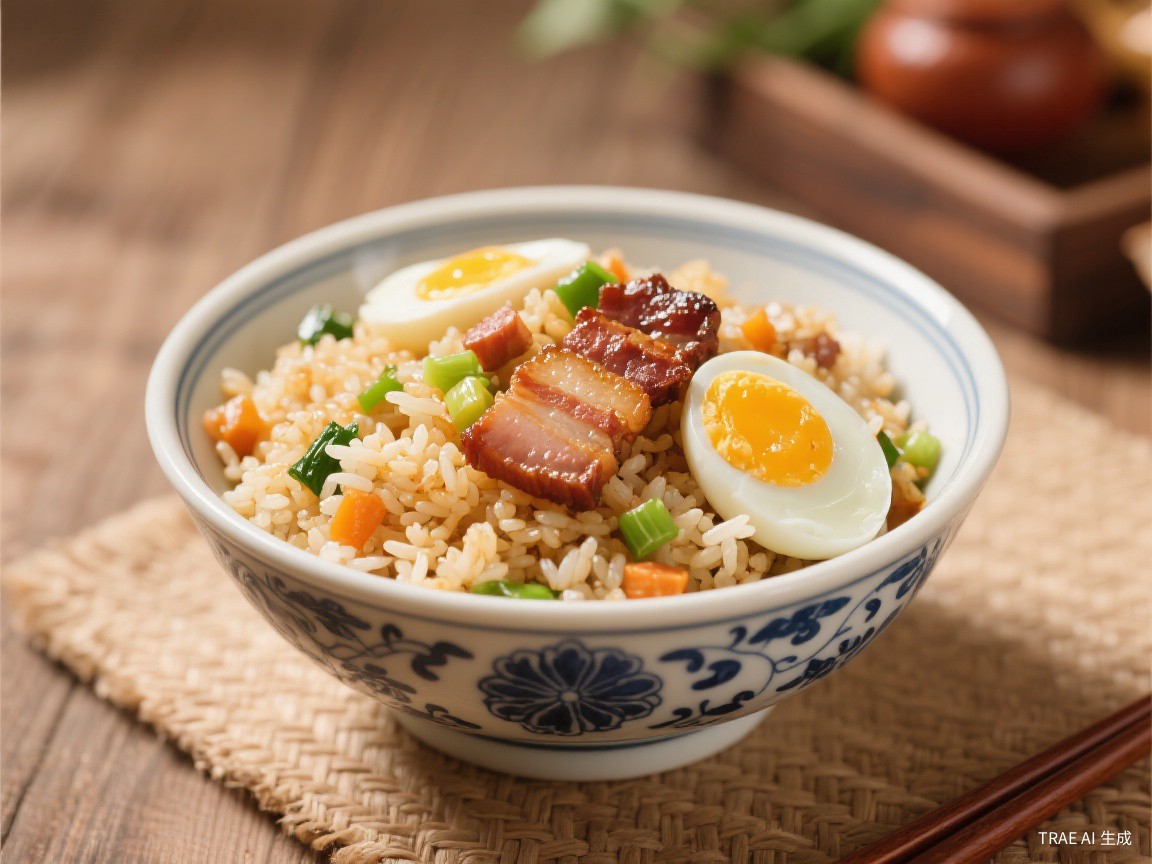
The egg is the heart of egg fried rice, and how you incorporate it dramatically affects the final dish. There are three primary techniques, each producing a different texture and visual result, and the one you choose depends on personal preference and regional tradition.
The first and most common technique is the "wrap" method: scramble the eggs in the wok first, push them to the side, add the rice, and then fold the scrambled egg back into the rice. This produces distinct, visible pieces of egg throughout the dish—yellow ribbons and curds that contrast visually with the white rice. It is the style most commonly seen in Chinese-American restaurants and is the easiest for beginners to master.
The second technique is the "coat" method: beat the eggs and pour them over the rice while it is being stir-fried, tossing continuously so the egg coats each grain in a thin, golden film. This produces a more uniform appearance and a silkier texture, with each grain of rice enveloped in a barely perceptible layer of cooked egg. This is the style favored in many Taiwanese and Fujianese preparations, and it is the technique I use most often in my own kitchen.
The third technique is the "press" method: crack the eggs directly onto the rice in the wok and use the spatula to press and fold the mixture, breaking the eggs into irregular pieces that become distributed throughout. This is the most rustic approach and is common in home kitchens across China, where speed and efficiency matter more than visual perfection.
Soy Sauce: Choosing and Using
Soy sauce is the primary seasoning in fried rice, and understanding the difference between its two main types is crucial. Light soy sauce (sheng chou) is thin, salty, and relatively light in color. It provides the dish's primary saltiness and a subtle fermented umami. Dark soy sauce (lao chou) is thicker, slightly sweeter, and much darker due to longer fermentation and the addition of caramel. It contributes color more than salt and should be used sparingly—a tablespoon or less for an entire batch of fried rice.
The most common mistake is adding soy sauce directly to the rice in the wok. This floods the rice with liquid, undoing all the work you put into drying it overnight. Instead, drizzle the soy sauce around the edge of the wok, where it hits the hot metal and caramelizes almost instantly, creating a smoky, concentrated seasoning that coats the rice as you toss it. This technique, called "running the soy sauce around the wok," is one of the fundamental skills of Chinese stir-frying and makes an enormous difference in the final flavor.
- Use light soy sauce for seasoning: It provides saltiness without excessive color or sweetness
- Dark soy sauce is for color only: Add it sparingly—a little goes a very long way
- Never pour soy sauce directly onto the rice: Always drizzle it around the edge of the hot wok
- Add soy sauce after the rice has been frying for a minute: This allows the rice to dry further before any liquid is introduced
Regional Styles: A Tour of China in Rice
Fried rice is not a single dish but a family of dishes, each region of China putting its own distinctive stamp on the formula. Yangzhou fried rice (yeung chow fan) is perhaps the most famous, originating in the Jiangsu province city of Yangzhou. It is characterized by its elaborate mix of ingredients—shrimp, pork, char siu (barbecue pork), peas, carrots, and scrambled egg—all cut into uniform dice that echo the precision of the city's renowned carved jade. The rice itself should be golden from the egg but not dark from soy sauce, and each grain should be separate and glistening.
Fujian-style fried rice takes a different approach entirely, incorporating the province's famous oyster sauce and often featuring a generous amount of scallion oil—oil that has been gently heated with copious amounts of chopped scallions until the scallions are fragrant and deeply golden. The result is a fried rice that is intensely aromatic, with a sweetness from the scallions that balances the savory oyster sauce. Fujian fried rice is less about the mix-ins and more about the rice itself, which should be perfectly seasoned and deeply flavorful on its own.
In Sichuan, fried rice takes on the region's characteristic heat with the addition of doubanjiang (fermented chili bean paste) and pickled mustard greens (suan cai). The result is a fiery, tangy fried rice that is worlds apart from the mild, soy-sauce-forward versions of the east coast. It is a dish that demands to be eaten with a cold beer and a tolerance for capsaicin.
The Final Toss: Garnish and Serve
Fried rice should be served immediately—every minute it sits in the serving bowl, it loses heat, the grains begin to steam against each other, and the delicate texture you worked so hard to achieve starts to deteriorate. Have your bowls warmed and your diners ready before the rice hits the wok. The entire cooking process, from the first sizzle to the final toss, should take no more than three to four minutes.
A final garnish of freshly chopped scallions, sprinkled over the rice just before serving, provides a sharp, oniony brightness that cuts through the richness. A few drops of toasted sesame oil added off-heat (never during cooking, as heat destroys its delicate flavor) contribute a nutty aroma that elevates the dish from satisfying to memorable. In my family, we also serve fried rice with a side of lao gan ma, the famous Sichuan chili crisp, for those who want an extra kick. But the rice itself—simple, golden, fragrant, and perfectly textured—should be extraordinary enough to stand on its own.
Ready to Master Fried Rice?
Download our complete guide with wok seasoning instructions, regional style recipes, and a video tutorial on achieving wok hei at home.
Get the Free Guide