The first time I tasted lamb korma prepared in the traditional Mughlai style, I was seated on the floor of my aunt's home in Lucknow, a city that has preserved the culinary traditions of India's Mughal emperors with an almost religious devotion. The korma arrived in a copper-handled pot, its surface shimmering with a thin film of ghee, and the aroma that rose from it was so complex—nutty, creamy, faintly sweet, and deeply spiced—that I closed my eyes before the first bite, wanting to memorize the scent. That single dish changed the trajectory of my career and sent me on a decade-long journey to understand the royal cuisine that produced it.
Born in the Imperial Kitchens of the Mughal Court
The Mughal Empire, which ruled much of the Indian subcontinent from the early sixteenth to the mid-nineteenth century, brought with it not only political authority but an extraordinarily sophisticated culinary tradition. The Mughal emperors—descendants of Timur and Genghis Khan—had inherited Persian and Central Asian cooking techniques that they merged with India's indigenous ingredients and spice traditions, creating a cuisine of unprecedented richness and complexity known as Mughlai.
The word "korma" itself derives from the Urdu word "qorma," meaning braised, and the technique reflects this etymology precisely. In its original form, korma was a method of braising meat in a sealed pot over low heat, using its own juices and the moisture from yogurt and onions to create a rich, self-contained sauce. The sealed pot method—called "dum" in Hindi—trapped steam and aromas, producing meat so tender it could be cut with a spoon and a sauce so deeply flavored that it seemed to contain the history of every spice that had ever crossed the Silk Road.
The imperial kitchens of the Mughal court employed hundreds of specialist cooks, each responsible for a different category of dish. The korma cooks were among the most revered, as the dish required not just technical skill but an intuitive understanding of how spices interacted with dairy, how heat transformed yogurt from tart to mellow, and how patience could turn tough cuts of meat into silk. The emperors judged their chefs by the quality of their korma, and a poorly made batch could result in exile—or worse.
"Korma is not a curry. It is a meditation on patience. Every ingredient exists in service of the meat, and every minute of cooking brings the dish closer to the tenderness that the Mughal emperors demanded as their birthright."
— Chef Priya
The Yogurt Marinade: Science and Tradition
The foundation of a great lamb korma is the marinade, and the marinade is built on yogurt. This is not arbitrary—yogurt serves a dual purpose that no other ingredient can replicate. First, its acidity gently denatures the proteins on the surface of the meat, breaking down tough muscle fibers and creating a more tender result. This is not the aggressive chemical tenderization of commercial meat tenderizers, which can turn meat mushy, but a slow, gentle process that preserves the meat's texture while making it more receptive to the flavors of the spices.
Second, yogurt acts as a carrier for the marinade's spices, coating each piece of lamb in a thick, clinging layer that ensures the spices penetrate the meat rather than sliding off. The lactic acid in yogurt also helps to bloom the ground spices—coriander, cumin, turmeric, and chili powder—waking up their essential oils and creating a more intensely flavored result than dry rubbing alone could achieve.
Chef's Tip
Use full-fat, whole-milk yogurt for the marinade—never low-fat or Greek yogurt, which has been strained and is too dense. The yogurt should be thick enough to coat the meat but loose enough to spread easily. If your yogurt is very thick, whisk in a tablespoon of water or milk to loosen it. For the most authentic flavor, use homemade yogurt, which has a tangier, more complex flavor than commercial varieties. The marinade should contain a pinch of salt, which helps the yogurt penetrate the meat more effectively through osmosis.
Marination Time: Longer Is Better
The minimum marination time for lamb korma is two hours, but overnight is dramatically better. During extended marination, the yogurt's acidity works deeper into the meat, the spices continue to bloom and infuse, and the lamb absorbs the flavors so thoroughly that the meat itself becomes seasoned through to its core. For the most tender results, marinate for twelve to twenty-four hours in the refrigerator, covered tightly to prevent the yogurt from absorbing other odors.
When you are ready to cook, bring the marinated lamb to room temperature for thirty minutes before proceeding. Cooking cold meat straight from the refrigerator causes the protein fibers to contract suddenly, squeezing out moisture and producing tougher results. This small step—often overlooked—makes a noticeable difference in the final texture.
The Nut Paste: Cashew and Almond Together
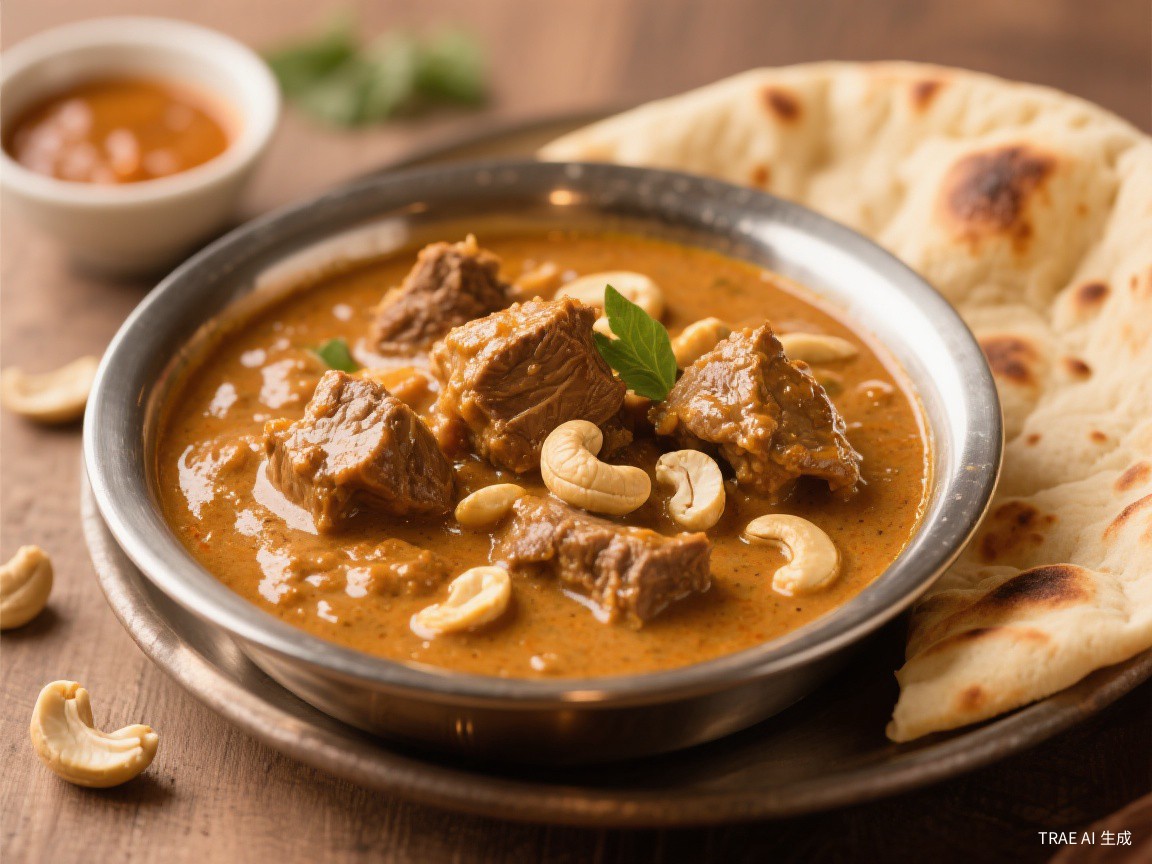
What separates korma from virtually every other Indian meat dish is the generous use of ground nuts, which create the sauce's signature velvety texture and rich, rounded flavor. The traditional combination is cashews and almonds, used together in roughly equal proportions. Cashews contribute a natural sweetness and a buttery smoothness when ground, while almonds add a slightly marzipan-like depth and a subtle bitterness that prevents the sauce from becoming cloying.
The nuts should be soaked in warm water for at least thirty minutes before grinding—this softens them and produces a smoother paste. Grind them with a small amount of water or milk until they form a completely smooth, lump-free paste. Any grittiness in the nut paste will translate to a grainy sauce, which is the opposite of the silky texture you are aiming for. Some cooks add a few tablespoons of poppy seeds (khas khas) to the nut paste for additional body and a faintly peppery undertone, a technique that is particularly common in Hyderabadi korma.
When to Add the Nut Paste
Timing is critical. The nut paste should be added after the onions have been fried and the ground spices have been bloomed, but before the lamb and yogurt marinade go in. Fry the nut paste in the remaining oil or ghee for two to three minutes, stirring constantly to prevent scorching. The paste will darken slightly and release a rich, nutty aroma. This brief frying step cooks off the raw nut flavor and integrates the paste into the sauce base, ensuring a smooth, homogeneous final result.
Spice Blooming: The Technique That Changes Everything
The concept of "blooming" spices—cooking them briefly in hot fat to release their essential oils—is central to virtually all Indian cooking, but it is especially important in korma, where the spice flavors must be deep and integrated rather than sharp and raw. The technique is simple in principle but requires attention in practice.
After frying your onions to a deep golden brown (not burnt—this is crucial, as burnt onions will make the entire korma bitter), reduce the heat to medium-low and add your ground spices: coriander, cumin, turmeric, Kashmiri chili powder (which provides color without excessive heat), and garam masala. Stir them into the hot oil and cook for thirty to sixty seconds, just until the spices become fragrant and darken slightly. This brief cooking transforms the spices from dry, dusty powders into aromatic, flavor-intensified compounds that permeate the entire dish. Overcook them, and they will turn bitter and acrid. Undercook them, and they will taste raw and gritty.
- Coriander seeds (ground): Provides a warm, citrusy base note; use freshly ground for the best flavor
- Cumin seeds (ground): Adds an earthy, slightly smoky depth that anchors the spice profile
- Turmeric: Contributes color and a mild, warm bitterness; a quarter teaspoon is usually sufficient
- Kashmiri chili powder: Delivers a vibrant red color with moderate heat; standard chili powder is too aggressive for korma
- Garam masala: The finishing spice blend; add half during blooming and the remainder at the end of cooking
Ghee vs. Oil: The Fat That Defines the Dish
In traditional Mughlai cooking, ghee (clarified butter) is the default cooking fat, and for good reason. Ghee has a higher smoke point than butter, a rich, nutty flavor that permeates the entire dish, and a luxurious mouthfeel that vegetable oil cannot replicate. It also has deep cultural significance in Indian cuisine, where it is considered not just a cooking medium but a sacred substance—ghee is used in Hindu rituals, Ayurvedic medicine, and traditional celebrations.
For korma, ghee is strongly preferred because its flavor integrates seamlessly with the nut paste and yogurt, creating a sauce that tastes rich without feeling greasy. If you must use oil, choose a neutral oil with a high smoke point—vegetable oil, canola oil, or sunflower oil will work—but be aware that the flavor profile will be noticeably different. Some cooks use a combination: ghee for the initial frying of onions and spices, and a small amount of oil to prevent the ghee from burning during the longer cooking process.
Making Your Own Ghee
Homemade ghee is vastly superior to store-bought and surprisingly simple to make. Melt unsalted butter in a heavy-bottomed saucepan over medium-low heat. As it melts, it will separate into three layers: white milk solids on top, golden clarified butter in the middle, and milk solids that settle to the bottom. Simmer gently until the foam subsides and the milk solids at the bottom turn golden brown and smell like toasted nuts. Strain through a fine-mesh sieve or cheesecloth. The resulting ghee will keep at room temperature for months and will transform your korma from good to extraordinary.
Slow Cooking: The Dum Method
The traditional method for finishing korma is dum cooking—a technique where the pot is sealed and the dish cooks in its own steam over very low heat. In a modern kitchen, this translates to covering the pot tightly with a lid (some cooks seal the edge with a strip of dough for an airtight seal) and cooking on the lowest possible heat for one to two hours. The trapped steam gently braises the lamb in the yogurt-nut sauce, producing meat that is extraordinarily tender and a sauce that has thickened and concentrated to a silky, coating consistency.
During dum cooking, resist the urge to lift the lid and stir. Every time you open the pot, you release steam and lower the temperature, extending the cooking time and disrupting the gentle braising process. Trust the technique, trust the low heat, and let the korma cook undisturbed. When it is done, the lamb should be tender enough to break apart with gentle pressure, the sauce should be thick enough to coat the back of a spoon, and the surface should be shimmering with a thin, golden film of ghee that signals the dish is ready.
Serving: Naan, Rice, or Both?
The question of what to serve with lamb korma is one that sparks genuine debate in Indian households. Purists argue that naan is the only appropriate accompaniment—the soft, pillowy bread is perfect for tearing and scooping up the thick, creamy sauce. Others insist on plain basmati rice, which provides a neutral, fragrant counterpoint that lets the korma's flavors speak for themselves. In my family, we serve both, because the korma sauce is too good to leave behind in the bowl, and rice absorbs it in a way that bread cannot.
- Garlic naan: The most popular choice; the charred, buttery bread is a natural vehicle for the creamy sauce
- Plain basmati rice: Fluffy, long-grain rice that absorbs the sauce without competing with its flavors
- Jeera rice: Basmati rice tempered with cumin seeds; adds a subtle aromatic layer
- Paratha: A flaky, layered flatbread that provides more textural contrast than naan
Finish the plate with a scattering of fresh cilantro leaves, a few slivers of raw onion soaked in lemon juice (which provides a sharp, crunchy contrast to the rich sauce), and perhaps a small bowl of raita on the side. These garnishes are not decorative—they serve a culinary purpose, cutting through the korma's richness and refreshing the palate between bites. A proper lamb korma, served this way, is not just a meal. It is a window into one of the world's greatest culinary traditions, a dish that carries the weight of emperors and the warmth of home kitchens in every golden, fragrant spoonful.
Ready to Master Lamb Korma?
Download our complete guide with a spice blooming tutorial, homemade ghee instructions, and the authentic dum cooking method explained step by step.
Get the Free Guide