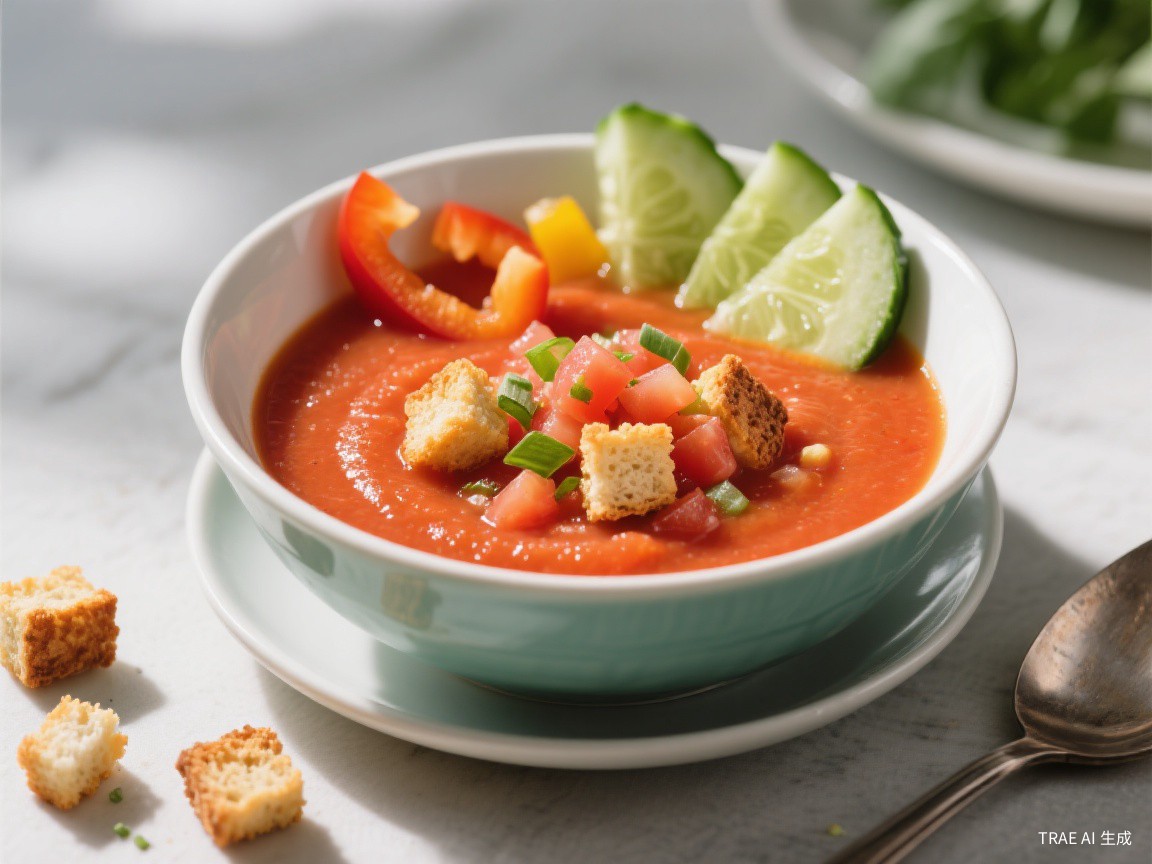
In the white-washed villages of Andalusia, where summer temperatures regularly exceed forty degrees Celsius and the midday sun drives everyone indoors, gazpacho is not a starter course or an appetizer. It is survival. Served ice-cold in tall glasses or shallow earthenware bowls, this chilled tomato soup is the culinary equivalent of jumping into a swimming pool—immediate, refreshing, and utterly transformative. But to reduce gazpacho to "cold soup" is to misunderstand it entirely. Properly made, gazpacho is a sophisticated emulsion of raw vegetables, olive oil, and vinegar that achieves a silky, velvety texture no less refined than the finest French bisque.
The Moorish Roots of a Spanish Icon
Gazpacho's history stretches back far further than the tomato, which is something that surprises many people. The original gazpacho was a bread-based soup that predated the arrival of tomatoes in Europe by centuries. Moors who ruled Al-Andalus—the Islamic territory that covered most of the Iberian Peninsula from the eighth to the fifteenth century—created a cold soup of bread, garlic, olive oil, vinegar, and water that was pounded together in a mortar. This proto-gazpacho was a practical food for field workers and shepherds, providing hydration and sustenance during the brutal Andalusian summer.
When tomatoes arrived from the New World in the sixteenth century, they were initially treated with suspicion in Europe, belonging to the nightshade family and widely believed to be poisonous. But in Andalusia, where the climate was perfectly suited to tomato cultivation, they were gradually incorporated into the existing gazpacho tradition. By the nineteenth century, the tomato-based gazpacho we know today had become firmly established as the defining cold soup of southern Spain.
The evolution from Moorish bread soup to modern gazpacho was not a sudden replacement but a gradual transformation. Each generation added something—a new vegetable here, a different vinegar there—until the recipe settled into the form that Andalusian grandmothers still prepare today. The bread never left the recipe, though. It remains the essential thickener and textural foundation of authentic gazpacho, even if modern restaurant versions sometimes omit it in favor of a lighter, more purely tomato-based soup.
"Gazpacho is not a rough-chopped salsa in a bowl. It is a carefully emulsified soup that should be smooth, silky, and almost creamy. The bread is not optional—it is the soul of the dish, the ingredient that transforms a bowl of blended vegetables into something transcendent."
— Chef Sofia
Tomato Selection: The Most Critical Ingredient
Authentic gazpacho is made with raw tomatoes, and the quality of those tomatoes determines the quality of the final soup more than any other single factor. In Andalusia, gazpacho is made during peak tomato season—late July through September—when tomatoes are at their ripest, sweetest, and most flavorful. Making gazpacho with hothouse tomatoes in January is like making strawberry shortcake with winter strawberries: technically possible, but fundamentally compromised.
The preferred varieties in Andalusia are Roma (also called plum or pear) tomatoes and the locally grown Raf tomato. Roma tomatoes are widely available and well-suited to gazpacho because of their dense, meaty flesh and relatively low water content. They provide concentrated tomato flavor without diluting the soup with excess liquid. Raf tomatoes, a heirloom Spanish variety with green shoulders and a lobed, irregular shape, are considered the gold standard in southern Spain. They have an extraordinary balance of sweetness and acidity, with a firm texture that holds up well to blending.
Chef's Tip
Always salt your chopped tomatoes and let them macerate for fifteen to twenty minutes before blending. The salt draws out their natural juices and intensifies their flavor. Reserve this juice—it is liquid gold—and add it back to the blender with the rest of the ingredients. This simple step dramatically improves the depth and sweetness of the finished gazpacho.
Peeling and Seeding: A Matter of Preference
Traditional Andalusian gazpacho is made with unpeeled tomatoes. The skin contains valuable flavor compounds and pigments, and modern high-speed blenders process it thoroughly enough that no unpleasant texture remains. However, some cooks prefer to peel their tomatoes for a smoother result, and this is a perfectly valid choice. If you choose to peel, the easiest method is to score an X in the bottom of each tomato, blanch them in boiling water for thirty seconds, then transfer to an ice bath. The skins will slip off easily.
Seeding is more controversial. Tomato seeds and the gel that surrounds them contain a significant amount of umami-producing glutamic acid, and removing them strips the gazpacho of flavor. I never seed my tomatoes for gazpacho, and neither does any Andalusian cook I have ever met. The seeds contribute to both flavor and body, and a good blender will process them completely.
The Emulsion: Olive Oil as the Magic Ingredient
Here is the secret that separates great gazpacho from mediocre gazpacho: it is not a blended soup. It is an emulsion. The olive oil is not simply drizzled on top as a garnish—it is blended into the soup in a significant quantity, creating a stable emulsion that gives gazpacho its characteristic silky, almost creamy texture. This is the technique that elevates gazpacho from a rustic puree to a refined dish, and it is the step most often misunderstood by home cooks and restaurants outside of Spain.
The ratio matters. Authentic Andalusian gazpacho calls for a generous amount of extra virgin olive oil—typically between one-quarter and one-third cup per pound of tomatoes. This may seem like a lot, but the oil is essential for the emulsion. When blended vigorously with the tomato-vegetable mixture, the oil droplets are dispersed throughout the liquid, creating a smooth, cohesive texture that coats the palate. Without sufficient oil, gazpacho is thin and watery. With the right amount, it becomes something altogether more luxurious.
The technique is similar to making mayonnaise: the oil must be added gradually while the blender is running, allowing it to incorporate and emulsify before more is added. Some cooks add all the oil at once with modern high-speed blenders and achieve acceptable results, but the gradual method produces a more stable and refined emulsion. The finished soup should be homogeneous, with no visible oil separation on the surface.
- Use extra virgin olive oil only: Its flavor is integral to the soup, not merely a structural component
- Add oil gradually: Stream it into the running blender for the smoothest emulsion
- Use a high-speed blender: A standard blender or food processor may not achieve the same silky texture
- Chill thoroughly before serving: Gazpacho must be served very cold—ideally four hours in the refrigerator
- Adjust seasoning when cold: Cold temperatures dull flavors, so taste and adjust after chilling
Sherry Vinegar: The Andalusian Signature
The vinegar in gazpacho is not optional, neutral, or interchangeable. In Andalusia, the vinegar of choice is sherry vinegar—vinagre de Jerez—a product of the same sun-drenched region that produces gazpacho itself. Sherry vinegar is made from Palomino, Pedro Ximenez, or Moscatel grapes aged in oak barrels using the solera system, a fractional blending method that produces vinegars of extraordinary complexity and depth.
The quality of sherry vinegar varies widely. Reserva sherry vinegar, aged for a minimum of two years, has a rich, nutty, slightly sweet character with a clean, sharp acidity that cuts through the richness of the olive oil emulsion. Gran reserva, aged for ten years or more, is even more complex, with notes of toasted nuts, dried fruit, and caramel. Either is excellent for gazpacho, but avoid cheap sherry vinegars that taste harsh and one-dimensional.
The vinegar performs a critical balancing function. Without it, gazpacho would be sweet and flat—a puree of tomatoes and oil with no tension. The vinegar's acidity brightens the entire dish, lifts the tomato flavor, and creates a dynamic interplay with the olive oil's richness. The amount should be noticeable but not overwhelming—enough to make you sit up and pay attention, not enough to make you pucker.
Bread: The Ancient Thickener
As mentioned earlier, bread has been part of gazpacho since long before tomatoes entered the equation. In the modern recipe, a slice or two of day-old country bread—specifically the interior crumb, not the crust—is soaked in water until soft, then squeezed dry and added to the blender. The bread serves multiple functions: it thickens the soup to the proper consistency, it contributes starch that helps stabilize the emulsion, and it adds a subtle, yeasty sweetness that rounds out the sharp edges of the tomato and vinegar.
The type of bread matters. A dense, rustic loaf with a tight crumb works best. Sourdough adds a pleasant tang that complements the vinegar. Avoid soft, commercial sandwich bread, which dissolves into a gummy paste and contributes nothing but textureless bulk. The bread should be stale enough to absorb water without disintegrating—ideally a day or two old—and free of any strong flavors (no herbs, cheese, or seeds) that would compete with the soup's delicate balance.
Salmorejo vs. Gazpacho: Understanding the Difference
Cordoba, a city in the heart of Andalusia, is famous for salmorejo—a close cousin of gazpacho that is thicker, creamier, and served with specific garnishes. While gazpacho contains tomatoes, cucumber, bell pepper, garlic, bread, olive oil, and vinegar, salmorejo uses only tomatoes, bread, garlic, olive oil, and vinegar. The higher bread-to-tomato ratio produces a thick, orange-pink soup with the consistency of a thick puree or even a dip. It is traditionally garnished with hard-boiled egg and diced jamon iberico, and it is one of the most beloved dishes in all of Spanish cuisine.
The distinction matters because salmorejo is often what foreigners think of when they imagine gazpacho—a thick, creamy, almost sauce-like soup. True gazpacho is thinner, more complex in its vegetable composition, and served as a drinkable soup rather than a spreadable one. Both are extraordinary, but they are different dishes with different histories and different purposes.
The Garnish Tradition
How you garnish gazpacho can be a surprisingly contentious topic in Spain. In Andalusia, the traditional garnishes are finely diced cucumber, bell pepper, red onion, and sometimes hard-boiled egg and small cubes of jamon serrano. These are served separately in small bowls, allowing each diner to customize their bowl to their preference. The garnishes should be cut into small, uniform dice—no larger than a quarter inch—so that they distribute evenly through the soup and provide textural contrast without overwhelming the smooth liquid.
A final drizzle of extra virgin olive oil on top of each serving is universal. This is not the emulsified oil within the soup but a finishing touch—a few drops of your best olive oil that float on the surface and provide a burst of fruity, peppery flavor with each spoonful. Some cooks also add a tiny pinch of cumin, though this is more common in Extremadura than in Andalusia proper.
- Prepare garnishes first: Finely dice cucumber, bell pepper, and red onion. Keep chilled.
- Chill your serving vessels: Glasses or bowls should be refrigerator-cold before serving.
- Pour and garnish: Ladle the gazpacho into cold glasses, add garnishes, and finish with a drizzle of olive oil.
- Serve immediately: Gazpacho should be consumed while still very cold—do not let it sit at room temperature.
Summer in a Glass
Gazpacho is, at its core, an expression of place and season. It could only have been born in Andalusia, where the summer sun is relentless, the tomatoes are extraordinary, and the olive oil flows like water. It is a dish that requires no cooking—just blending, balancing, and chilling—which makes it paradoxically both the simplest and the most demanding of soups. Simple because there is no heat to manage, no timing to coordinate, no technique to master beyond the emulsion. Demanding because, with so few steps and so few ingredients, every element must be perfect. The tomatoes must be ripe. The oil must be excellent. The vinegar must be true sherry vinegar. The bread must be good bread.
When all of these elements come together—the sweet tomatoes, the peppery olive oil, the sharp vinegar, the earthy bread, the smoky hint of garlic—the result is something that tastes like summer itself. Cold, bright, alive, and endlessly refreshing. It is a soup that requires no introduction and accepts no substitutes. It is gazpacho, and it is one of the great dishes of the world.
Ready to Make Authentic Gazpacho?
Download our complete guide with tomato variety recommendations, emulsion techniques, and garnish ideas.
Get the Free Guide