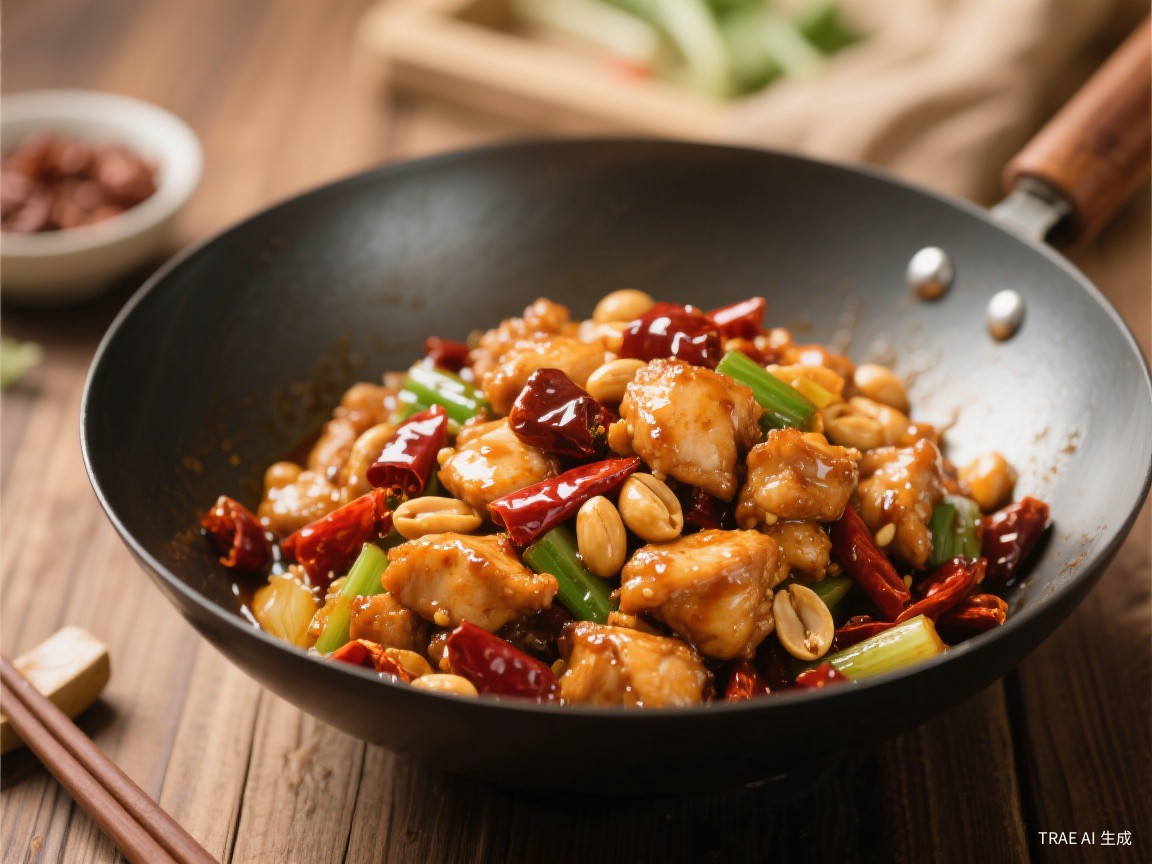
If there is a single dish that captures the fiery, complex soul of Sichuan cooking, it is Kung Pao Chicken. A seemingly simple stir-fry of diced chicken, peanuts, and dried chilies, it delivers an experience that is simultaneously sweet, sour, salty, savory, and numbing—a flavor collision so perfectly balanced that it has survived centuries of imperial courts, revolutionary upheavals, and global reinterpretations.
The Legend of Ding Baozhen
The story of Kung Pao Chicken begins not in a restaurant kitchen, but in the halls of Qing Dynasty power during the late nineteenth century. Ding Baozhen was a governor of Sichuan province and a trusted official in the court of the Tongzhi Emperor. Like many men of his station, he employed a personal chef who catered to his particular tastes—specifically, his love of tender chicken stir-fried with chilies and peanuts.
"Kung Pao" itself is an honorary title, roughly translating to "Palace Guardian" or "Prince," reflecting Ding Baozhen's rank. The dish was originally known in Sichuan as "Gong Bao Ji Ding," and for decades it remained a regional specialty, largely unknown outside the province. It wasn't until the mid-twentieth century, when Sichuanese chefs began migrating to other parts of China and eventually the world, that Kung Pao Chicken became the global phenomenon we recognize today.
What makes the Ding Baozhen story compelling is how it illustrates a recurring theme in Chinese culinary history: the way a single powerful patron's personal preference can elevate a home-style dish to legendary status. Countless imperial dishes share similar origins—a ruler's craving immortalized by generations of cooks who refined and passed down the recipe.
"In Sichuan, we do not eat to fill the stomach. We eat to awaken every nerve in the body. A proper Kung Pao should make your lips tingle, your forehead glisten, and your soul feel alive."
— Chef Wei, Sichuan Cuisine Specialist
The Holy Trinity: Chilies, Peppercorns, and Peanuts
Understanding Kung Pao Chicken requires understanding its three defining ingredients, each of which plays a role far more complex than a casual diner might appreciate.
Sichuan Peppercorns: The Numbing Spark
Sichuan peppercorns are not actually peppercorns at all. They are the dried husks of the prickly ash tree, and they contain a molecule called hydroxy-alpha-sanshool that produces a distinctive tingling, numbing sensation on the tongue and lips. This sensation, known in Chinese as "ma," is one of the two pillars of Sichuan flavor—the other being "la," or heat from chilies.
The numbing effect serves a brilliant culinary purpose. By slightly anesthetizing the tongue's surface, it allows the diner to perceive flavors more intensely and for longer periods. It also moderates the burn of the chilies, creating a push-and-pull dynamic that keeps you reaching for the next bite. Toast the peppercorns briefly in a dry wok before using them—this activates their essential oils and deepens their citrusy, almost pine-like aroma.
Chef's Tip
Always pick through your Sichuan peppercorns and discard any black seeds. The reddish-brown husks carry all the flavor and numbing power, while the tiny black seeds are bitter and gritty. A good batch of peppercorns should be reddish, open like tiny blossoms, and smell intensely of citrus when crushed.
Dried Chilies: Heat Without Overwhelming
The dried chilies used in Kung Pao are typically facing heaven chilies (chaotianjiao), named for the way they grow pointing upward on the plant. They are moderately hot—significantly less fiery than bird's eye chilies—and they contribute a deep, smoky, almost fruity heat that permeates the oil during stir-frying. The key is to fry them until they darken and become fragrant but never burn. A burned chili turns acrid and bitter, ruining the entire dish.
The Peanut Question
Peanuts in Kung Pao Chicken should never be an afterthought. They must be properly prepared—either dry-roasted or fried in oil until golden and crunchy. Raw or undercooked peanuts are soft and bland, a textural disappointment in an otherwise carefully constructed dish. Some Sichuanese cooks briefly blanch their peanuts in hot water, then fry them; this technique produces an exceptionally crisp exterior with a tender center. The peanuts should be added near the end of cooking so they retain their crunch.
Mastering Wok Hei
Wok hei, literally "breath of the wok," is the elusive quality that separates restaurant-quality stir-fry from home-cooked attempts. It is the smoky, slightly charred flavor that results from cooking at extremely high temperatures in a well-seasoned carbon steel wok. Achieving wok hei at home requires a few specific conditions.
First, your wok must be screaming hot—so hot that a drop of water evaporates in less than a second. Second, you must work quickly, moving ingredients in and out of the wok in rapid succession. Third, the wok must be properly seasoned so that the oil forms a slick, non-stick surface that allows ingredients to sear rather than steam.
The traditional sequence for Kung Pao Chicken is precise: heat the wok until smoking, add oil, fry the chilies and peppercorns until fragrant, add the marinated chicken and spread it in a single layer to sear, toss until just cooked through, add the scallions and garlic, pour in the pre-mixed sauce, toss to coat, and finish with the peanuts. The entire cooking process takes less than two minutes from the moment the chicken hits the wok.
The Sauce: Balance in a Bowl
The sauce for Kung Pao Chicken is a masterclass in Chinese flavor balancing. It typically combines light soy sauce for saltiness, dark soy sauce for color, Chinese black vinegar for tartness, sugar for sweetness, and a cornstarch slurry for body. The ratios are critical: too much vinegar and the dish becomes sharp and one-dimensional; too much sugar and it becomes cloying. The ideal sauce should taste complex on its own—sweet, sour, salty, and savory all at once—but should enhance rather than mask the flavor of the chicken.
- Light soy sauce: Provides clean saltiness without darkening the dish excessively
- Dark soy sauce: Adds a rich, caramel color and deeper umami notes
- Chinese black vinegar (Zhenjiang): Contributes a malty, slightly smoky acidity far more complex than Western vinegars
- Rock sugar: Preferred over refined sugar for its cleaner, rounder sweetness
- Cornstarch slurry: Thickens the sauce just enough to cling to every piece of chicken
The Velvet Technique: Tender Chicken Every Time
One of the secrets to restaurant-quality Kung Pao Chicken is a technique called "velveting." Before stir-frying, the chicken is marinated in a mixture of soy sauce, rice wine, a pinch of sugar, and cornstarch, then briefly coated in egg white and a thin layer of oil. This coating protects the chicken proteins from the intense heat of the wok, keeping the meat extraordinarily tender and juicy even after rapid cooking.
Velveting is not unique to Kung Pao Chicken—it is used across Chinese stir-fry cooking—but it is especially important here because the chicken is cut into small dice, which means it has a large surface area relative to its volume and can easily overcook. The velvet coating buys you those crucial extra seconds of cooking time.
A Dish Misunderstood
Western adaptations of Kung Pao Chicken have strayed so far from the original that many people have never tasted the authentic dish. The cloyingly sweet, thickly sauced versions found in many American Chinese restaurants bear little resemblance to the Sichuan original, which is lighter, more complex, and considerably more fiery. The authentic dish is defined by its balance—the way sweetness, sourness, saltiness, heat, and numbing sensation coexist in every bite without any single element dominating.
If you have only experienced the Westernized version, I urge you to seek out the real thing or, better yet, make it yourself. The difference is not subtle. It is the difference between a cover band and the original recording.
Common Mistakes to Avoid
- Using a non-stick wok: You cannot achieve proper wok hei on a non-stick surface. Use carbon steel or cast iron.
- Overcrowding the wok: Cook in batches if necessary. Crowding lowers the temperature and causes steaming instead of searing.
- Skipping the velvet step: Without it, the chicken will be tough and dry.
- Burning the chilies: Darkened chilies are fragrant; blackened chilies are bitter. Watch them constantly.
- Adding peanuts too early: They will soften and lose their essential crunch.
Serving and Pairing
In Sichuan, Kung Pao Chicken is typically served as part of a larger meal, accompanied by steamed white rice, a simple vegetable dish, and perhaps a clear soup. It is not meant to be eaten alone. The rice tempers the heat, the vegetables provide freshness, and the soup cleanses the palate between bites. A cold Sichuan-style cucumber salad with garlic and black vinegar makes an especially refreshing counterpart.
For beverages, a cold lager beer is the traditional pairing in Sichuan—the carbonation and mild bitterness cut through the oil and heat beautifully. If you prefer wine, look for an off-dry Riesling with enough acidity to complement the vinegar in the sauce and enough residual sugar to balance the chilies.
Ready to Master Kung Pao Chicken?
Download our complete Sichuan pantry guide with sourcing tips for authentic peppercorns, vinegars, and chilies.
Get the Free Guide