Mumbai does not eat to live—it lives to eat. And nowhere is this more evident than after sunset, when the city's legendary street food scene erupts into a sensory symphony of sizzling oil, pounding spices, and the ceaseless, joyful chaos of millions of people feeding their deepest cravings. I was born in Mumbai, but after fifteen years abroad, returning to its night markets felt like stepping into a time machine that transported me straight back to my childhood—when my grandmother would hold my hand through crowded lanes, ordering from the same vendors she had trusted for decades. This is that story, told through five unforgettable bites.
Mohammad Ali Road: The Grand Arena
If Mumbai's street food scene has a cathedral, it is Mohammad Ali Road. This narrow, teeming thoroughfare in South Mumbai transforms during the month of Ramadan into what can only be described as the world's greatest open-air food festival. But even outside of Ramadan, the street pulses with an energy that is unmatched anywhere in India. The stalls open around 7:00 PM and don't close until well past midnight, their gas burners casting an orange glow that illuminates the smoke rising from a hundred sizzling pans.
My first stop was at Noor Mohammadi Hotel, a name that is slightly misleading—this is not a hotel but a legendary eatery that has been serving Mughlai cuisine since 1923. Their nalli nihari (slow-cooked lamb shanks in a rich, spiced gravy) is the stuff of Mumbai food mythology. The lamb is braised for six to eight hours until the meat slides off the bone with barely a nudge, and the gravy—a deep, dark, almost black reduction of bone marrow, spices, and caramelized onions—is so intensely flavored that a single spoonful coats your entire palate with warmth and complexity. Served with fresh naan bread for tearing and dipping, it is a dish that demands your full attention. At 350 rupees (about $4.20 USD), it is a meal that would cost twenty times as much in a fine-dining restaurant in London or New York.
Insider's Tip
Visit Mohammad Ali Road on a Wednesday or Thursday night if you want to experience the energy without the extreme Ramadan crowds. The food is just as good, the stalls are fully operational, and you'll actually be able to find a place to stand while you eat.
The Seekh Kebab Encounter
Just steps from Noor Mohammadi, I found a stall with no name—just a charcoal grill, a young man working the skewers, and a crowd of locals that served as the only recommendation I needed. The seekh kebabs here were extraordinary: minced goat meat mixed with fresh herbs, green chilies, and a blend of spices that included the stall owner's secret garam masala, then hand-formed onto flat metal skewers and grilled over charcoal until the exterior was deeply charred and the interior remained juicy and fragrant.
The texture was the revelation. Unlike the dense, almost rubbery seekh kebabs I have encountered at Indian restaurants abroad, these were light and almost crumbly, with a smoky char that permeated every bite. The owner served them with a wedge of raw onion, a squeeze of lime, and a green chutney made from fresh mint, cilantro, and green chili that provided a bright, sharp contrast to the rich, smoky meat. Four kebabs cost 120 rupees (about $1.45 USD). I ordered six.
Ashok Vada Pav: Mumbai's Original Fast Food
Every city has a food that defines it—New York has the bagel, Tokyo has ramen, Paris has the croissant. Mumbai has the vada pav, and the most famous vada pav in Mumbai is served at Ashok, a tiny stall near Mithibai College in Vile Parle that has been operating since 1974. Ashok's founder, the late Ashok Satam, started with a single cart and a recipe passed down from his mother, and today the stall is run by his sons, who maintain the same standards that made their father famous.
A vada pav, for the uninitiated, consists of a batata vada (a spiced potato fritter) sandwiched in a pav (a soft, pillowy bread roll) with generous amounts of dry garlic chutney, green chutney, and sometimes tamarind chutney. It sounds simple. It is anything but. The quality of a vada pav depends on dozens of variables: the texture of the potato mash, the balance of spices in the vada, the temperature of the oil, the freshness of the pav, and the potency of the chutneys.
"The vada pav is Mumbai on a plate—humble, fast, affordable, and absolutely unforgettable. It doesn't pretend to be anything it's not, and that honesty is what makes it perfect."
— Ashok Satam, founder of Ashok Vada Pav
At Ashok, every element is dialed in to perfection. The batata vada has a crisp, golden exterior that shatters on impact, giving way to a fluffy, intensely spiced potato filling seasoned with mustard seeds, turmeric, green chilies, and fresh cilantro. The pav is sourced fresh from a local bakery and lightly toasted on the griddle, giving it a soft warmth that contrasts beautifully with the hot, crispy vada. But the true secret weapon is the dry garlic chutney—a potent, rust-colored powder made from dried red chilies, garlic, and shredded coconut that adds a fiery, garlicky kick to every bite. At 25 rupees (about $0.30 USD), it is not just the best vada pav in Mumbai—it is one of the best value meals on the planet.
Pav Bhaji at Sardar: A Butter-Laden Love Letter
No Mumbai street food tour is complete without pav bhaji, and no pav bhaji discussion is complete without Sardar Refreshments, a chaotic, beloved stall near Tardeo that has been serving the dish since 1964. Pav bhaji is a vegetable mash—potatoes, tomatoes, onions, peas, cauliflower, and capsicum, boiled and then aggressively spiced with pav bhaji masala, turmeric, and Kashmiri red chili—served with butter-toasted pav bread. It is the ultimate comfort food, and Sardar's version is the gold standard.
The first thing you notice at Sardar is the butter. They use enormous quantities of Amul butter—so much that the bhaji arrives with a visible layer of yellow fat floating on top. This is not a dish for the calorie-conscious, and that is precisely the point. The butter enriches the vegetables, carrying the spices across the palate and creating a silky, luxurious texture that is utterly addictive. The pav is halved and toasted on the griddle with yet more butter until it is golden and slightly crisp, then served alongside the bhaji for tearing and dipping.
The bhaji itself is a masterclass in spice management. Despite the generous use of chili, it is not aggressively hot—instead, the spices build a warm, rounded flavor that is deeply savory with a subtle sweetness from the caramelized onions and tomatoes. A squeeze of fresh lime and a sprinkle of raw onion on top add brightness and crunch. A large plate with four pav costs 180 rupees (about $2.15 USD), and it is enough to satisfy even the heartiest appetite.
Bhelpuri at Chowpatty Beach: Sunset and Spice
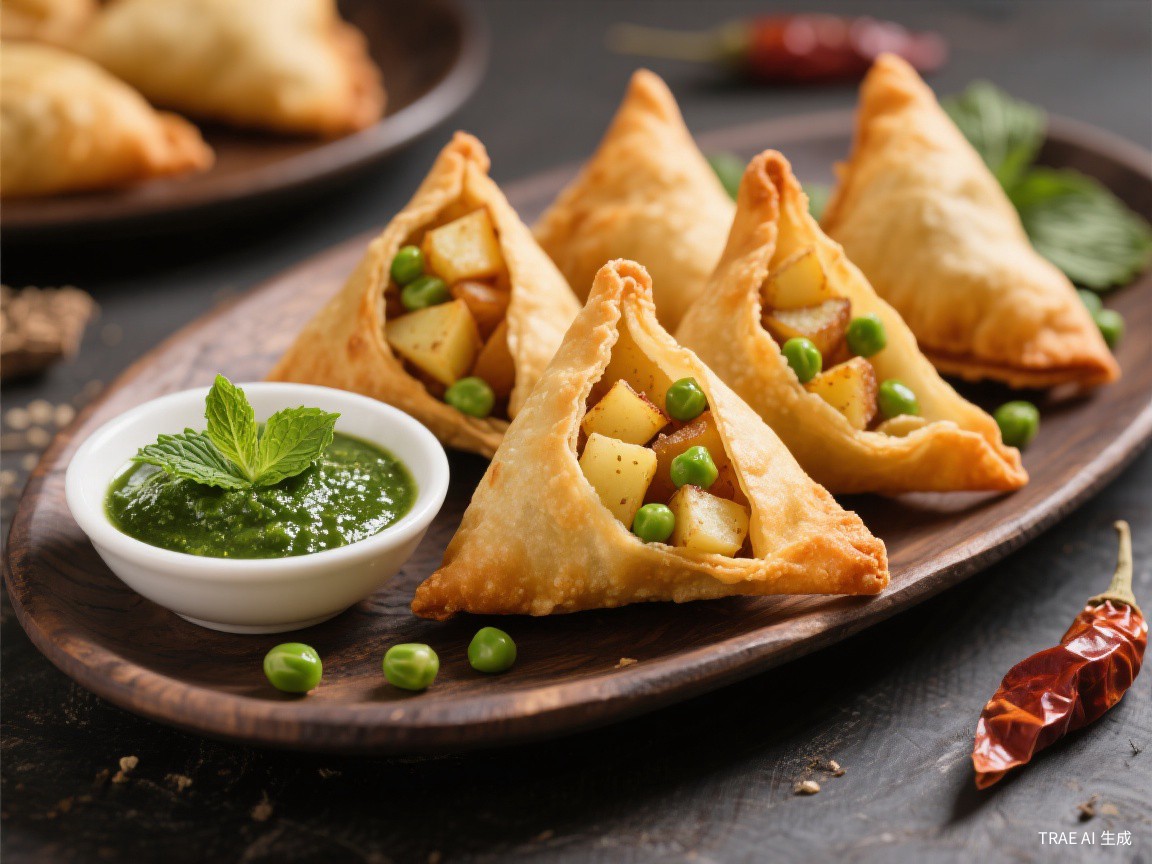
There is a specific moment on Mumbai's Chowpatty Beach, just as the sun dips below the Arabian Sea and the sky turns from orange to purple, when the bhelpuri vendors light their stalls and the evening's magic begins. Bhelpuri is a puffed rice snack—a chaotic, crunchy, tangy mixture of puffed rice, sev (thin fried noodles), chopped onions, tomatoes, potatoes, raw mango, and fresh cilantro, tossed with tamarind chutney and green chutney and served in a cone made from recycled newspaper.
The best bhelpuri I found was at a stall run by a woman named Sunita, who has been working the Chowpatty stretch for over twenty years. Her bhelpuri had a perfect balance of textures—the ethereal lightness of the puffed rice, the satisfying crunch of the sev, the juicy burst of the tomatoes, and the sharp, tangy bite of the raw mango. The chutneys were applied with a practiced hand: enough tamarind for sweetness and acidity, enough green chutney for heat and herbaceousness, but never so much that either overwhelmed the other ingredients. A large portion cost 60 rupees (about $0.72 USD), and I ate it standing at the water's edge, watching the fishing boats bob in the harbor as the city lights flickered to life behind me.
Pani Puri: The Five-Second Experience
Pani puri is the most interactive street food in India—a hollow, crispy sphere of fried dough (the puri) that is filled with a mixture of spiced potato, chickpeas, and onion, then submerged in a spicy, tangy liquid (the pani) and eaten whole in a single bite. The entire experience lasts about five seconds, from the moment the vendor hands you the filled puri to the moment you swallow it, but those five seconds contain an extraordinary range of flavors and textures.
The crack of the puri as it breaks against your palate. The flood of cold, spicy, minty liquid that follows. The soft, warm filling of potato and chickpeas that provides substance. The sharp bite of raw onion. The lingering heat of the green chili in the pani. It is a complete culinary experience compressed into a single mouthful, and it is utterly addictive.
- Find the busiest stall: High turnover means fresh ingredients. A pani puri stall with no customers is a warning sign.
- Eat immediately: Pani puri does not wait. The puri begins softening the moment the liquid goes in, so eat it the instant the vendor hands it to you.
- Ask for extra pani: The spicy liquid is the soul of the dish. Most vendors will happily give you an extra cup.
- Start mild: If you're not accustomed to spicy food, ask for the less spicy version first. You can always increase the heat on subsequent rounds.
Navigating Hygiene: A Practical Guide
Let's address the elephant in the room. Many visitors to Mumbai are concerned about street food hygiene, and while it's true that standards vary enormously, there are reliable indicators of a safe, well-run stall. After decades of eating on these streets, here are the rules I follow without exception.
- Watch the water source: The safest stalls use filtered or boiled water. If you see a vendor drawing water from an unmarked container, move on.
- Look for high turnover: Freshly cooked food is safe food. A stall that sells out and replenishes constantly is far safer than one where food sits around.
- Check the oil: Fresh oil is clear and light. If the oil in a fryer is dark, thick, or smells rancid, avoid it entirely.
- Observe the vendor's hands: The best vendors wear gloves or wash their hands frequently. If a vendor handles money and food with the same unwashed hands, find another stall.
- Trust your gut: Literally and figuratively. If something looks or smells off, don't eat it—no matter how many people recommend it.
The Night Market Energy
What makes Mumbai's street food scene truly special is not just the food itself but the environment in which it is consumed. The night markets are not merely places to eat—they are social spaces, community hubs, and living theaters where the city's incredible diversity is on full display. At Mohammad Ali Road, you'll find families, teenagers on dates, office workers grabbing a late dinner, and tourists all sharing the same cramped tables, eating the same food, united by the simple, universal pleasure of a good meal.
The sounds are as important as the flavors: the rhythmic thwack of the vada pav vendor's spatula, the sizzle of oil in a hot pan, the vendor calling out orders in a musical mix of Hindi, Marathi, and Urdu, the laughter of friends sharing a plate of pav bhaji. The air is thick with the aromas of cumin, coriander, garam masala, and caramelized onions. And the pace is relentless—vendors work at extraordinary speed, serving dozens of customers per minute with a choreography that borders on balletic.
Mumbai's street food is not refined. It is not plated. It does not come with a wine pairing or a tasting menu. But it possesses something that the world's finest restaurants often lack: authenticity, immediacy, and an unbreakable connection to the people and culture that created it. Every plate of pav bhaji, every vada pav, every pani puri is a direct link to generations of home cooks, street vendors, and food lovers who have made Mumbai one of the great eating cities on earth.
Explore More Global Street Food
From Mumbai's chaat stalls to Istanbul's kebab grills, discover our complete collection of international food reviews.
See All Reviews