Before my first trip to Tokyo, I thought I understood ramen. I had eaten it in New York, London, and Sydney. I had even made it from scratch at home, simmering pork bones for eighteen hours and hand-pulling noodles until my arms ached. But nothing—absolutely nothing—prepared me for the depth, diversity, and devotion of Tokyo's ramen culture. Over ten days, I ate twenty-three bowls. These five changed me permanently.
Bowl One: Ichiran — The Solo Symphony (Shibuya)
Ichiran is the ramen shop that non-Japanese people know best, and for good reason. With locations across Tokyo and a growing international presence, it has become synonymous with tonkotsu ramen—the rich, milky pork bone broth that has conquered the world. But experiencing Ichiran in its Shibuya flagship is something entirely different from eating it at an overseas branch.
The first thing that strikes you is the ordering system. You purchase a ticket from a vending machine at the entrance, selecting your broth richness, noodle firmness, garlic level, spice intensity, and onion quantity on a custom form. Then you're led to an individual booth—a walled cubicle with a bamboo curtain in front, a small shelf, and nothing else. There is no conversation, no eye contact, no distraction. It is you and the bowl.
The tonkotsu broth arrived steaming and opaque, a pale ivory color that looked almost like liquid cream. The first sip was a revelation: deeply porky but not heavy, with a rounded umami that coated the palate without overwhelming it. The noodles—thin, straight, and cooked to the exact firmness I had requested—had a springy resilience that made each slurp satisfying. The chashu pork slices were meltingly tender, and the signature red sauce (a blend of chili and garlic) added a slow-building heat that complemented rather than competed with the broth.
Ramen Insider Tip
At Ichiran, order the "extra firm" noodles and "rich" broth. The firmer noodles hold up better in the dense tonkotsu, and the richer broth intensifies the pork flavor without becoming cloying. Also, do not be afraid of the kaedama (noodle refill) system—order it halfway through your first bowl so the fresh noodles arrive at the perfect moment.
What made this bowl transformative wasn't just the taste—it was the experience. Eating alone, in silence, focused entirely on the sensory experience of the ramen, I tasted things I had never noticed in a bowl of noodles before. The subtle sweetness in the broth. The way the noodles absorbed the sauce differently at the bottom of the bowl. The interplay of textures between the soft pork, the firm noodles, and the crunchy wood ear mushrooms. Ichiran taught me that ramen is not just food—it is meditation.
Bowl Two: Fuunji — The Tsukemen Temple (Shinjuku)
If Ichiran is about solitude, Fuunji is about intensity. Located in the basement of a Shinjuku office building, this tsukemen (dipping noodle) specialist has earned a cult following that translates into lines of up to ninety minutes during peak hours. I arrived at 10:45 AM on a Tuesday—fifteen minutes before opening—and there were already thirty people ahead of me.
Tsukemen is a different animal from traditional ramen. Instead of noodles swimming in broth, you receive a bowl of thick, chewy noodles and a separate bowl of concentrated dipping sauce. The noodles at Fuunji are house-made, with a remarkable elasticity that comes from a high water content and careful kneading. They are thicker than standard ramen noodles, almost udon-like, with a surface texture that grips the dipping sauce.
The dipping sauce is where Fuunji earns its reputation. Made from a base of chicken and dried fish (sardine and mackerel), it is thick, glossy, and intensely flavored. The first dip coats the noodles in a layer of concentrated umami—earthy, briny, and deeply savory, with a sweetness that emerges on the finish. Alongside the noodles and sauce, you receive chashu pork, a soft-boiled egg marinated in soy, and a plate of sliced pork that you add to the dipping sauce to enrich it as you eat.
"Tsukemen is a conversation between the noodle and the sauce. Each dip is a negotiation—how much sauce to take, how long to let it drip, how fast to slurp. It is the most interactive way to eat noodles that exists."
— Toshiaki Watanabe, ramen historian
Halfway through, the staff offers a "wari-soup"—a small pitcher of hot dashi broth that you pour into the remaining dipping sauce to transform it into a drinkable soup. This moment, when the intense dipping sauce becomes a gentle, warming broth, is one of the most satisfying transitions in all of Japanese cuisine. At 1,100 yen (about $7.50 USD), Fuunji delivers an experience that feels worth ten times the price.
Bowl Three: Afuri — The Yuzu Revelation (Ebisu)
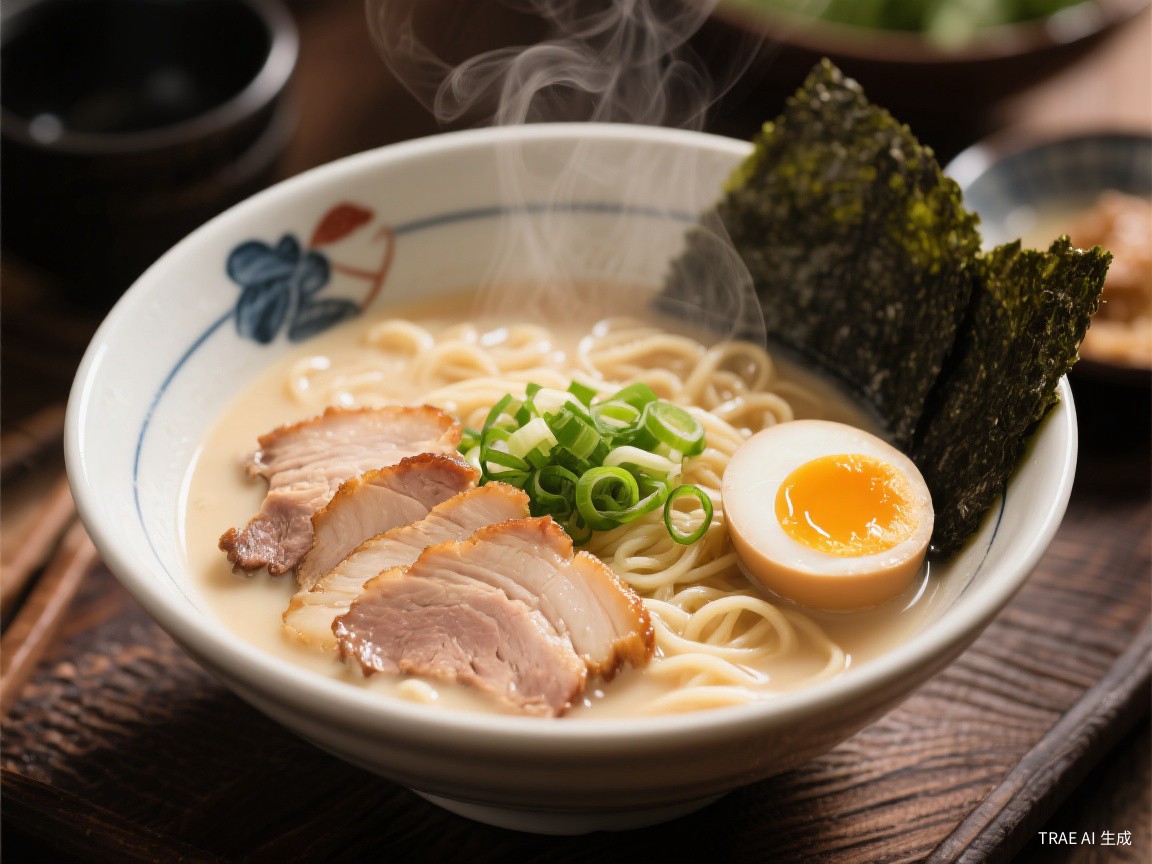
After the heavy, pork-rich bowls at Ichiran and Fuunji, Afuri felt like stepping out of a steam room into a mountain breeze. This Ebisu-based chain has built its reputation on a style of ramen that is virtually unknown outside Japan: yuzu shio ramen. The broth is a delicate chicken and dashi base infused with fresh yuzu juice and zest, creating a soup that is citrusy, floral, and astonishingly light.
The visual presentation is immediately striking. Instead of the milky white of tonkotsu or the dark brown of shoyu, Afuri's broth is a pale, almost golden yellow, with a slick of yuzu oil floating on the surface. The aroma alone is worth the visit—bright and citrusy, with underlying notes of kombu and bonito that add depth to the fruit's perfume.
The noodles are thin and wavy, designed to capture the light broth, and the toppings include tender chicken chashu, a perfectly jammy soft-boiled egg, menma (bamboo shoots), nori, and a generous pile of fragrant yuzu zest. The first sip was a genuine surprise: the broth was simultaneously refreshing and deeply savory, with the yuzu's acidity cutting through the chicken fat and elevating the dashi's umami. It was the most balanced bowl of ramen I have ever tasted, and it completely upended my assumption that great ramen must be heavy and rich.
Bowl Four: Rokurinsha — The Dipping Master (Tokyo Station)
Hidden in the underground labyrinth of Tokyo Station's Ramen Street, Rokurinsha is another tsukemen specialist, but its style is markedly different from Fuunji. Where Fuunji's dipping sauce is fish-forward and briny, Rokurinsha's is pork-based and thick—almost gravy-like in consistency, with a deep, roasted flavor that comes from long simmering and careful reduction.
The noodles here are the thickest I encountered in Tokyo—substantial, chewy, and satisfying in a way that borders on primal. They have a rough surface texture that holds an extraordinary amount of sauce, so each bite delivers an intense hit of concentrated pork flavor. The chashu is sliced thicker than at most shops, with a beautiful char on the outside and a meltingly tender interior that falls apart at the lightest pressure.
What sets Rokurinsha apart is the sheer density of the experience. This is not a subtle bowl. It is bold, unapologetic, and almost overwhelmingly flavorful in the best possible way. By the time I finished, I understood why people line up for hours: there is simply nothing else quite like it. The wari-soup at the end was particularly welcome here, diluting the intense sauce into a warming, drinkable broth that felt like a gentle conclusion to an overwhelming meal.
Bowl Five: Konjiki Hototogisu — The Hidden Gem (Shinjuku)
The fifth bowl was the one I almost missed. Konjiki Hototogisu, a tiny eight-seat shop in Shinjuku's backstreets, has no English menu, no vending machine, and no international reputation. I found it through a Japanese food blogger's recommendation, and it turned out to be the most memorable meal of my entire trip.
The chef, a quiet man in his fifties named Yamamoto-san, serves a single style: shoyu ramen with a clam-based broth. This is extraordinarily unusual. Most shoyu ramen uses a chicken or pork base, but Yamamoto-san builds his from asari (Manila clams) and hamaguri (hard clams), simmered slowly with kombu and dried bonito. The result is a broth of staggering clarity and complexity—golden amber in color, with a briny sweetness that is unlike any ramen I have tasted.
The toppings change with the seasons. On my visit, the bowl included a slice of wagyu beef (instead of the standard chashu), a perfectly soft-boiled egg, tender bamboo shoots, and a sheet of nori. The wagyu was an inspired substitution—its marbling melted into the clam broth, adding a richness that complemented rather than masked the seafood's delicate flavor. The noodles were house-made, thin and slightly wavy, with a gentle firmness that provided textural contrast to the silky broth.
- Respect the ticket machine: Most Tokyo ramen shops use vending machines for ordering. If you're unsure, watch what the person ahead of you does, or look for English translations on the buttons.
- Slurp loudly: In Japanese ramen culture, slurping is not rude—it's a compliment to the chef and the best way to aerate the noodles and broth together.
- Don't leave broth behind: Finishing your broth is a sign of appreciation. If it's too rich, add the wari-soup or ask for a lighter version next time.
- Eat quickly: Ramen waits for no one. The noodles begin softening the moment they hit the broth, so don't photograph for five minutes before eating.
The Ticket Machine Culture
One of the most intimidating aspects of Tokyo ramen for foreigners is the ticket machine system. At most shops, you don't order from a waiter—you feed bills into a machine, press a button corresponding to your desired dish, and hand the resulting ticket to the chef. This system exists for efficiency: it allows the kitchen to start preparing your bowl the moment you walk in, and it eliminates the need for waitstaff in what are often tiny, cramped spaces.
My advice is simple: embrace it. The machines are increasingly multilingual, with English translations on most buttons. If you encounter one without English, look at the pictures (there are usually photos above each button) or watch what the person ahead of you orders. The regulars are almost always happy to help a confused foreigner—pointing at buttons, nodding encouragingly, and occasionally stepping in to translate. The ticket machine is not a barrier; it's the first step in a ritual that connects you to centuries of Japanese food culture.
Ramen Etiquette: What Every Visitor Should Know
- Slurp with confidence: Loud slurping cools the noodles and aerates the broth, enhancing both flavor and aroma. Silence at the ramen counter is not golden.
- No tipping: Tipping is not practiced in Japan and can cause confusion or even offense. Pay exactly what the machine says.
- Keep it brief: Ramen shops are high-turnover operations. Lingering at your seat after finishing prevents others from eating. Finish, pay, and go.
- Handle chopsticks properly: Never stick your chopsticks upright in your bowl (this resembles funeral incense) or pass food chopstick-to-chopstick (this resembles funeral bone-passing).
- Say "gochisousama": After finishing, a brief "gochisousama deshita" (thank you for the meal) to the chef is always appreciated.
Continue the Asian Food Journey
From Tokyo's ramen shops to Mumbai's street stalls, explore our complete collection of Asian dining reviews.
See All Reviews