There is a moment in every Indian meal when the naan arrives at the table—puffy, charred in spots, glistening with butter—and the entire room falls silent. This is not merely bread. It is a centuries-old craft that traveled from Persian kitchens to the royal courts of the Mughal Empire, eventually finding its way into every corner of the globe. Understanding naan means understanding the story of Indian cuisine itself.
The Persian Connection: What's in a Name?
The word "naan" itself reveals a fascinating linguistic journey. Derived from the Persian "nān," meaning simply "bread," the term spread across Central Asia, the Middle East, and South Asia along ancient trade routes. In Farsi, every bread is a nān—sangak nān, lavash nān, barbari nān. But it was in the Indian subcontinent that the word became synonymous with one particular style: the soft, pillowy, leavened flatbread cooked against the searing walls of a clay tandoor.
When Persian traders and later Mughal conquerors arrived in India, they brought with them the tradition of clay oven baking. The tandoor itself likely originated in ancient Mesopotamia, but it found its most celebrated expression in the Indian kitchen. The Mughal emperors, known for their lavish feasts, elevated naan from everyday sustenance to royal indulgence, employing dedicated bakers called "naanbai" whose sole purpose was perfecting the imperial bread.
"Naan is the bread of conquerors and commoners alike. It crossed mountains and deserts, adapted to every palate, and yet its soul remains unchanged—a simple mixture of flour, water, and fire."
— Chef Priya Sharma
Yeast vs. Sourdough: The Leavening Debate
Traditional naan relies on yeast for its characteristic puff and airy crumb. The yeast ferments sugars in the dough, producing carbon dioxide bubbles that expand dramatically when the bread hits the tandoor's intense heat—often exceeding 480 degrees Celsius. This rapid expansion creates the signature bubbles and the slightly chewy, tender texture that distinguishes naan from other flatbreads.
However, a growing movement of artisan bakers is revisiting sourdough naan, using wild fermentation to achieve deeper, more complex flavors. Sourdough naan develops a subtle tang that pairs beautifully with rich curries, and the longer fermentation produces a bread with better keeping qualities. The trade-off is time: where yeast naan can be ready in two to three hours, sourdough versions require twelve to twenty-four hours of cold fermentation for optimal results.
The Role of Yogurt in the Dough
What truly sets naan apart from other leavened breads is the addition of yogurt—typically whole milk yogurt—to the dough. The yogurt serves multiple purposes. Its acidity tenderizes the gluten strands, resulting in a softer, more pliable bread. The lactic acid also contributes a subtle tang that complements the mild sweetness of the flour. And the fat content in whole milk yogurt enriches the crumb, giving naan its characteristic slight chewiness and moist interior.
Some regional variations use milk instead of yogurt, or a combination of both. In Punjabi households, the ratio of yogurt to flour is a closely guarded family secret, passed down through generations. Too little yogurt and the naan becomes dry and tough. Too much and the dough becomes impossibly sticky, difficult to shape, and prone to tearing.
Chef's Tip
For the most tender naan, use full-fat Greek yogurt. Its thicker consistency means you can add more moisture without making the dough too wet. Let the yogurt come to room temperature before mixing—it incorporates more evenly and helps the yeast activate faster.
The Tandoor: An Ancient Oven
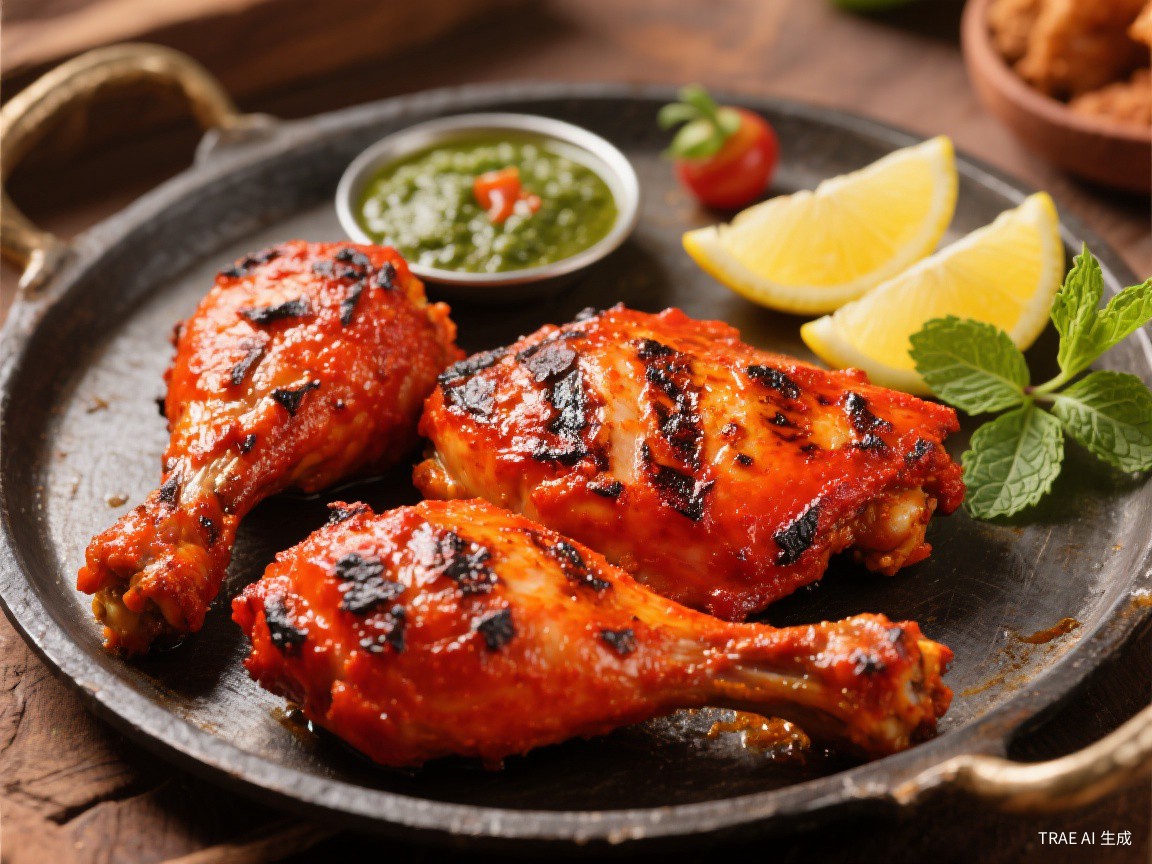
The tandoor is not merely an oven; it is a cooking vessel that creates conditions impossible to replicate with conventional equipment. Shaped like a large clay urn, it is fired with charcoal or wood to temperatures that can reach 500 degrees Celsius. The clay walls radiate intense, even heat, while the convection currents inside create a unique cooking environment that simultaneously bakes, steams, and chars the bread.
The sticking technique—the method of affixing the naan to the tandoor's inner wall—is an art form in itself. The baker shapes the dough into an elongated oval, stretches it by hand to achieve the characteristic teardrop shape, then slaps it firmly against the hot clay wall. The dough adheres through a combination of moisture and the porous nature of the clay. Within sixty to ninety seconds, the bread puffs, develops charred spots, and slides free, ready to be brushed with ghee or butter.
The Home Oven Adaptation
Not everyone has access to a traditional tandoor, but the home oven can produce remarkably good naan with a few strategic adjustments. The most effective method involves inverting a heavy baking sheet or, better yet, a pizza stone on the top rack of your oven and preheating it at the highest possible setting—usually 260 degrees Celsius or higher—for at least forty-five minutes. This mimics the radiant heat of the tandoor walls.
- Preheat thoroughly: Your pizza stone needs at least 45 minutes to absorb enough heat. A cold stone will not produce the characteristic puff and char.
- Invert the stone: Placing it upside down on the top rack allows you to slide the naan onto the hot surface from below, closer to how a tandoor works.
- Use the broiler: Switch to the broiler for the final 30 to 60 seconds to achieve the charred spots that give naan its signature appearance.
- Brush with ghee immediately: The fat should hit the bread while it is still piping hot, allowing it to melt into the surface and create that irresistible glossy finish.
The Topping Variations
Plain naan is a thing of beauty, but the variations are where creativity truly shines. Garlic naan—perhaps the most popular version globally—is made by pressing minced garlic and fresh cilantro into the dough just before cooking. The garlic roasts in the tandoor's heat, mellowing its sharpness while concentrating its sweetness. A dusting of nigella seeds (kalonji) adds an earthy, oniony counterpoint.
Butter naan is simplicity itself: freshly cooked bread brushed generously with melted butter or, more traditionally, clarified butter (ghee). The butter soaks into the surface, creating a rich, savory crust that practically melts on the tongue. In many Indian restaurants, this is the default naan, and for good reason—it is nearly impossible to stop at one.
More elaborate versions include cheese naan, stuffed with a mixture of grated paneer and herbs; peshwari naan, filled with a sweet mixture of coconut, almonds, and raisins; and keema naan, which encases a spiced minced meat filling within the bread itself. Each variation reflects the ingenuity of Indian cooks who transformed a simple bread into a canvas for endless flavor combinations.
Naan and Butter Chicken: A Love Story
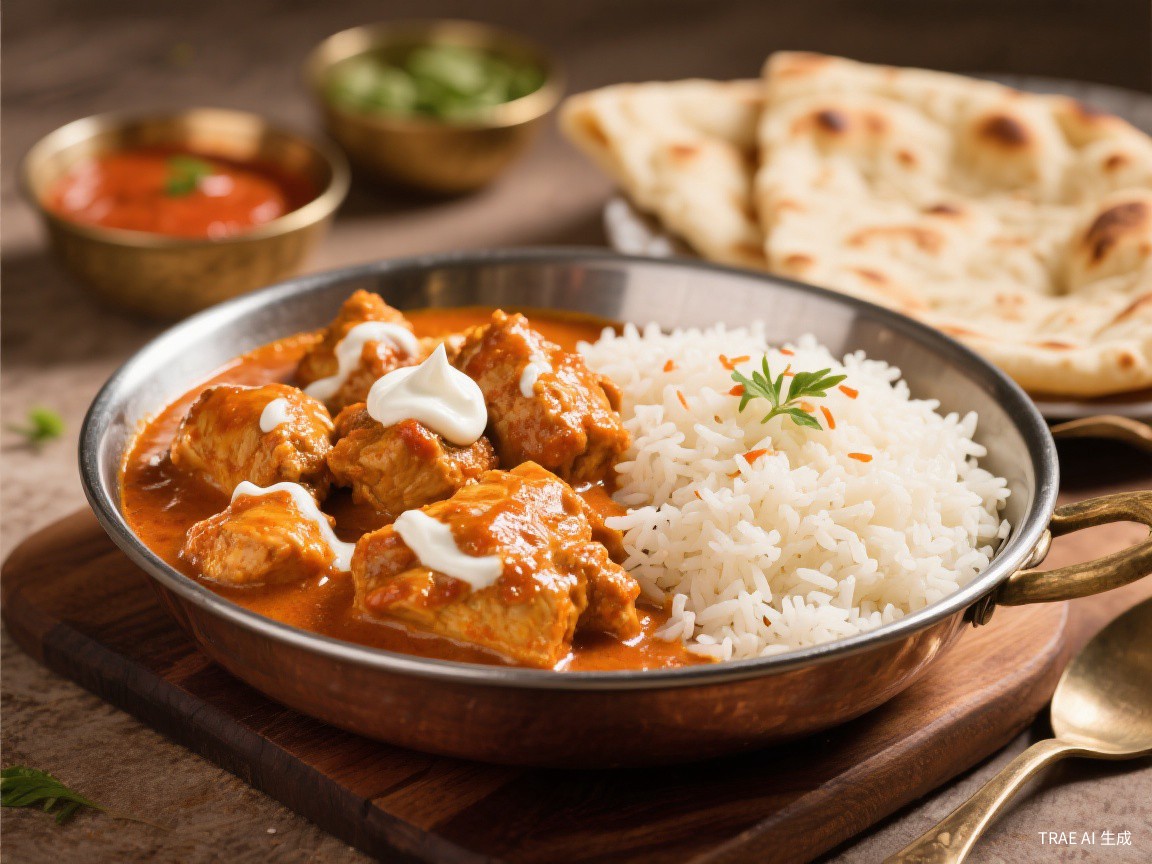
No discussion of naan toppings would be complete without acknowledging its most famous partnership: butter chicken. The mild, creamy, tomato-based sauce of butter chicken demands a bread that can scoop, soak, and carry without disintegrating. Naan answers this call perfectly. Its sturdy yet tender structure holds up to the sauce, its slight char provides textural contrast, and its mild flavor lets the spices of the curry take center stage. Together, they form one of the most beloved combinations in global cuisine.
Naan vs. Roti vs. Paratha: Understanding the Family
Indian cuisine boasts an extraordinary diversity of flatbreads, and understanding the differences between them is key to appreciating each one. Naan is leavened with yeast and cooked in a tandoor, giving it its characteristic puff and chew. Roti (or chapati) is unleavened, made simply from whole wheat flour and water, and cooked on a flat griddle called a tawa. It is thinner, lighter, and more austere—a daily bread for millions of Indian families.
Paratha occupies a middle ground. Also unleavened, it is layered with ghee and folded repeatedly before cooking on the tawa, creating a flaky, rich bread that is more indulgent than roti but less elaborate than naan. Stuffed parathas, filled with potato, paneer, or radish, are a breakfast staple across North India. Each bread has its place, its purpose, and its devoted following.
- Naan: Yeast-leavened, tandoor-baked, soft and pillowy with charred spots
- Roti: Unleavened, tawa-cooked, thin and light, everyday bread
- Paratha: Unleavened but layered with ghee, flaky and rich, pan-fried
- Puri: Unleavened, deep-fried until puffed and golden
- Kulcha: Similar to naan but often baked without yeast, using baking powder instead
A Living Tradition
Naan continues to evolve. Modern chefs experiment with flavors like chocolate and espresso naan for dessert, or activated charcoal naan for dramatic visual effect. Food trucks in London and New York serve naan tacos and naan pizzas. Yet the heart of the bread remains unchanged—a simple dough, transformed by fire and tradition into something extraordinary.
Whether you are eating it in a bustling Delhi restaurant, at a neighborhood Indian takeaway, or fresh from your own oven, naan carries within it centuries of culinary wisdom. It is a reminder that the simplest foods, when made with care and understanding, are often the most satisfying.
Ready to Bake Authentic Naan?
Download our complete tandoori naan guide with step-by-step photos, timing charts, and home oven adaptation techniques.
Get the Free Guide