Of all the desserts that have earned a place in New York City's culinary mythology, none carries quite the weight of the New York cheesecake. It is not a light, airy confection. It is not a delicate French creation meant to be admired and quickly consumed. It is a dense, creamy, unapologetically rich slab of cream cheese, eggs, sugar, and vanilla, set upon a buttery graham cracker crust and served in wedges substantial enough to constitute a meal. It is, in every sense, a dessert that reflects the city that created it: bold, indulgent, and utterly confident.
The Jewish Deli Connection
The New York cheesecake as we know it was born not in a fine dining restaurant but in the bustling Jewish delis of early twentieth-century Manhattan. Arnold Reuben, a German-Jewish immigrant who opened Reuben's Delicatessen on Broadway in 1908, is widely credited with creating the modern version. According to deli lore, Reuben was served a cheese pie at a dinner party and was so inspired that he returned to his kitchen and began experimenting with cream cheese instead of the farmer's cheese traditionally used in Eastern European cheesecakes.
The substitution was revolutionary. Cream cheese, which had been developed in upstate New York by William Lawrence in 1872, provided a richness and smoothness that farmer's cheese could not match. It also had a longer shelf life, making it practical for deli operations that needed to prepare large quantities in advance. Reuben's version caught on rapidly, and by the 1930s, New York cheesecake had become a signature item at delis across the city—from Lindy's on Broadway to Junior's in Brooklyn, each establishment developing its own variation on the theme.
The Jewish deli culture of the era was essential to the cheesecake's identity. These were not places of dainty portions or restrained indulgence. They were temples of abundance, where pastrami sandwiches towered on rye bread and pickles arrived by the barrel. The cheesecake fit perfectly into this ethos—a dessert that announced itself with every dense, creamy bite.
"A proper New York cheesecake should make you close your eyes after the first bite. If you can eat it casually while holding a conversation, it isn't rich enough."
— Chef Sarah, Pastry Specialist
The Cream Cheese Question: Philadelphia and Beyond
The single most important ingredient in New York cheesecake is cream cheese, and the brand you choose matters more than most cooks realize. Philadelphia cream cheese has been the standard since the dish's invention, and for good reason: it has a consistent fat content (around 34%), a smooth texture, and a clean, slightly tangy flavor that serves as an ideal base.
However, the cream cheese landscape has expanded significantly in recent years. European-style cream cheeses, such as those from Vermont Creamery or Murray's, offer higher fat content and a more complex, cultured flavor. Some bakers swear by these premium brands, arguing that their deeper tang produces a more interesting cheesecake. Others prefer the predictability of Philadelphia, especially when baking for large groups where consistency matters.
The critical factor, regardless of brand, is temperature. Cream cheese must be fully softened to room temperature before you begin. Cold cream cheese will not incorporate smoothly into the batter, leaving lumps that translate into an uneven texture in the finished cake. Plan ahead: set your cream cheese on the counter at least two hours before baking, or overnight in the refrigerator's warmer zones.
Chef's Tip
For the silkiest texture, beat the cream cheese alone before adding any other ingredients. Scrape the bowl and beaters frequently. You are looking for a completely smooth, lump-free base before the sugar, eggs, and vanilla go in. This single step eliminates the grainy texture that plagues many homemade cheesecakes.
The Water Bath: Your Insurance Policy
If there is one technique that separates a professional-quality cheesecake from a home-baked one, it is the water bath. Also known as a bain-marie, this method involves placing the cheesecake pan inside a larger pan filled with hot water and baking the whole assembly. The water creates a gentle, humid environment in the oven that allows the cheesecake to cook evenly and slowly, preventing the surface from drying out or cracking while the interior sets to a creamy, custard-like consistency.
The science is straightforward. Cheesecake is essentially a custard—a mixture of eggs, dairy, and sugar that sets through the coagulation of egg proteins. If the oven temperature is too high or the environment too dry, the proteins on the surface coagulate and contract before the interior has finished cooking, causing cracks. The water bath moderates the oven's heat and adds moisture, dramatically reducing the risk.
Water Bath Setup, Step by Step
- Wrap the pan: Use two layers of heavy-duty aluminum foil, pressing it tightly against the outside of your springform pan to create a waterproof seal
- Choose the right vessel: A roasting pan or large baking dish that allows at least one inch of clearance on all sides
- Use hot water: Boiling water poured carefully into the outer pan, reaching halfway up the sides of the cheesecake pan
- Handle with care: Place the assembly on the oven rack first, then pour the water to avoid splashing into the batter
- Remove carefully: The water will be extremely hot after baking. Use oven mitts and work slowly
The Graham Cracker Crust: More Than a Base
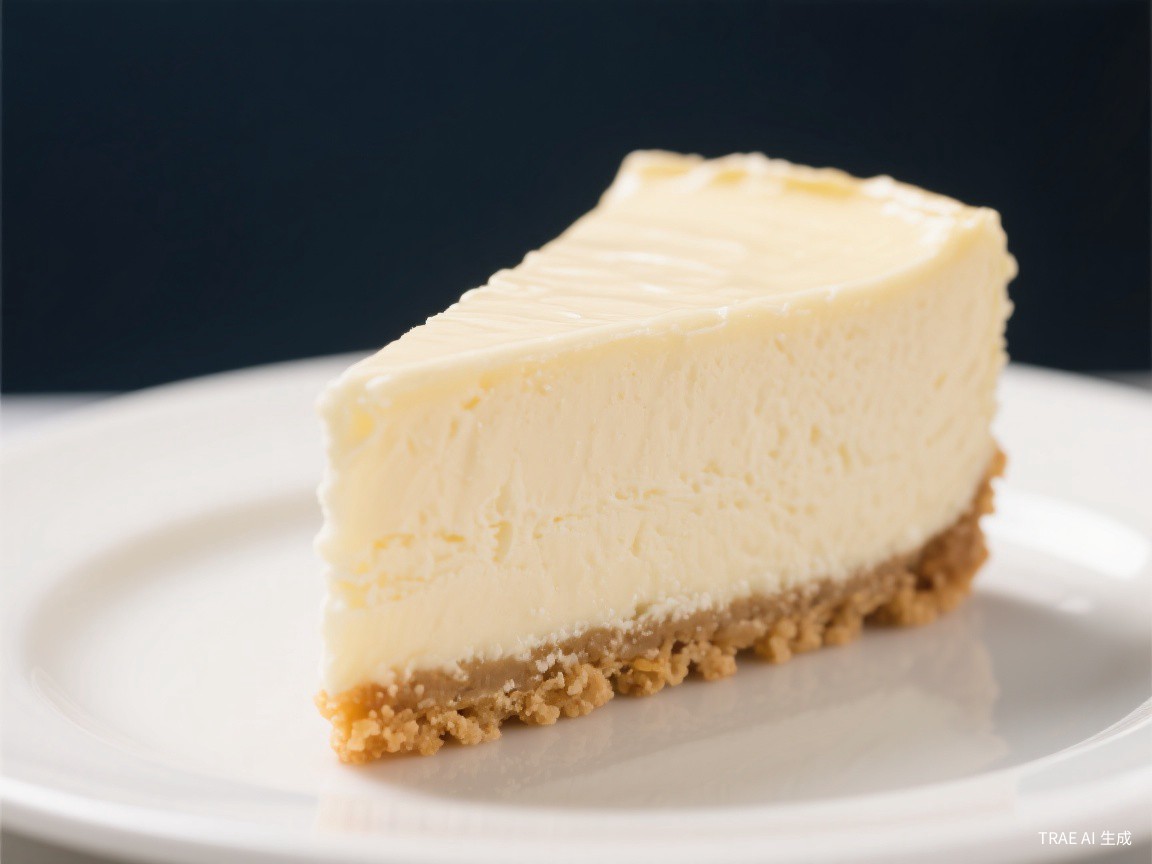
The crust of a New York cheesecake is often treated as an afterthought, but it plays a crucial structural and flavor role. The classic graham cracker crust—made from crushed graham crackers, melted butter, and a tablespoon of sugar—provides a buttery, slightly sweet counterpoint to the dense, tangy filling. It also serves as a foundation that prevents the cheesecake from sticking to the pan and makes slicing cleaner.
The key to a great crust is the ratio of crumbs to butter. Too much butter, and the crust will be greasy and soggy. Too little, and it will be dry and crumbly, falling apart when you try to slice the cake. The ideal ratio is approximately one and a half cups of finely crushed graham crackers to six tablespoons of melted butter, with a tablespoon of sugar for sweetness. The mixture should resemble wet sand—it should hold together when you squeeze a handful but not feel wet or oily.
Pre-baking the crust for eight to ten minutes at 350 degrees Fahrenheit sets the butter and creates a slightly crisp base that will hold up to the moisture of the cheesecake filling. Without this step, the crust can become soft and gummy during the long baking time.
Crust Variations Worth Exploring
- Ginger snap crust: Adds a warm, spicy note that pairs beautifully with the cream cheese filling
- Chocolate wafer crust: A richer, more decadent alternative for chocolate lovers
- Amaretti crust: Crushed amaretti cookies with butter create an almond-scented base with Italian flair
- Pecan crust: Finely ground pecans mixed with graham crackers add Southern sophistication
Avoiding the Dreaded Crack
Cheesecake cracks are the most common frustration for home bakers, and they are almost always caused by one of three things: overbaking, rapid temperature changes, or overmixing the batter. Understanding each cause is the key to prevention.
Overbaking is the most frequent culprit. A cheesecake is done when the edges are set and lightly golden, but the center two to three inches still has a slight wobble when you gently shake the pan. This wobble is not a sign of underbaking—it is a sign of perfection. The residual heat will continue to cook the center as the cake cools, and that gentle, slow finishing is what produces the creamy texture that defines New York cheesecake.
Rapid temperature changes cause the surface to contract faster than the interior, creating stress fractures. This is why you should never remove a cheesecake from the oven and immediately place it in the refrigerator. Instead, turn the oven off, crack the door open, and let the cake cool gradually inside for at least an hour. Then cool it completely at room temperature before refrigerating.
Overmixing incorporates excess air into the batter, which expands during baking and then collapses as the cake cools, causing cracks. Mix on low speed, add eggs one at a time, and stop mixing the moment the ingredients are combined. A few streaks of egg white are preferable to an overmixed batter.
The Overnight Rest: Why Patience Pays
Here is a truth that many cheesecake recipes mention in passing but few emphasize strongly enough: New York cheesecake must rest in the refrigerator for at least eight hours, and ideally overnight, before serving. This is not merely a suggestion. During this resting period, the flavors meld and deepen, the texture sets to its final consistency, and the cheesecake becomes something far greater than the sum of its parts.
A freshly baked cheesecake eaten warm from the oven will taste pleasant but one-dimensional—mostly sweet, with the individual ingredients still distinct. The same cheesecake after a night in the refrigerator will have transformed. The cream cheese flavor will have deepened, the vanilla will have permeated every bite, and the texture will have achieved that characteristic New York density: firm enough to hold its shape when sliced, yet creamy enough to dissolve on the tongue.
Ready to Bake the Perfect Cheesecake?
Download our complete baking guide with timing charts, troubleshooting tips, and flavor variation recipes.
Get the Free Guide