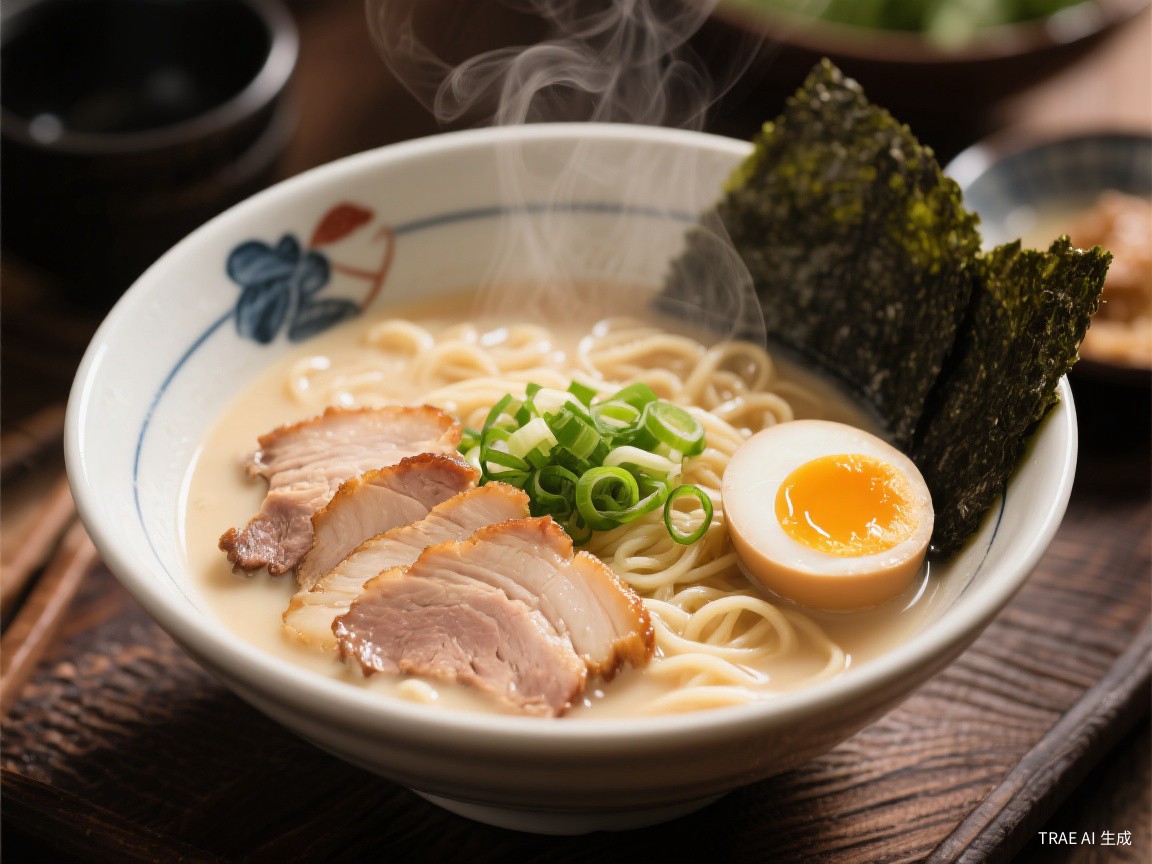
I spent three years working in a ramen shop in Shinjuku, Tokyo, before I truly understood shoyu ramen. Not the mechanics of making it—I could produce a competent bowl within my first month—but the philosophy behind it. In Japan, ramen is not simply soup with noodles. It is an architecture of components, each one developed independently, each one capable of standing on its own, yet designed to come together in a single bowl in a way that feels inevitable, as though no other combination of ingredients could possibly work as well. Shoyu ramen, the soy sauce-based style that originated in Tokyo at the turn of the twentieth century, is the purest expression of this philosophy. It is clear, balanced, and deeply savory—a bowl that rewards attention with every sip.
Understanding the Architecture: Tare, Broth, and Noodles
Every bowl of ramen is built from three fundamental components: the tare, the broth, and the noodles. The tare is the seasoning base—a concentrated mixture of soy sauce, mirin, and aromatics that sits at the bottom of the bowl. The broth is poured over it, diluting and distributing the tare's intensity. The noodles are added last, along with toppings. This separation of seasoning and liquid is the defining characteristic of Japanese ramen and the key to its remarkable depth of flavor.
Think of the tare as the conductor of an orchestra. It does not play the loudest instrument, but it determines how every other element sounds. A well-made tare provides salt, umami, sweetness, and aromatic complexity in a concentrated form that permeates the entire bowl. Without it, even the most carefully prepared broth would taste flat and incomplete. With it, the broth transforms into something layered and alive, revealing new flavors with each sip as the different components of the tare interact on the palate.
Shoyu Tare: The Soul of the Bowl
Shoyu tare is, at its most basic level, seasoned soy sauce—but the variations are endless, and each ramen shop guards its tare recipe as fiercely as a perfumer guards a signature fragrance. The foundation is always high-quality Japanese soy sauce, specifically the dark koikuchi variety, which is fermented for six months or more and has a deep, complex flavor with notes of caramel, wine, and earth.
Beyond the soy sauce, a classic shoyu tare typically includes mirin, the sweet rice wine that adds a mellow sweetness and gloss to the seasoning. Sake is often added for its subtle alcoholic sharpness, which evaporates during cooking but leaves behind amino acids that enhance umami. Some tare recipes incorporate dried bonito flakes (katsuobushi), kombu seaweed, or dried shiitake mushrooms for additional layers of savory depth. Others add a touch of chicken fat or sesame oil for richness and body.
Building a Basic Shoyu Tare
- 1 cup koikuchi soy sauce: The backbone—choose a naturally brewed, traditionally fermented brand
- 1/2 cup mirin: Sweetness and balance; use hon-mirin, not the synthetic aji-mirin
- 1/4 cup sake: Adds depth and umami; cook briefly to evaporate the alcohol
- 2 pieces kombu (4-inch squares): Soaked in the soy sauce mixture overnight for subtle oceanic umami
- 1 tablespoon niboshi (dried baby sardines): Optional, for a fishy depth that is traditional in Tokyo-style shoyu
Chef's Tip
The tare should be prepared at least one day in advance and refrigerated. This resting time allows the flavors of the soy sauce, mirin, and any aromatics to meld and mellow. A freshly made tare will taste sharp and one-dimensional; a rested tare reveals layers of sweetness, salt, and umami that were not apparent the day before. Most ramen shops keep their tare for weeks, refreshing it as needed, which is why the flavor at your favorite shop never quite matches what you make at home.
The Broth: Clear, Chicken, or Tonkotsu
While the tare provides the seasoning, the broth provides the body and volume of the soup. Shoyu ramen is uniquely versatile among ramen styles because it pairs well with virtually any broth base. The three most common are clear broth (chintan), chicken broth (tori paitan), and pork bone broth (tonkotsu), each producing a dramatically different bowl despite using the same tare.
Chintan: The Classic Clear Broth
Chintan is the traditional broth for Tokyo-style shoyu ramen, and it is the purest expression of the style. Made by simmering chicken bones, pork bones, and aromatics at a gentle temperature for six to twelve hours, chintan produces a broth that is golden, clear, and deeply savory. The key to clarity is gentle heat—a rolling boil clouds the broth with emulsified fat and dissolved proteins. The liquid should barely move, with only the occasional bubble breaking the surface. This patience produces a broth that is light on the palate but intensely flavorful, allowing the tare's soy sauce character to shine through without competition from heavy fats.
Tori Paitan: Creamy Chicken Broth
Tori paitan, the chicken equivalent of tonkotsu, is made by vigorously boiling chicken bones and feet for eight to twelve hours. The aggressive heat emulsifies the chicken fat and collagen into the broth, creating a milky-white, creamy liquid with extraordinary body and richness. When combined with shoyu tare, the result is a bowl that is simultaneously light (from the chicken) and luxurious (from the emulsion). This style has become enormously popular in recent years and represents a modern evolution of the classic shoyu ramen formula.
"A bowl of ramen is a conversation between the chef and the diner. The tare speaks first—bold and direct. The broth answers—warm and enveloping. The noodles carry the dialogue. And the toppings are the punctuation that gives the sentence its meaning."
— Chef Kenji's teacher, Ramen shop owner, Shinjuku
Tonkotsu: The Rich Pork Bone Broth
Tonkotsu broth is made by boiling pork femur bones at a rolling boil for twelve to eighteen hours. The prolonged, vigorous cooking breaks down the collagen in the bones into gelatin, creating an extraordinarily thick, opaque, and creamy broth with a pronounced pork flavor. While tonkotsu is most commonly associated with Hakata-style ramen from Kyushu, pairing it with shoyu tare produces a hybrid style that is rich, savory, and deeply satisfying. The soy sauce cuts through the broth's heaviness, providing the acidic sharpness that prevents the bowl from becoming cloying.
Noodle Selection: The Unsung Hero
Ramen noodles are not interchangeable, and the wrong noodle can undermine even the most carefully prepared broth and tare. Shoyu ramen traditionally uses a straight, medium-thickness noodle with a yellow hue and a slightly alkaline flavor from kansui, the mineral water mixture of sodium carbonate and potassium carbonate that gives ramen noodles their distinctive springy texture and characteristic aroma.
The alkalinity of kansui is what separates ramen noodles from other wheat noodles. It changes the structure of the gluten proteins, making the dough more elastic and the cooked noodles firmer and more chewy. It also raises the pH, which gives the noodles their yellow color and that slightly soapy, mineral flavor that ramen enthusiasts crave. The water-to-flour ratio, the amount of kansui, and the protein content of the flour all affect the final texture, which is why ramen noodles come in such an extraordinary range of thicknesses, firmnesses, and surface textures.
For shoyu ramen with a clear chintan broth, a thinner, straight noodle with a smooth surface allows the delicate broth to coat each strand evenly. For richer broths like tori paitan or tonkotsu, a thicker noodle with a wavy or curly shape provides more surface area to hold the heavier sauce and stands up better to the robust broth. Fresh noodles, available at Japanese markets and online, are always preferable to dried, though high-quality dried ramen noodles can produce excellent results when cooked properly.
Chashu Pork: The Essential Topping
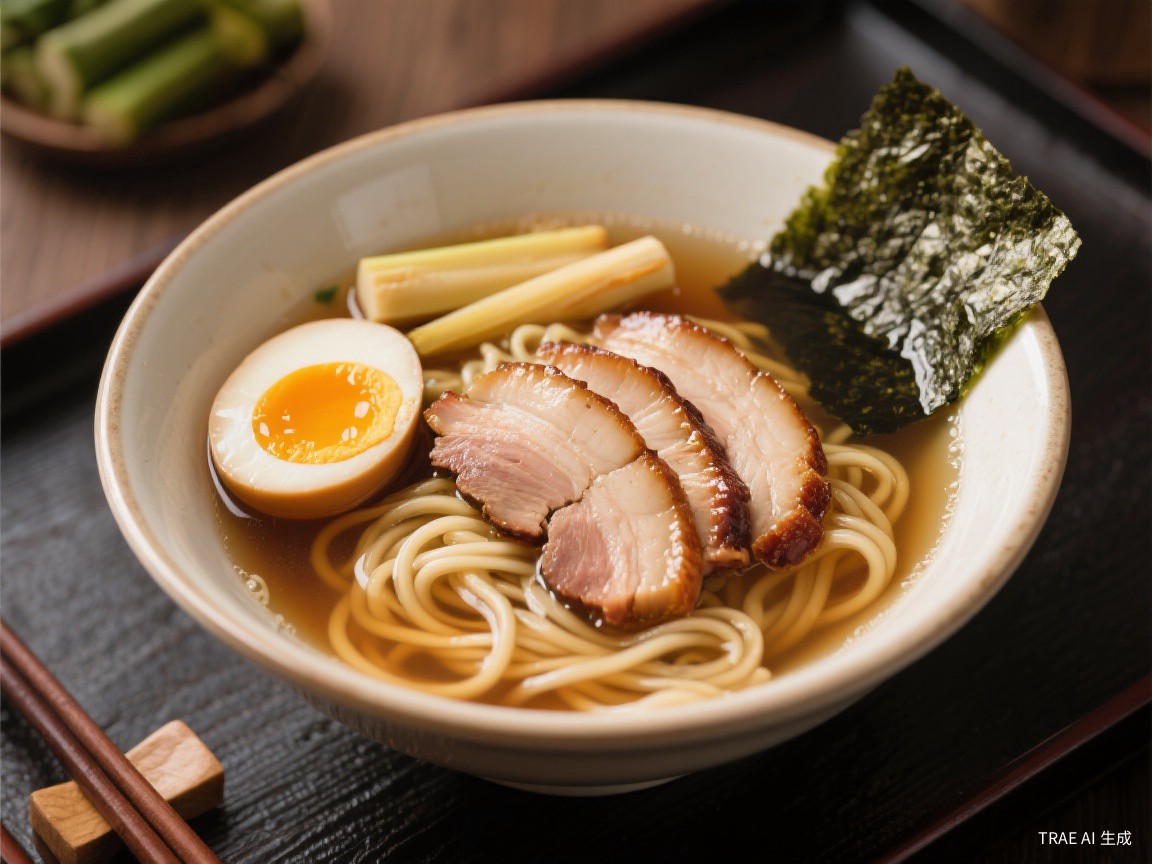
Chashu—braised, rolled pork belly—is the topping most closely associated with ramen, and for shoyu ramen in particular, it is nearly indispensable. The traditional preparation involves rolling a slab of pork belly tightly and tying it with kitchen twine, then braising it in a mixture of soy sauce, mirin, sake, sugar, garlic, and ginger for two to three hours until it is meltingly tender. The braising liquid becomes intensely flavorful and can be reduced to use as a seasoning for other dishes or as a base for additional tare.
The pork belly should be sliced thinly—about one-quarter inch thick—against the grain, and arranged in overlapping slices on top of the noodles. At room temperature, the fat in the pork belly should be soft and yielding, dissolving on the tongue with minimal chewing. The lean meat should be tender but not falling apart, with a deep, caramelized color from the long braising. Some shops sear the rolled pork belly before braising to develop additional Maillard flavors, while others skip this step for a cleaner, more delicate result.
Chef's Tip
After braising, let the chashu cool in its braising liquid. As it cools, the pork absorbs more flavor from the liquid, and the fat sets into a firm, sliceable texture. Chashu that is sliced while still warm will smear and fall apart. Refrigerate overnight for the cleanest, most beautiful slices.
Ajitama: The Perfect Ramen Egg
The ajitama—marinated soft-boiled egg—is the topping that separates a good bowl of ramen from a great one. A properly made ajitama has a tender, barely-set white and a creamy, custard-like yolk that flows when cut. It is marinated in a mixture of soy sauce, mirin, and dashi for anywhere from four hours to overnight, which gives the exterior of the white a beautiful amber color and a savory, umami-rich flavor that complements the broth.
The technique for achieving the perfect ajitama yolk is precise but not difficult. Bring a pot of water to a rolling boil, then gently lower refrigerated eggs into the water. For large eggs, cook for exactly six minutes and thirty seconds. Immediately transfer to an ice bath and cool for at least ten minutes. The ice bath stops the cooking instantly, preserving the soft, custardy center. Peel the eggs carefully under running water—the cold water helps separate the membrane from the white—and marinate in the soy-mirin-dashi mixture in the refrigerator.
The Complete Topping Lineup
- Chashu pork: Three to four thin slices of braised pork belly, arranged overlapping
- Ajitama egg: Halved lengthwise, yolk facing up, marinated to a deep amber
- Nori: One or two sheets of roasted seaweed, tucked against the side of the bowl
- Scallions: Thinly sliced green onions, both white and green parts
- Bamboo shoots (menma): Lacto-fermented bamboo tips with a tangy, crunchy texture
- Spinach or bean sprouts: Briefly blanched, squeezed dry, and mounded on one side
- Sesame seeds: A pinch of toasted white or black sesame seeds for aroma
Assembling the Bowl
The final assembly of a bowl of shoyu ramen is a ritual that should be performed with care and intention. Heat your serving bowls by filling them with hot water for two minutes, then emptying them. A warm bowl keeps the broth at the proper temperature throughout the meal. Place one to two tablespoons of tare in the bottom of each bowl—the exact amount depends on the size of the bowl and your personal preference for saltiness. Ladle in the hot broth and stir gently to dissolve the tare. Add the drained noodles, using chopsticks or tongs to arrange them neatly in the center. Finally, arrange the toppings artfully on top—the chashu slices leaning against one side, the halved egg nestled beside them, the nori standing upright at the back, and the scallions and sesame seeds scattered across the surface.
Eat immediately. Ramen waits for no one, and the noodles begin to soften the moment they meet the broth. In Japan, it is perfectly acceptable—and even expected—to slurp your noodles loudly, which cools them as you eat and aerates the broth, releasing its aromas. A bowl of shoyu ramen is meant to be consumed in fifteen to twenty minutes, before the noodles lose their spring and the broth begins to cool. It is fast food in the best sense of the term: food made with extraordinary care and consumed with extraordinary pleasure.
Ready to Master Japanese Ramen?
Download our complete ramen guide with tare recipes for all four major styles, broth preparation timelines, and noodle sourcing recommendations.
Get the Free Guide