The scent of satay grilling over charcoal is one of Southeast Asia's most evocative aromas. In Malaysia, satay is more than food—it's a cultural institution. These perfectly marinated, charcoal-grilled meat skewers served with rich peanut sauce represent the country's multicultural heritage, blending Malay, Chinese, and Indian influences into something uniquely delicious.
The Origins of Satay
Satay's history reflects Malaysia's position at the crossroads of Asian trade routes. The dish likely evolved from Indian kebabs brought by Muslim traders, adapted by local cooks to incorporate indigenous ingredients and techniques. By the early 20th century, satay had become a staple of Malaysian street food culture, sold by vendors who would set up their grills along busy streets and markets.
Today, satay remains deeply woven into Malaysian life. It's served at weddings, festivals, and family gatherings. Satay stalls are gathering places where people from all backgrounds come together over shared plates of skewers. The dish transcends social boundaries—everyone from laborers to politicians can be found enjoying satay at their favorite stall.
Chef's Tip
The key to tender satay is in the cutting. Slice your meat against the grain into thin strips, then thread onto skewers. This ensures each bite is tender rather than chewy.
Choosing Your Meat
While chicken is the most popular satay in Malaysia, the dish welcomes many proteins. Beef satay, particularly from the tenderloin or sirloin, offers rich flavor. Lamb satay is prized for its slightly gamey depth. Even rabbit and venison appear on specialized menus. Each meat requires slightly different preparation, but all share the essential marinade and grilling technique.
For chicken satay, use boneless, skinless thigh meat rather than breast. The higher fat content keeps the meat juicy during grilling. Cut the meat into strips about half an inch wide and two inches long—small enough to cook quickly but large enough to stay tender.
Popular Satay Varieties
- Satay Ayam: Chicken satay, the most common variety.
- Satay Lembu: Beef satay, often considered the most flavorful.
- Satay Kambing: Lamb satay, rich and slightly gamey.
- Satay Perut: Beef tripe satay, a delicacy for adventurous eaters.
- Satay Udang: Prawn satay, a coastal specialty.
The Essential Marinade
What transforms simple meat skewers into satay is the marinade. This aromatic blend typically includes lemongrass, galangal, turmeric, garlic, shallots, and coriander. The ingredients are pounded into a paste using a mortar and pestle—a process that releases essential oils and creates a more vibrant flavor than machine-blending.
Turmeric gives satay its distinctive yellow-orange color and earthy flavor. Lemongrass provides citrusy brightness, while galangal adds a pine-like, slightly peppery note. The combination creates layers of flavor that penetrate the meat during marination, which should last at least four hours or preferably overnight.
"A good satay marinade should be strong enough to flavor the meat but not so aggressive that it overpowers. Balance is everything—the aromatics should enhance the natural flavor of the meat, not mask it."
— Chef Norman Musa
The Art of Charcoal Grilling
Authentic satay is grilled over charcoal, which imparts a subtle smokiness that gas or electric grills cannot replicate. The skewers are placed close to the coals and turned constantly, cooking quickly while developing a slight char. This constant attention prevents burning while ensuring even cooking.
During grilling, satay vendors traditionally brush the skewers with a mixture of coconut milk and aromatics. This keeps the meat moist while adding another layer of flavor. The coconut milk caramelizes slightly on the surface, contributing to the characteristic glossy appearance of well-made satay.
The Peanut Sauce: A Crucial Companion
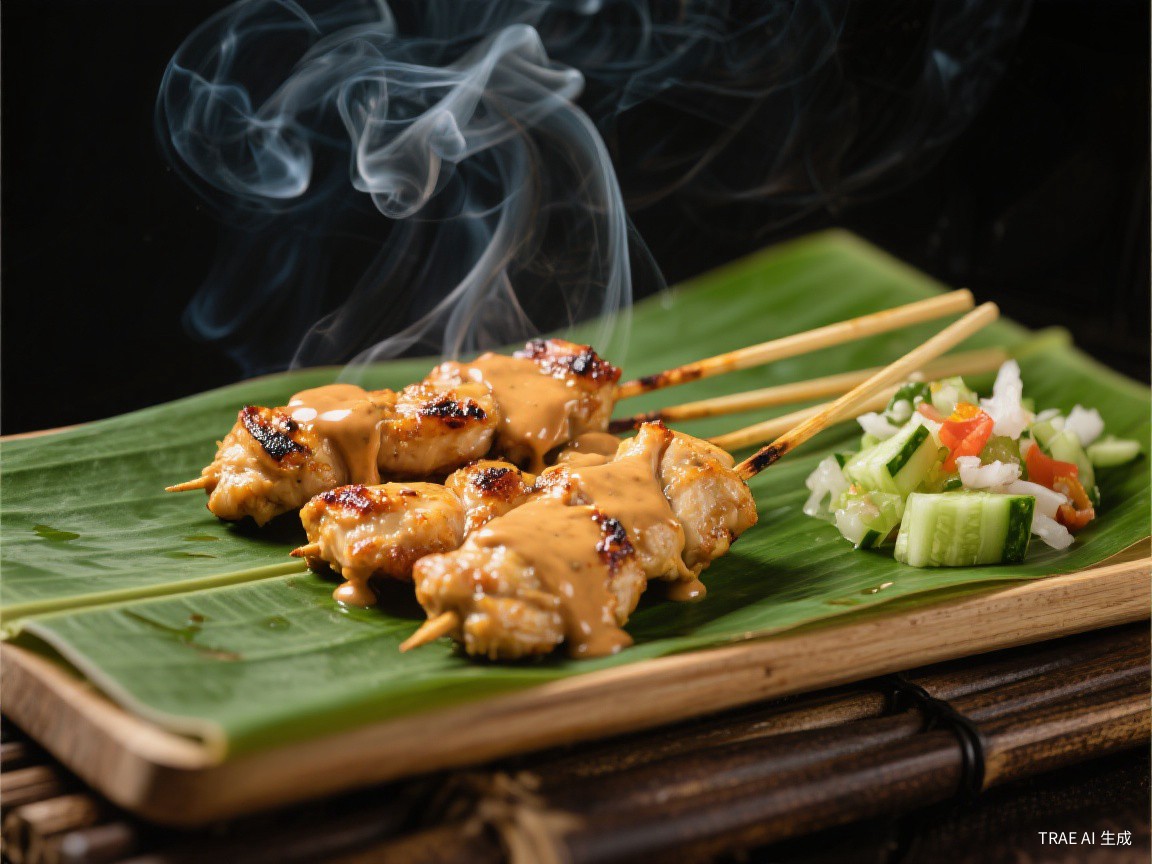
No discussion of satay is complete without its essential accompaniment: peanut sauce. This rich, slightly sweet, mildly spicy sauce is what many people remember most about their satay experience. A good peanut sauce should be thick enough to coat the meat but pourable, with a complex flavor that balances sweet, salty, and spicy.
Traditional peanut sauce begins with roasting raw peanuts, then grinding them into a paste. The paste is cooked with coconut milk, palm sugar, tamarind, and spices. Some recipes include a small amount of the satay marinade for continuity of flavor. The result should be velvety smooth with a depth that commercial peanut butter cannot provide.
Building the Perfect Peanut Sauce
- Roast peanuts: Until golden and fragrant, then grind to a paste.
- Build the base: Cook aromatics like garlic and shallots in oil.
- Add liquids: Coconut milk and a little water for consistency.
- Season: Palm sugar for sweetness, tamarind for acidity, salt to taste.
- Add heat: Dried chilies or sambal for spice level.
Traditional Accompaniments
In Malaysia, satay is never served alone. The classic accompaniment is ketupat—compressed rice cakes wrapped in woven palm leaves. These dense, slightly chewy cakes provide a neutral base that soaks up peanut sauce and balances the rich, spiced meat. Nasi impit, compressed rice cakes in square form, is a common alternative.
The plate also includes cucumber and onion slices, which provide refreshing crunch and help cut through the richness. Some regions add compressed rice cakes called lontong or a small portion of spicy-sweet pickled vegetables. These accompaniments aren't afterthoughts—they're essential components of a complete satay experience.
Regional Variations
While Malaysian satay is perhaps the most famous, variations exist throughout Southeast Asia. Indonesian satay often uses sweeter marinades and different sauce preparations. Thai satay, influenced by Malaysian versions from the border regions, tends to be milder and served with a thinner, more coconut-forward sauce. Singapore's satay is similar to Malaysian but often includes more diverse meat options.
Within Malaysia, regional differences persist. Kajang, a town in Selangor, is famous for its satay and draws visitors from across the country. Penang satay often includes pork, reflecting the island's Chinese influence. These variations show how a single concept adapts to local tastes and ingredients while maintaining its essential character.
Making Satay at Home
While nothing quite matches the experience of eating satay at a Malaysian street stall, excellent results are achievable at home. If you don't have a charcoal grill, a gas grill or even a grill pan on the stovetop can produce delicious results. The key is high heat and frequent turning to develop char without burning.
For the most authentic flavor, seek out fresh ingredients for your marinade. Frozen lemongrass and galangal are available at Asian markets and work well. If you cannot find fresh turmeric, the powdered version will suffice, though the flavor is less complex. Make your peanut sauce from scratch—the difference from commercial versions is dramatic.
Ready to Master Malaysian Satay?
Download our complete Southeast Asian grilling guide with recipes for satay, sauces, and traditional accompaniments.
Get the Free Guide