If there is one dish that can claim to be the heartbeat of the Philippine archipelago, it is chicken adobo. Walk into any Filipino household anywhere on earth—Manila, Los Angeles, Dubai, Toronto—and you will likely smell it: that unmistakable aroma of soy sauce, cane vinegar, garlic, and bay leaves bubbling away on the stove. It is not merely a recipe. It is a living archive of colonization, adaptation, and fierce culinary pride.
The Name That Wasn't Ours
The word "adobo" is Spanish, borrowed during more than three centuries of colonial rule beginning in 1565. The conquistadors encountered indigenous Filipinos cooking meat in vinegar and salt to preserve it in the tropical heat, and they recognized the method as similar to their own adobar—to marinate or pickle. But the Filipino version had already existed long before the Spanish arrived, rooted in Malay and Chinese trading traditions that introduced soy sauce and vinegar to the islands.
What makes this linguistic borrowing so fascinating is that Filipinos took a foreign label and made it entirely their own. When a Filipino says "adobo," they do not mean the Spanish marinade of paprika, oregano, and olive oil. They mean something far more specific: the pungent, tangy, deeply savory braise that has become the unofficial national dish of a nation of over seven thousand islands.
"Adobo is not a single recipe. It is a philosophy of cooking—improvisational, resourceful, and deeply personal. Every Filipino family has their own version, and every version is correct."
— Chef Rosa, on the spirit of adobo
The Soy Sauce and Vinegar Debate
At the core of every adobo lies a tension between two bold flavors: the salty depth of soy sauce and the sharp acidity of vinegar. The ratio between them defines the character of the dish, and Filipino cooks have been arguing about it for generations. A classic ratio is one part soy sauce to one part vinegar, but this is only the starting point.
In the Tagalog-speaking regions around Manila, cooks tend to favor a darker, soy-forward adobo with a generous pour of cane vinegar for balance. Travel south to the Bicol region, and you will find adobo enriched with coconut milk, which softens the acidity and adds a luxurious creaminess. Head up to the Ilocos provinces in the north, and the adobo shifts dramatically—less soy sauce, more vinegar, often with the addition of sugarcane or fish sauce for an umami punch that hits differently.
Choosing Your Vinegar
The type of vinegar you use will fundamentally alter the dish. In the Philippines, the default is cane vinegar (suka), which has a clean, slightly sweet sharpness. If you cannot find it, unseasoned rice vinegar is the closest substitute. Apple cider vinegar works in a pinch but introduces fruity notes that some traditionalists find distracting. White distilled vinegar is acceptable but harsher, so use it sparingly.
- Cane vinegar (suka): The traditional choice—clean, mild, slightly sweet
- Rice vinegar: A widely available alternative with similar delicacy
- Coconut vinegar: Earthy and complex, used in southern Philippine cooking
- Apple cider vinegar: Non-traditional but workable with its fruity undertone
- Palm vinegar: Another regional favorite with a rounded, mellow acidity
Chef's Tip
Never stir the adobo while the vinegar is reducing. Let it come to a boil undisturbed so the acidity can mellow and concentrate. Stirring too early traps the sharp vinegar flavor in the sauce. Patience here is what separates good adobo from extraordinary adobo.
The Essential Aromatics
Garlic is not optional in adobo—it is foundational. A proper Filipino adobo calls for an almost absurd amount of garlic, often a whole head for a single chicken. The cloves are typically crushed or roughly chopped, never minced, so they soften into sweet, golden nuggets during braising. Some cooks fry the garlic first until fragrant before adding the chicken; others toss everything into the pot together. Both approaches work, but the fried-garlic-first method builds a more complex base.
Bay leaves (laurel) contribute an earthy, slightly floral note that is difficult to replicate. Fresh bay leaves are superior if you can find them, but dried leaves work perfectly well. Black peppercorns add warmth and a gentle heat. Some regional versions incorporate ginger, particularly in the Visayan islands, where the ginger's peppery bite complements the vinegar beautifully.
Chicken Cuts and Cooking Methods
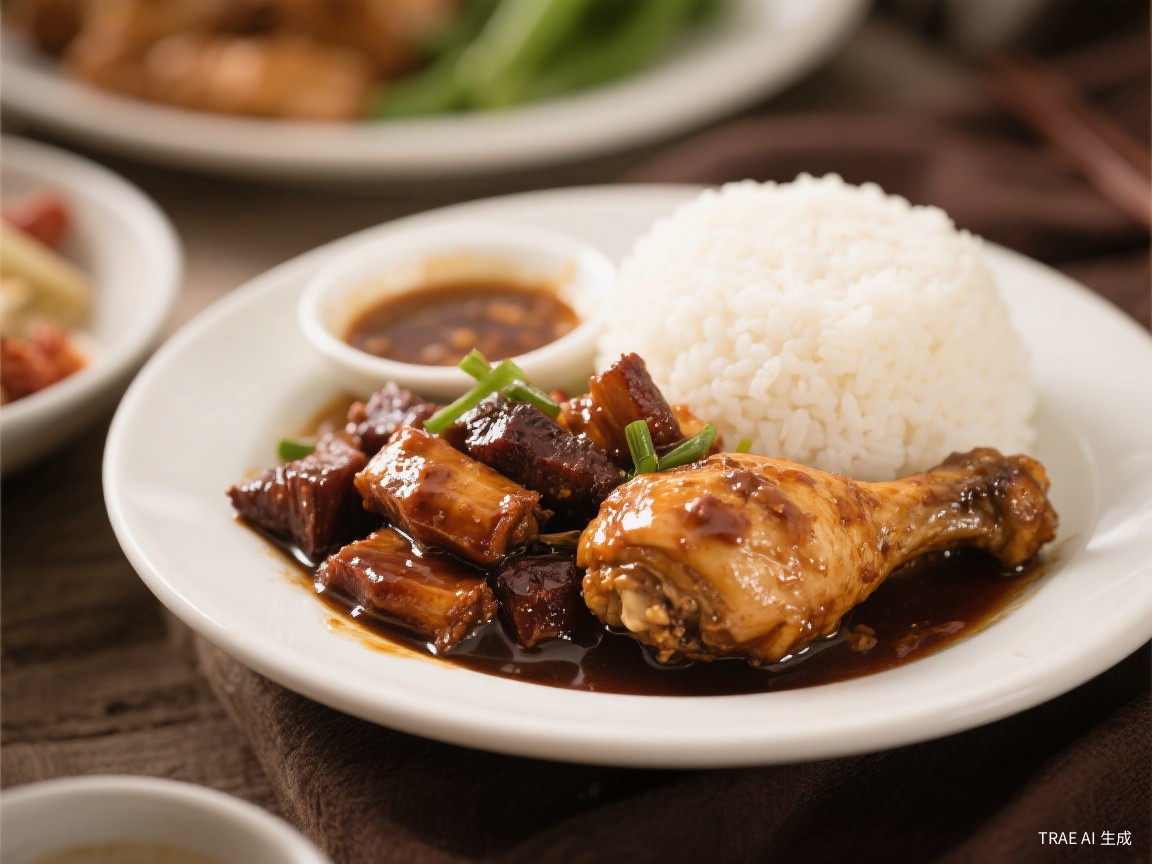
Traditional adobo uses bone-in chicken pieces—thighs, drumsticks, and sometimes wings—because the bones contribute gelatin and depth to the sauce. Breast meat can be used, but it tends to dry out during the long braise. If you prefer white meat, reduce the cooking time and consider leaving the skin on for protection.
The classic stovetop method involves braising the chicken in the soy-vinegar mixture for about thirty to forty minutes, then removing the lid to reduce and thicken the sauce. The final stage is crucial: the sauce should reduce until it becomes dark, glossy, and almost syrupy, coating the chicken in a lacquer of concentrated flavor. Some Filipino cooks go a step further and fry the braised chicken briefly in hot oil before returning it to the reduced sauce, creating a caramelized exterior that contrasts beautifully with the tender meat beneath.
Pressure Cooker vs. Stovetop
The pressure cooker has become a popular shortcut, and it delivers remarkably tender chicken in about twenty minutes. However, there is a trade-off. The stovetop method allows for more nuanced flavor development because the slow, uncovered reduction concentrates the sauce gradually. In a pressure cooker, the sauce does not reduce at all during cooking, so you must still finish it on the stovetop if you want that signature glaze. My recommendation: use the pressure cooker for convenience on a weeknight, but reserve the stovetop method for weekends and special occasions when you want the full experience.
Regional Variations Worth Exploring
The beauty of adobo is its infinite adaptability. Beyond the classic chicken version, the Philippines offers a staggering range of interpretations. Adobong puti ("white adobo") omits soy sauce entirely, relying solely on vinegar, garlic, and salt for a lighter, sharper profile. Adobong dilaw uses turmeric, giving the dish a vivid golden hue and an earthy warmth. In Batangas province, adobo is cooked with generous amounts of pork liver, creating a rich, iron-heavy sauce that locals swear by.
Some of the most exciting modern variations come from the Filipino diaspora. In the United States, Filipino-American chefs have experimented with adobo made with short ribs, with cauliflower for a vegetarian version, and even with adobo-flavored pasta sauces. These innovations are not betrayals of tradition—they are extensions of it, proof that adobo is a living, breathing dish that evolves with every generation.
Adobo the Next Day
Ask any Filipino cook, and they will tell you the same thing: adobo is always better the next day. As the dish rests in the refrigerator overnight, the flavors marry and deepen, the garlic softens further, and the sauce thickens naturally. In fact, many Filipino families cook a large batch specifically to enjoy over several days. The sauce becomes more complex with each reheating, developing a richness that is impossible to achieve in a single cooking session.
- Day one: Fresh and vibrant, with bright vinegar notes and tender chicken
- Day two: Deeper, more integrated flavors—the sweet spot for most cooks
- Day three: Rich and concentrated, the sauce having thickened into a glaze
- Day four and beyond: Some families swear by this stage, when the adobo has become almost jammy
Serving and Pairing
Chicken adobo is traditionally served over steamed white rice, which absorbs the savory sauce and provides a neutral canvas for the bold flavors. A simple side of pickled papaya (atchara) adds a refreshing crunch and acidity that cuts through the richness. Some meals include a clear soup like sinigang or a vegetable dish like pinakbet to round out the table.
The dish travels exceptionally well, which is one reason it features so prominently in Filipino packed lunches (baon). Wrapped in banana leaves with a mound of rice, adobo becomes a portable meal that tastes even better at room temperature, making it the ultimate Filipino comfort food—whether you are eating at the family dinner table or halfway across the world, far from home.
Ready to Cook Authentic Chicken Adobo?
Download our complete guide with regional variations, ingredient substitutions, and step-by-step timing for the perfect braise.
Get the Free Guide