Walk into any British chip shop, and you'll encounter an aroma that has defined a nation for over 150 years. That distinctive smell of frying oil, malt vinegar, and fresh fish is more than just a scent—it's a cultural touchstone, a Friday night tradition, and arguably Britain's greatest culinary contribution to the world.
A Brief History of an Icon
The marriage of fried fish and fried potatoes seems almost inevitable in hindsight, but its origins tell a story of cultural convergence. Fried fish was introduced to Britain by Jewish refugees from Portugal and Spain in the 17th century, while fried potatoes were a staple of industrial northern England. The first recorded fish and chip shop opened in London in 1860, though northern towns claim similar origins around the same time.
What's remarkable is how quickly the combination became embedded in British culture. By the early 20th century, fish and chips were fueling the industrial workforce, providing affordable, calorically dense sustenance for factory workers. During both World Wars, the government made special provisions to keep fish and chip shops open, recognizing their importance to national morale.
Chef's Tip
The secret to great fish and chips isn't just the recipe—it's the oil temperature. Too hot, and the batter burns before the fish cooks. Too cool, and you'll end up with greasy, soggy results. Invest in a good thermometer and maintain 375°F throughout cooking.
Choosing the Right Fish
Traditional British fish and chips typically features cod or haddock, both white fish with flaky texture and mild flavor. Cod remains the most popular choice, prized for its large, moist flakes and ability to hold up to frying. Haddock offers a slightly sweeter flavor and firmer texture that some connoisseurs prefer.
Sustainability has become an important consideration in recent years. With cod stocks under pressure in some waters, many responsible shops have turned to alternatives like pollock, hake, or responsibly sourced cod from well-managed fisheries. The best fish and chip shops proudly display their sourcing credentials.
Traditional Fish Options
- Cod: Classic choice with large, moist flakes and mild flavor
- Haddock: Slightly sweeter with firmer, denser flesh
- Plaice: Delicate and sweet, popular in southern England
- Rock salmon (Huss): Firm, meaty texture with no bones
The Art of the Batter
Great batter is the defining element of excellent fish and chips. It should be light, crisp, and golden, protecting the delicate fish within while providing textural contrast. The batter must adhere to the fish during frying but separate easily when eating. Achieving this balance requires understanding both ingredients and technique.
Most traditional recipes use a simple mixture of flour, baking powder, and a liquid—traditionally water or beer. The carbonation in beer creates a lighter, more aerated batter, while also adding subtle flavor. Some shops use sparkling water for similar effect without the beer taste. The key is achieving the right consistency: thick enough to coat the fish but thin enough to spread evenly.
"The batter should sing when it hits the oil. That sizzle is the sound of moisture turning to steam, creating the bubbles that make the coating light and crisp. No sizzle means your oil isn't hot enough."
— Traditional Chip Shop Wisdom
The Perfect Chip
British chips differ significantly from American french fries. They're thicker, softer inside, and less crispy overall. The ideal chip has a slightly crisp exterior giving way to a fluffy, steamy interior. Achieving this requires choosing the right potato variety and understanding the science of starch.
Floury potatoes like Maris Piper, King Edward, or Russet work best. Their high starch content creates that characteristic fluffy interior, while their low moisture content promotes crispiness. Waxy potatoes will produce chips that are dense and greasy rather than light and fluffy.
The Double-Fry Technique
- First fry: Cook at 325°F until just tender, not browned
- Rest: Allow chips to cool and dry completely
- Second fry: Cook at 375°F until golden and crisp
- Season immediately: Salt while hot for best adhesion
Traditional Accompaniments
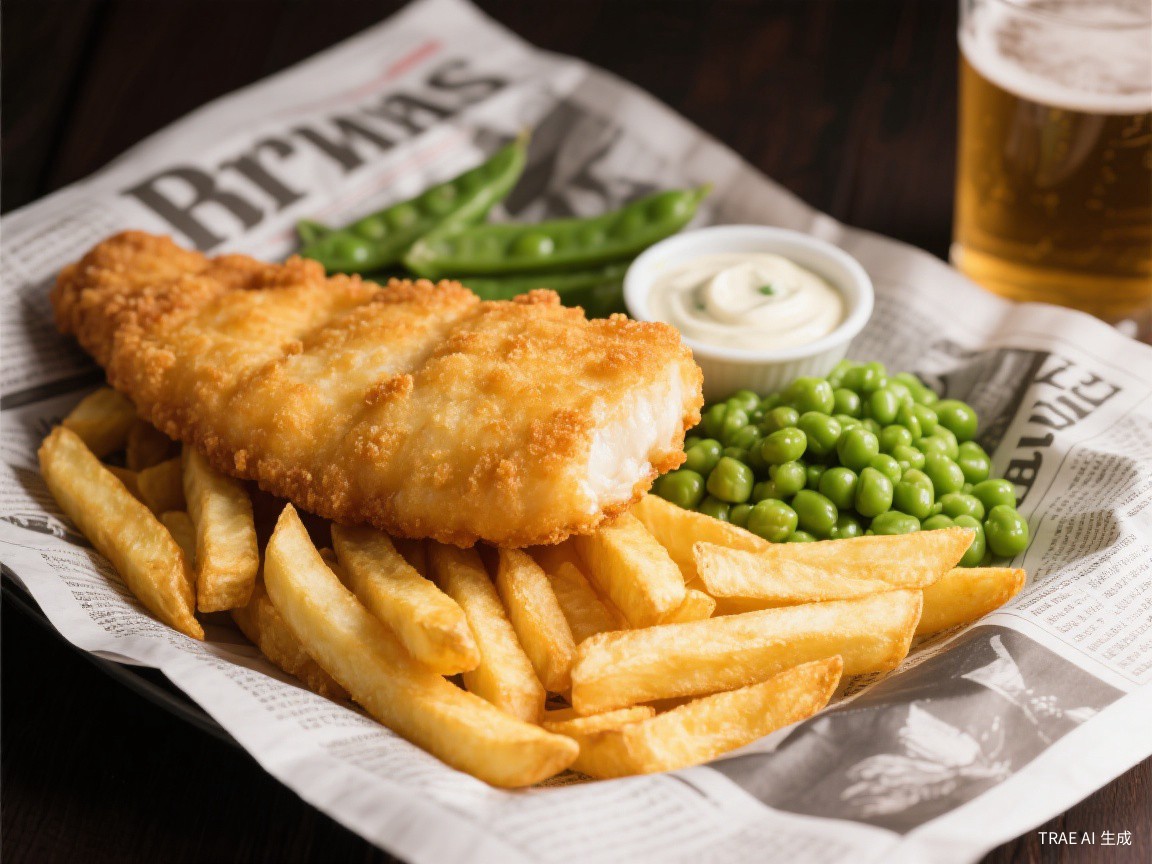
No fish and chips experience is complete without the traditional accompaniments. Malt vinegar is perhaps the most essential—a generous splash adds acidity that cuts through the richness. Salt, applied while everything is still hot, is non-negotiable for authenticity. Some regions prefer a sprinkle of pepper as well.
Mushy peas remain a beloved side dish, particularly in northern England. These are dried marrowfat peas, soaked overnight and simmered until they form a thick, bright green puree. The earthy, slightly sweet flavor provides perfect contrast to the salty, fried main event. Tartar sauce, pickled onions, and curry sauce are also popular additions depending on region and personal preference.
The Paper Tradition
Traditionally, fish and chips were served wrapped in newspaper, which absorbed excess oil and kept the food warm. Health regulations ended this practice in the 1980s, but many shops still use food-grade paper printed to look like newspaper, maintaining the aesthetic without the hygiene concerns. The wrapping itself is part of the experience—the way steam escapes, the way vinegar soaks into the paper.
Today's best chip shops balance tradition with modern standards. Sustainable sourcing, proper oil management, and attention to dietary requirements have become as important as maintaining authentic flavors. The dish has evolved while staying true to its essential character.
Making It at Home
Recreating restaurant-quality fish and chips at home is entirely achievable with proper technique. The most common mistake is overcrowding the fryer, which drops the oil temperature and results in greasy food. Fry in small batches, allowing the oil to return to temperature between additions.
For the fish, pat the fillets completely dry before dipping in batter. Any moisture on the surface will cause the batter to slide off during frying. For the chips, the double-fry method is essential—there's no shortcut to perfect results. But the effort is worthwhile when you pull that first batch of golden, crispy perfection from the oil.
Ready to Fry at Home?
Download our complete fish and chips guide with temperature charts and troubleshooting tips for perfect results.
Get the Free Guide