There's something almost magical about shakshuka. Perhaps it's the way the eggs nestle into the bubbling tomato sauce, or how the runny yolks create an instant sauce when broken. This humble dish, with its roots in North Africa and its heart in the Middle East, has captured the imagination of home cooks worldwide, and for good reason.
The Origins of a Beloved Dish
Shakshuka's history is as rich and layered as the dish itself. The word comes from Arabic, meaning "a mixture" or "shaken," which perfectly describes the harmonious blend of flavors in every bite. While its exact origins are debated, most food historians trace it to North Africa, particularly Tunisia, Libya, and Algeria, before it spread throughout the Middle East and eventually the world.
The dish gained particular prominence in Israel, where it was brought by Jewish immigrants from North Africa in the 1950s. Today, it's a staple of Israeli breakfast culture, served in restaurants dedicated entirely to its preparation and enjoyed at any hour of the day. Its global popularity has exploded in recent years, appearing on brunch menus from New York to Melbourne.
Chef's Tip
The secret to perfect shakshuka lies in the sauce consistency. It should be thick enough to support the eggs but loose enough to dip bread into. If your sauce is too thin, let it reduce a few more minutes before adding the eggs.
Building the Flavor Foundation
Every great shakshuka begins with a robust tomato base. While canned whole tomatoes work beautifully year-round, fresh tomatoes at the peak of summer can elevate the dish to new heights. The key is cooking the tomatoes down until they've lost their raw acidity and developed a concentrated sweetness.
The aromatic foundation typically includes onions, garlic, and bell peppers, though variations exist across regions. Some cooks add fresh chilies for heat, while others prefer the warm, earthy notes of cumin, paprika, and coriander. The spice blend is what gives each shakshuka its distinctive character.
Essential Spices for Authentic Flavor
- Cumin: Provides earthy warmth and is absolutely essential
- Paprika: Adds sweetness and beautiful red color; smoked paprika offers depth
- Caraway seeds: Traditional in Tunisian versions, adds subtle anise notes
- Harissa: North African chili paste for authentic heat and complexity
The Art of the Egg
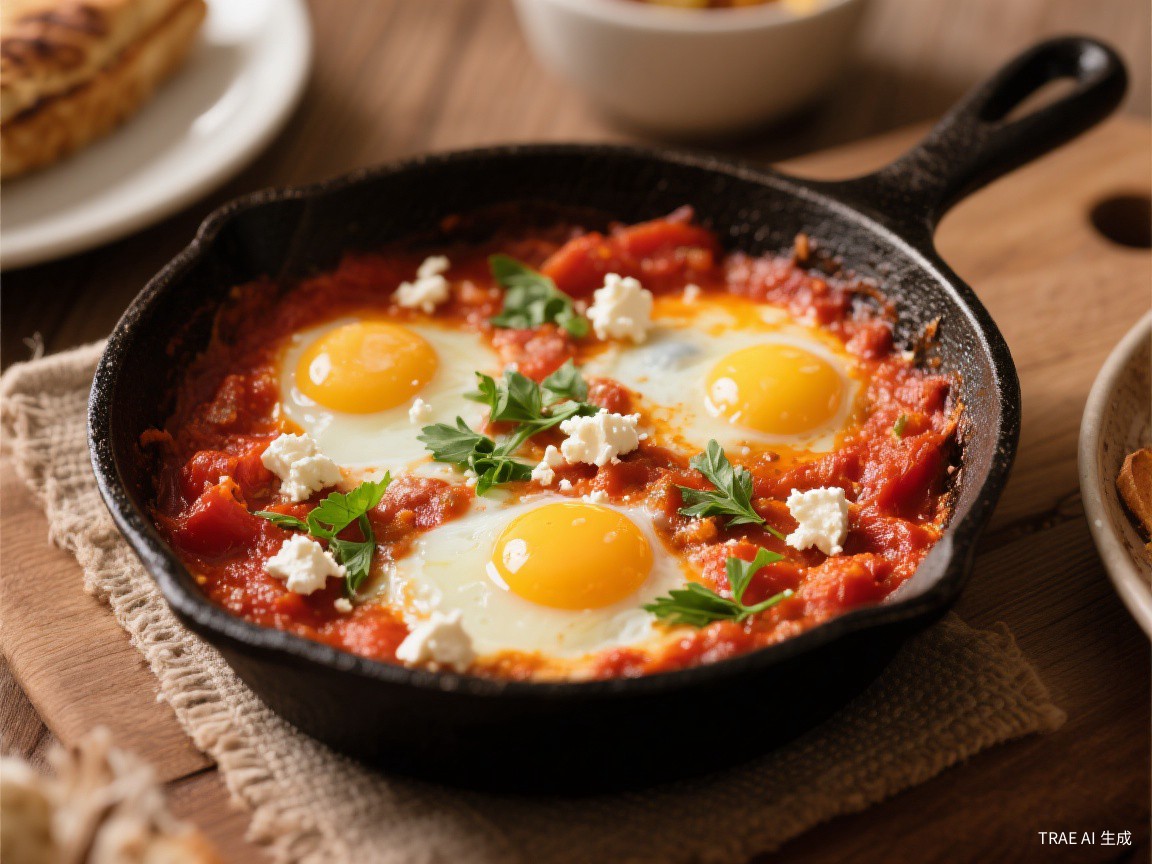
Adding the eggs is where technique truly matters. Create small wells in the sauce using the back of a spoon, then crack each egg directly into its designated spot. The goal is to keep the yolks intact while allowing the whites to set in the surrounding sauce.
Covering the pan helps the eggs cook evenly, but be careful not to overcook. The whites should be just set while the yolks remain gloriously runny. This usually takes four to six minutes over medium-low heat. Watch carefully, as the difference between perfect and overdone is measured in seconds.
"Shakshuka is the ultimate comfort food. It's forgiving, adaptable, and infinitely satisfying. Break the yolk, drag some crusty bread through the sauce, and you'll understand why this dish has endured for generations."
— Yotam Ottolenghi
Regional Variations
While the classic tomato-based shakshuka is most familiar, regional variations offer exciting alternatives. In Tunisia, the dish often includes potatoes and merguez sausage. Some versions incorporate spinach or Swiss chard for added nutrition and color. There's even a green shakshuka made with spinach, cilantro, and green chilies.
Modern interpretations have pushed boundaries even further. Chefs experiment with bases like roasted red peppers, tomatillos, or even curry-spiced lentils. While purists might object, these variations speak to shakshuka's fundamental appeal: it's a template for creativity that welcomes personal expression.
Serving and Enjoying
Shakshuka demands to be eaten directly from the pan, preferably with plenty of crusty bread for scooping up sauce and eggs. Traditional accompaniments include fresh herbs like cilantro or parsley, crumbled feta cheese, and a drizzle of olive oil. Some prefer a dollop of yogurt for cooling contrast.
The communal nature of shakshuka is part of its charm. Bring the pan to the table and let everyone dig in together. It's a dish that encourages conversation and connection, turning a simple meal into a shared experience. This is perhaps why it's become such a popular choice for brunch gatherings.
Perfect Accompaniments
- Crusty bread: Essential for sauce-mopping; warm pita works beautifully
- Fresh herbs: Cilantro, parsley, or dill add brightness
- Cheese: Feta, goat cheese, or even shredded mozzarella
- Pickled vegetables: Provide tangy contrast to the rich sauce
Making It Your Own
Part of shakshuka's beauty lies in its adaptability. Once you've mastered the basic technique, feel free to experiment. Add crumbled sausage for a heartier version, or incorporate leftover roasted vegetables. A sprinkle of za'atar just before serving adds a distinctly Middle Eastern flourish.
For those avoiding eggs, the spiced tomato base makes an excellent foundation for other proteins. Chickpeas transform it into a vegan main, while flakes of smoked salmon create an elegant variation. The sauce itself is so flavorful that it stands up to almost any addition.
A Dish for Any Time
While traditionally a breakfast dish, shakshuka transitions beautifully through the day. It makes an excellent quick dinner, particularly when served with a simple salad. Leftover sauce can be refrigerated and reheated with fresh eggs the next day, making it perfect for meal prep.
The relatively short cooking time and single-pan preparation make shakshuka ideal for busy weeknights. Yet it's impressive enough to serve at weekend brunch gatherings. This versatility explains much of its enduring appeal across cultures and generations.
Ready to Master Shakshuka?
Download our free guide with five regional variations and expert tips for perfect eggs every time.
Get the Free Guide