Few dishes have achieved the universal recognition and enduring popularity of the Caesar salad. What began as a resourceful improvisation in a bustling Mexican restaurant has evolved into one of the world's most beloved salads, appearing on menus from casual diners to fine dining establishments across the globe.
The Origin Story
The Caesar salad was born on July 4, 1924, at Caesar's Restaurant in Tijuana, Mexico. Caesar Cardini, an Italian immigrant who operated restaurants in both San Diego and Tijuana, found himself overwhelmed with American customers seeking to escape Prohibition restrictions. Running low on supplies, Cardini improvised with what he had on hand.
Using romaine lettuce, garlic, olive oil, eggs, Parmesan cheese, and croutons, he created a salad that he prepared tableside with dramatic flair. The customers were enchanted, and a culinary legend was born. The original preparation involved whole romaine leaves meant to be eaten with the hands, a style still served at some traditional restaurants today.
Chef's Tip
For the most authentic Caesar dressing, use eggs that have been coddled—briefly boiled for just one minute. This creates a silky, emulsified texture while reducing concerns about raw eggs. Alternatively, use pasteurized eggs for complete safety.
The Anatomy of a Perfect Caesar
What separates an exceptional Caesar salad from a mediocre one lies in the details. Each component must be prepared with care and attention, as the simplicity of the dish means there's nowhere to hide mistakes.
The Lettuce
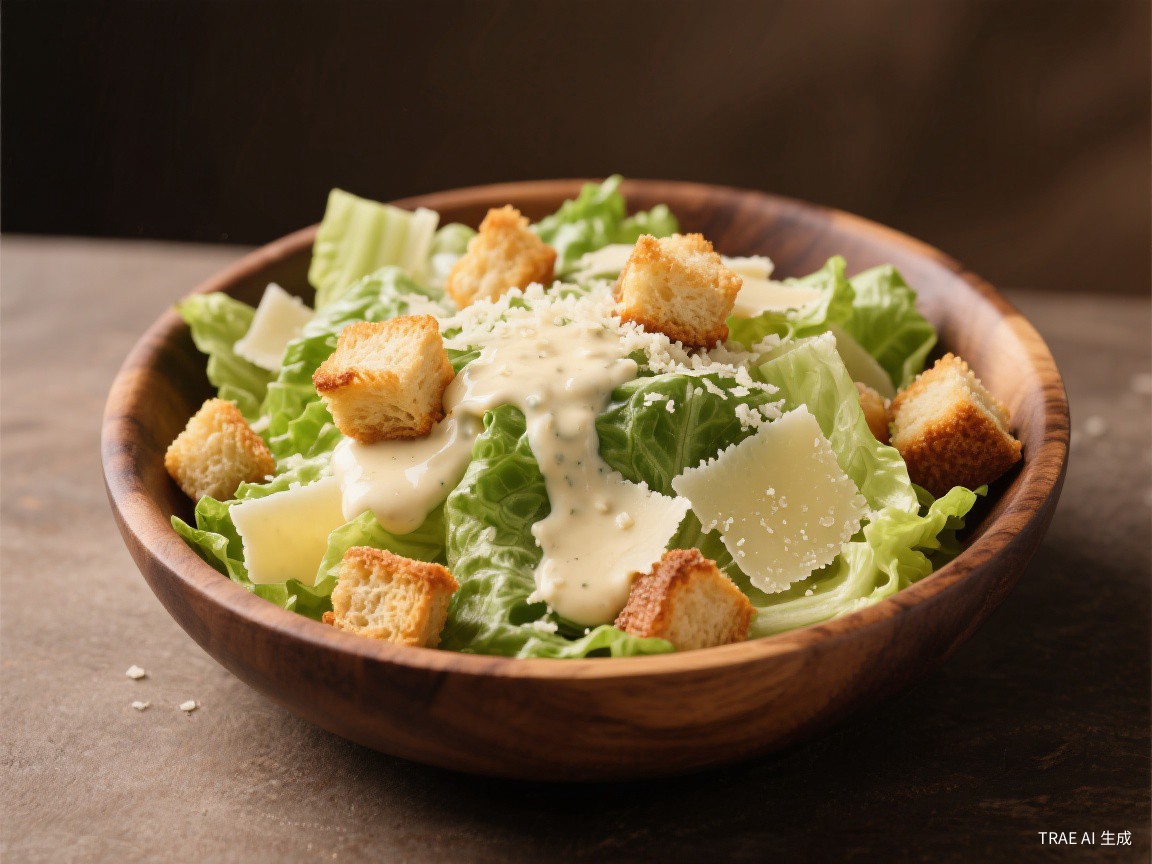
Romaine is the traditional and correct choice for Caesar salad. Its crisp texture and slightly bitter flavor provide the perfect foundation for the rich, tangy dressing. Choose heads that are firm and fresh, with no browning or wilting at the edges. The classic presentation uses whole leaves, but chopped romaine has become equally acceptable for casual preparations.
The Dressing
The heart of any Caesar salad is its dressing. A proper Caesar dressing is an emulsion of olive oil, egg yolks, garlic, lemon juice, Worcestershire sauce, Dijon mustard, and anchovies or anchovy paste. The anchovies are essential—they provide the umami depth that makes the dressing distinctive, even if their presence isn't immediately obvious to diners.
The key to a silky dressing lies in the emulsification process. Add the oil slowly while whisking vigorously, or use a blender for foolproof results. The dressing should coat the back of a spoon and cling to the lettuce leaves without pooling at the bottom of the bowl.
"A Caesar salad should be dressed just before serving, with just enough dressing to coat each leaf. The lettuce should glisten, not swim."
— Julia Child, Legendary Chef and Television Personality
The Croutons: More Than an Afterthought
Homemade croutons elevate a Caesar salad from good to extraordinary. Start with day-old bread—sourdough, French, or Italian all work beautifully. Cut into uniform cubes and toss with olive oil, garlic, and perhaps a sprinkle of Parmesan before baking until golden and crisp.
The texture contrast between the crunchy croutons and the crisp lettuce is essential to the Caesar experience. Store-bought croutons often lack the garlic intensity and fresh crunch of homemade versions, making this step well worth the extra effort.
Classic Crouton Recipe
- Bread: 4 cups cubed day-old bread
- Olive oil: 1/4 cup extra virgin
- Garlic: 2 cloves, minced
- Salt and pepper: To taste
- Optional: 2 tablespoons grated Parmesan
Toss all ingredients together, spread on a baking sheet, and bake at 375°F for 10-15 minutes until golden brown. Cool completely before adding to the salad.
The Cheese Factor
True Caesar salad requires Parmesan cheese—specifically Parmigiano-Reggiano when possible. The nutty, complex flavor of aged Parmesan complements the dressing beautifully. Add it in two ways: mixed into the dressing for depth, and shaved over the finished salad for visual appeal and bursts of flavor.
Use a vegetable peeler to create elegant shavings, or grate finely for more even distribution. Avoid pre-grated cheeses, which often contain anti-caking agents that prevent proper melting and integration with the other ingredients.
Modern Variations and Additions
While purists may argue for the classic preparation, the Caesar salad has proven remarkably adaptable. Grilled chicken transforms it into a substantial main course, while blackened salmon or shrimp offer elegant variations. Some restaurants add bacon, avocado, or even kale to create their signature versions.
However, the best variations maintain respect for the original balance of flavors. The creamy, tangy dressing should remain the star, with additions complementing rather than overwhelming the foundation.
Assembly and Presentation
The final step—assembly—requires as much care as the preparation. Have all components ready and at the proper temperature before beginning. The lettuce should be cold and crisp, the dressing at room temperature for optimal coating, and the croutons freshly made or stored in an airtight container.
- Prepare the bowl: Rub the inside of a wooden bowl with a cut garlic clove for subtle aromatics.
- Add the lettuce: Place torn or whole romaine leaves in the bowl.
- Apply dressing: Start with less than you think you need; you can always add more.
- Toss gently: Use your hands or large spoons to coat each leaf evenly.
- Add croutons: Scatter generously over the dressed lettuce.
- Finish with cheese: Shave Parmesan over the top in generous ribbons.
- Serve immediately: Caesar salad waits for no one.
The Enduring Appeal
What explains the Caesar salad's century-long reign as one of the world's most popular salads? Perhaps it's the perfect balance of flavors—rich and tangy, crisp and creamy. Maybe it's the interactive, tableside preparation that made it special from the beginning. Or it could be the versatility that allows it to work as a starter, a side, or a main course.
Whatever the reason, the Caesar salad remains a testament to the power of simple ingredients prepared with care and intention. In an era of complex culinary creations, this humble salad continues to remind us that sometimes the most enduring dishes are also the most straightforward.
Master the Classic Caesar
Download our complete guide to Caesar salad, including variations and troubleshooting tips for perfect results every time.
Get the Recipe Guide