Few dishes embody the concept of comfort food quite like shepherd's pie. This humble British creation, with its layers of savory meat and vegetables topped with clouds of buttery mashed potatoes, has been warming hearts and filling bellies for generations. It's the kind of dish that transforms a cold, rainy evening into something cozy and memorable.
The Origins of a Classic
Shepherd's pie emerged from the practical kitchens of 18th-century Britain and Ireland as a clever way to use leftover roasted meat. The frugal housewives of the era would take the remains of Sunday's lamb roast, mince it finely, and combine it with vegetables before topping it with mashed potatoes and baking until golden.
The dish gained particular prominence during the Industrial Revolution, when it provided a hearty, economical meal for working families. Its ability to stretch expensive meat with inexpensive vegetables and potatoes made it a staple in households across the British Isles. Today, it remains one of the most beloved examples of British comfort cooking.
Chef's Tip
The key distinction between shepherd's pie and cottage pie lies in the meat. Shepherd's pie uses lamb (shepherds tend sheep), while cottage pie uses beef. Both are delicious, but traditionalists insist on maintaining the distinction.
Building the Perfect Filling
The foundation of a great shepherd's pie lies in its meat filling. While ground lamb is the traditional choice, the quality and preparation of this ingredient significantly impacts the final dish. Choose lamb with some fat content—around 15-20%—to ensure the filling remains moist and flavorful.
The Vegetable Base
Aromatic vegetables form the backbone of the filling's flavor profile. The classic combination of onions, carrots, and celery—known in French cooking as mirepoix—provides sweetness and depth. These vegetables should be diced small so they cook evenly and distribute throughout the meat.
Many recipes also include peas, which add color and sweetness, and sometimes corn or green beans for additional texture. The vegetables should be cooked until they begin to soften before adding the meat, allowing their flavors to develop and meld together.
Creating Depth of Flavor
What elevates shepherd's pie from good to exceptional is the layering of flavors in the filling. This begins with properly browning the meat—don't rush this step. The Maillard reaction creates complex flavors that can't be achieved any other way. Work in batches if necessary to avoid steaming the meat.
- Worcestershire sauce: Adds umami depth and a subtle tang
- Tomato paste: Provides richness and helps bind the sauce
- Beef or lamb stock: Creates a savory base for the gravy
- Fresh herbs: Thyme and rosemary are traditional choices
- Red wine: Optional but adds wonderful complexity
"A proper shepherd's pie should have a filling that's rich and savory, with just enough gravy to moisten but not drown the meat. The potatoes should be fluffy inside with a golden, slightly crisp top."
— Chef Jamie Oliver, British Culinary Ambassador
The Potato Topping: More Than Just a Cover
The mashed potato topping is not merely a lid for the filling—it's an integral part of the dish that deserves as much attention as the meat below. The potatoes should be fluffy and creamy, able to hold their shape when served while remaining tender and smooth.
Choose floury potatoes like Russets or Maris Piper for the fluffiest texture. Waxy potatoes will result in a gummy mash that doesn't achieve the desired lightness. Peel and cut the potatoes into even pieces so they cook uniformly, and drain them thoroughly before mashing.
Perfect Mash Technique
The secret to perfect mashed potatoes lies in the ratio of butter to milk and the method of incorporation. Start by mashing the drained potatoes while they're still hot, then beat in softened butter until fully absorbed. Finally, add warm milk gradually until you achieve the desired consistency.
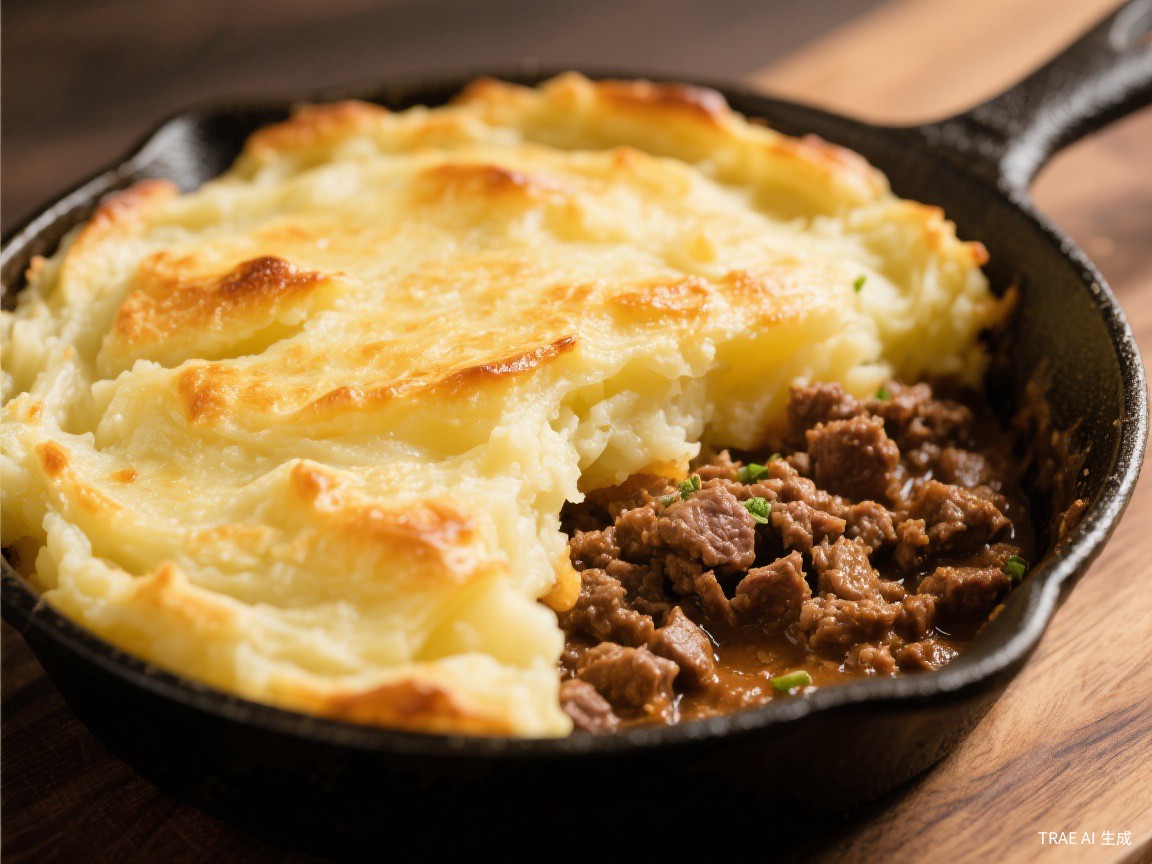
For shepherd's pie, the potatoes should be slightly firmer than for serving on their own—they need to hold their shape and create distinct peaks that will brown in the oven. Some cooks add an egg yolk to the mash, which helps it brown and creates a slightly richer topping.
Assembly and Baking
Assembling shepherd's pie is straightforward, but a few techniques ensure the best results. The filling should be spread evenly in the baking dish and allowed to cool slightly before adding the potatoes. This prevents the mash from sinking into the hot filling.
Spoon the mashed potatoes around the edge first, creating a seal that prevents the filling from bubbling over during baking. Then fill in the center, spreading the potatoes to the edges. Use a fork to create decorative peaks—these will become deliciously crispy in the oven.
- Prepare the filling: Cook meat and vegetables, add seasonings and stock, simmer until thickened.
- Cool slightly: Transfer filling to baking dish and let cool for 10-15 minutes.
- Prepare potatoes: Boil, drain, mash with butter and milk until smooth.
- Top the pie: Spread potatoes over filling, starting at edges and working inward.
- Create texture: Use a fork to create peaks across the surface.
- Bake: At 375°F for 25-30 minutes until golden and bubbling.
- Rest: Let stand for 5-10 minutes before serving.
Modern Variations
While the traditional recipe remains beloved, modern interpretations have expanded the shepherd's pie repertoire. Some cooks top their pies with a mixture of mashed potatoes and root vegetables like parsnips or sweet potatoes for added complexity. Others incorporate cheese into the mash or sprinkle it over the top for extra richness.
Vegetarian versions substitute lentils or plant-based meat alternatives for the lamb, often with excellent results. The key is ensuring the filling has sufficient depth and umami to satisfy without the meat. Mushrooms, particularly dried porcini, can provide much of the savory character that lamb contributes.
Serving Suggestions
Shepherd's pie is a complete meal in itself, but a few accompaniments can elevate the experience. A simple green vegetable like peas or green beans provides color and freshness to balance the rich pie. Some families serve it with pickled red cabbage or beetroot, whose acidity cuts through the richness.
For a truly British experience, serve with HP Sauce or Worcestershire sauce on the side, allowing diners to add extra tang to taste. A pint of ale or stout makes an excellent beverage pairing, echoing the flavors often found in the filling itself.
A Dish for All Seasons
Though most associated with cold weather and cozy nights, shepherd's pie deserves a place in your cooking repertoire year-round. Its make-ahead nature makes it perfect for busy weeknights—you can assemble it entirely in advance and bake when needed. Leftovers reheat beautifully, often improving as the flavors continue to meld.
Perhaps what makes shepherd's pie truly special is its ability to bring people together. It's the kind of dish that encourages second helpings and lingering at the table, the kind that children remember fondly and learn to cook themselves. In a world of complicated culinary creations, there's something profoundly satisfying about this simple combination of meat, vegetables, and potatoes done right.
Master the Classic Shepherd's Pie
Download our complete recipe with step-by-step instructions, tips for perfect results, and variations to try.
Get the Recipe Guide